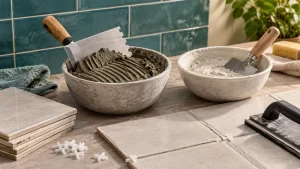
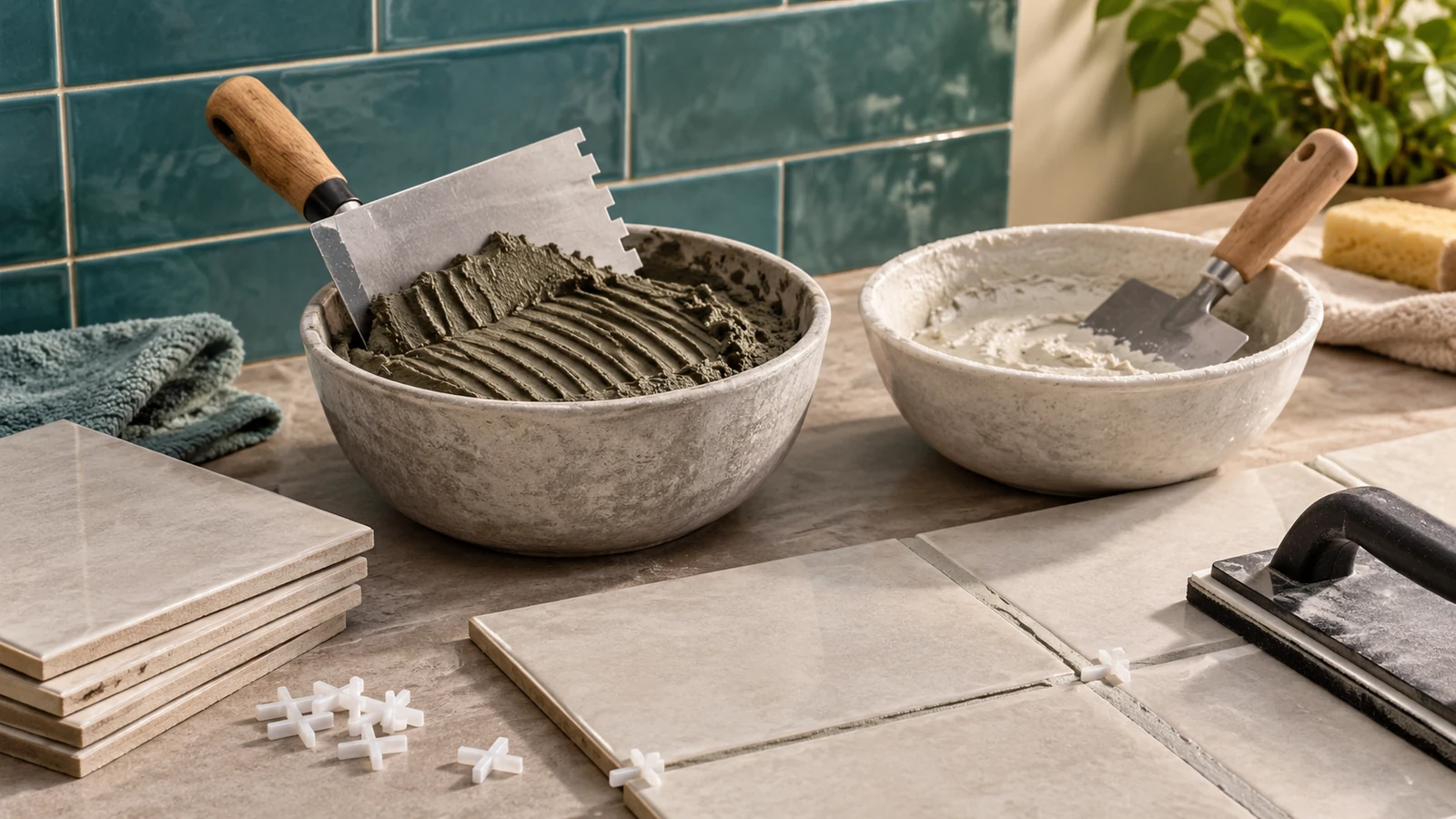
Ever found yourself mid-renovation and wondered if you could use tile adhesive as grout? You’re not alone. This question pops up often among DIY enthusiasts and even seasoned professionals. The idea of using one product for two purposes seems convenient, but is it practical or advisable?
Understanding the difference between tile adhesive and grout is crucial. While both play essential roles in tiling, they serve distinct functions. Tile adhesive secures your tiles to the surface, ensuring they stay in place. Grout, on the other hand, fills the gaps between tiles, providing stability and a polished finish. So, can you really swap one for the other? Let’s dive deeper to find out.
Key Takeaways
- Distinct Functions: Tile adhesive and grout serve different purposes. Tile adhesive secures the tiles to a surface, while grout fills the gaps between tiles to provide stability and a finished look.
- Composition and Types: Tile adhesive can be cement-based, epoxy, or mastic. Grout can be cementitious, epoxy, or furan. Each type has unique properties suited for specific applications.
- Not Interchangeable: It is not advisable to use tile adhesive as grout. Doing so can lead to structural issues, aesthetic problems, and reduced durability.
- Potential Problems: Using tile adhesive as grout can result in poor adhesion, cracking, inadequate water resistance, and an unsatisfactory finish that does not match the various color options available for grout.
- Professional Advice: Experts consistently recommend using tile adhesive for bonding tiles and grout for filling gaps to ensure the longevity, appearance, and hygiene of tiling projects.
Understanding Tile Adhesive And Grout
Understanding the distinct roles of tile adhesive and grout can help make informed decisions in tile installation projects.
What Is Tile Adhesive?
Tile adhesive, also known as tile glue or tile mortar, is a crucial component in the tile installation process. Its primary function is to bond the tiles to the surface, ensuring they stay securely in place.
Key Points About Tile Adhesive:
- Purpose: Attaches tiles to walls or floors, providing strength and stability.
- Types:
- Cement-based adhesive: Powdered form mixed with water. Offers heat and water resistance. Suitable for kitchens and bathrooms.
- Tile mastic: Pre-mixed, water-based. Ideal for dry areas but not for glass tiles. Easy to use and clean.
- Epoxy mortar: Resin-based, the strongest type. Sets quickly.
What Is Grout?
Grout is the material used to fill the spaces between tiles, creating a cohesive and finished look. It helps keep tiles in place and prevents moisture from seeping between them.
Key Points About Grout:
- Purpose: Fills gaps between tiles, provides stability, and enhances the aesthetic appearance.
- Types:
- Cementitious grout: Made of cement, water, and sand. Common in most residential settings.
- Epoxy grout: Made of epoxy resins and hardeners. Resistant to stains and chemicals.
- Furan grout: Composed of polymers of furfural alcohol. Used in industrial settings due to its high resistance to chemicals.
| Feature | Tile Adhesive | Grout |
|---|---|---|
| Primary Function | Bonds tiles to surface | Fills gaps between tiles |
| Common Types | Cement-based, tile mastic, epoxy mortar | Cementitious, epoxy, furan |
| Application Areas | Floors, walls, high-moisture areas | Between tiles in all settings |
| Key Characteristics | Strong adhesion, varying resistance | Stability, moisture protection |
| Setting Time | Varies by type, generally quick | Varies; epoxy sets faster than cementitious |
Understanding these materials and their specific roles will guide you in choosing the appropriate products for your tiling projects.
Differences Between Tile Adhesive And Grout
Understanding the differences between tile adhesive and grout helps you make informed decisions for your tiling projects. Although they might seem similar, they have distinct compositions and purposes.
Composition
- Tile Adhesive: Typically made from cement, epoxy, or mastic. Cement-based adhesives come in powdered form and mix with water to create a sticky substance. Epoxy adhesives, resin-based, offer strong, waterproof bonds. Adhesive’s composition ensures secure tile bonding.
- Grout: Usually a cement-based material but can also be epoxy or unsanded. Grout’s primary function is to fill gaps between tiles. Frequently mixed with sand for added durability, grout ensures a uniform appearance and protection.
Purpose
- Tile Adhesive: Bonds tiles to surfaces, ensuring they remain in place securely. Adhesive prevents tile movement and shifting over time, providing a stable base.
- Grout: Fills the gaps between tiles, creating a seamless look. It also protects tile edges from moisture and dirt infiltration, contributing to tile stability and longevity.
Types of Tile Adhesive
Different types of tile adhesive serve various purposes and environments. Understanding these types helps you choose the right one for your project.
- Cement-Based Adhesive: This type is versatile and commonly used. It’s suitable for both indoor and outdoor applications. Example: Thin-set mortar.
- Epoxy Adhesive: Known for its strong bonding and waterproof properties. Ideal for areas exposed to water, such as bathrooms and kitchens. Example: Two-part epoxy.
- Mastic Adhesive: Ready-to-use form, best for lightweight tiles and small areas. Not recommended for high-moisture environments. Example: Organic mastic.
Types of Grout
Grout types vary to meet different needs, from aesthetic to functional requirements. Choosing the correct grout reinforces the durability and appearance of your tile installation.
- Cementitious Grout: Made from a mix of cement, water, and sand. It’s widely used and available in sanded and unsanded forms. Example: Portland cement grout.
- Epoxy Grout: Composed of epoxy resins and filler powder. Offers chemical resistance and durability, making it suitable for kitchens and industrial areas. Example: Industrial-grade epoxy grout.
- Furan Grout: Similar to epoxy but made from furan resin. It provides excellent chemical resistance and is used in environments exposed to harsh chemicals. Example: Furan resin grout.
| Feature | Tile Adhesive | Grout |
|---|---|---|
| Main Components | Cement, Epoxy, Mastic | Cement, Epoxy, Unsanded |
| Primary Function | Bonding tiles to surfaces | Filling gaps between tiles |
| Variants | Cement-Based, Epoxy, Mastic | Cementitious, Epoxy, Furan |
| Applications | Indoor & outdoor, high-moisture areas | Kitchens, bathrooms, industrial areas |
Knowing these differences empowers you to choose the right materials, resulting in a successful and durable tile installation.
Can You Use Tile Adhesive As Grout?
No, it’s not recommended to use tile adhesive as grout. You must understand the distinct purposes of these materials before considering their interchangeability.
Situations Where It Might Be Possible
While it’s generally not advisable, there are specific scenarios where the idea might be considered, though with certain caveats:
DIY Projects
In some DIY contexts, tile adhesive might be used as a substitute for grout due to its ease of application. For example, you might think it’s easier to apply the adhesive both under and between tiles. But, it’s crucial to understand that this practice can lead to several issues, including improper sealing and structural instability.
Emergency or Temporary Fix
In rare cases where a quick fix is needed and proper grout isn’t available, tile adhesive might be used temporarily. For instance, if you’re in the middle of an urgent repair and have no grout on hand, using adhesive as a stopgap can suffice. But, it’s vital to replace it with proper grout as soon as possible to maintain the durability and appearance of your tiles.
Potential Issues And Concerns
Using tile adhesive as grout can lead to various problems:
Structural Issues
- Bonding Problems: Tile adhesive is designed to bond tiles to surfaces, not fill gaps. Using it as grout may result in poor adhesion and tiles may shift or loosen over time.
- Inadequate Flexibility: Grout is formulated to have some flexibility to accommodate slight movement within the tile setup. Tile adhesive lacks this property, making it prone to cracking when used as grout.
Aesthetic Concerns
- Appearance: Tile adhesive generally doesn’t provide the smooth and finished look that grout does. This can affect the overall aesthetic appeal of your tiled area.
- Color Match: Grout comes in various colors to match tiles, enhancing the visual consistency. Tile adhesive doesn’t offer this variety and may not complement your tiles.
Durability Concerns
- Water Resistance: Proper grout resists water infiltration, protecting the substrate from moisture. Tile adhesive doesn’t offer the same level of water resistance and may deteriorate more rapidly in wet conditions.
- Sand Content: Grout often contains sand for added strength, especially in larger gaps. Tile adhesive doesn’t have this feature, making it less suitable for filling spaces between tiles.
| Issue Type | Tile Adhesive Issues | Grout Benefits |
|---|---|---|
| Structural Integrity | Poor adhesion, risk of shifting | Securely fills gaps, provides stability |
| Flexibility | Prone to cracking | Formulated to accommodate slight movements |
| Aesthetics | Unsmooth, unfinished look | Smooth finish, multiple color options |
| Water Resistance | Low, prone to rapid deterioration | High, protects substrate from moisture |
| Sand Content | Lacks sand, weaker in large gaps | Contains sand, adds strength and stability |
By understanding these potential issues, you can avoid the pitfalls of using tile adhesive as grout and ensure a successful and durable tiling project.
Expert Opinions And Advice
Professional Recommendations
Tile adhesive and grout serve different purposes in tiling projects. Tile adhesive bonds tiles to surfaces, while grout fills gaps between tiles, preventing bacteria, germs, and mold buildup.
Key Differences:
- Function: Tile adhesive secures tiles; grout fills gaps.
- Properties: Grout offers stain resistance, flexibility, and durability.
- Suitability: Epoxy grout is waterproof and chemical-resistant.
Why Not Use Tile Adhesive as Grout:
- Lack of Stain Resistance: Tile adhesive lacks the stain resistance of grout, leading to discoloration.
- Durability Issues: Adhesive is not as durable or flexible as grout, causing potential cracking.
- Aesthetic Problems: Using adhesive disrupts the visual appeal and protection provided by grout.
Real-World Experiences
When engaging in tiling projects, users have found that attempting to use tile adhesive as grout leads to several practical issues. For instance:
- Cracking and Discoloration: Adhesive does not withstand the same stress and environmental conditions as grout.
- Inadequate Waterproofing: Tile adhesive does not create a waterproof seal, unlike epoxy grout.
- Mold Growth: Lack of appropriate sealing leads to increased mold risk within tile gaps.
Professionals consistently recommend using the right product for each purpose to avoid the pitfalls experienced when interchanging tile adhesive and grout. Proper usage enhances tile longevity, appearance, and hygiene, ensuring a successful and durable tiling project.
Conclusion
Understanding the distinct roles of tile adhesive and grout is crucial for any tiling project. While tile adhesive is designed to bond tiles to surfaces, grout fills the gaps between tiles, offering stability and a polished look. Using tile adhesive as grout can lead to structural, aesthetic, and durability issues.
Experts unanimously recommend using each product for its intended purpose. This ensures your tiling project is not only visually appealing but also long-lasting and resistant to common issues like cracking and mold. By making informed decisions, you can achieve a successful and durable tiling outcome.
Frequently Asked Questions
How to tile with tile adhesive?
Step 1: Prepare the Surface. First, get the surface ready.
Step 2: Plan the Layout.
Step 3: Check Levelness of the Wall.
Step 4: Mix the Tile Adhesive.
Step 5: Apply the Adhesive.
Step 6: Lay the Tiles.
Step 7: Level and Adjust.
Step 8: Let the Tiles Set.
Is it OK to tile without grout?
No, it’s not recommended. Regardless of the size of the project, elements like dust, dead cells, or other debris will find a way between your tiles if they are not grouted. Grout helps create a finished look and prevents material from getting lodged.
Can I use tile mortar instead of grout?
No, you shouldn’t. Thinset mortar is used to adhere tiles to a surface, while grout is designed to fill the gaps between tiles once they’ve been installed. They serve different purposes and are not interchangeable.
What happens if you use tile adhesive as grout?
Using tile adhesive as grout is not recommended. It may not fill gaps effectively and may lack the durability, moisture resistance, and stain-resistance properties of grout, potentially leading to issues over time.
Is mortar stronger than grout?
Yes, mortar is generally stronger than grout. Mortar is used as a bonding agent in masonry construction to hold bricks, stones, or blocks together, while grout fills gaps between tiles. Mortar provides strength and durability, whereas grout has a fluid consistency for gap filling and aesthetic purposes.