When you need a reliable adhesive for tough repairs, JB Weld often comes to mind. Known for its remarkable strength and versatility, this epoxy has become a go-to solution for both DIY enthusiasts and professionals. But just how strong is JB Weld?
In this text, you’ll discover the impressive capabilities of JB Weld, from its tensile strength to its ability to withstand extreme conditions. Whether you’re fixing a broken metal part or sealing a leak, understanding the limits and strengths of JB Weld can make all the difference in your repair projects. Let’s jump into the science and real-world applications that make JB Weld a trusted name in adhesives.
Key Takeaways
- Impressive Tensile Strength: JB Weld demonstrates substantial tensile strength, typically rated around 5,200 psi, making it suitable for demanding repairs and structural applications.
- Exceptional Bonding Capabilities: The adhesive’s bonding strength often exceeds the materials it adheres to, ensuring durable and long-lasting repairs across various surfaces like metal, wood, plastics, and ceramics.
- Variety of Types: JB Weld offers different types like Steel Reinforced Epoxy and KwikWeld, each with specific properties such as set time, cure time, and temperature resistance to cater to diverse repair needs.
- Optimal Application Tips: To achieve the best results, proper surface preparation, correct mixing ratio, adequate curing time, and applying in thin layers are crucial steps.
- Versatility in Applications: JB Weld can be used for automotive repairs, household fixes, woodworking projects, and industrial applications, providing strong, reliable bonds in a range of real-world scenarios.
- Comparison to Other Epoxies: JB Weld outperforms many generic epoxies in terms of tensile strength and temperature resistance, making it a preferred choice for robust and high-stress repairs.
Overview Of JB Weld Strength
JB Weld, a two-part epoxy adhesive, offers robust bonding capabilities across multiple applications. This section delves into its key strength attributes.
Tensile Strength
JB Weld exhibits notable tensile strength, making it suitable for demanding repairs.
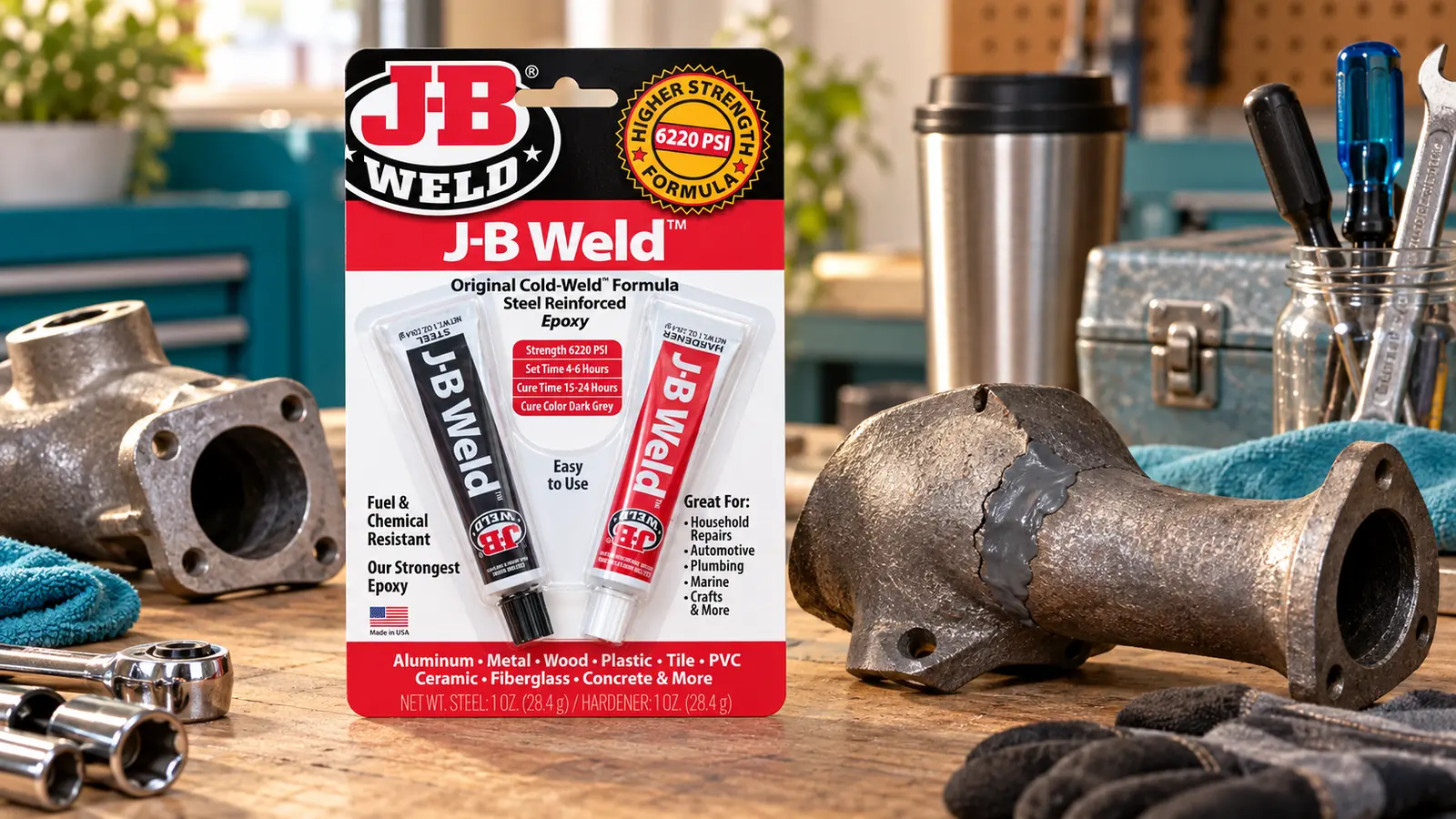
- Rated Tensile Strength: JB Weld typically shows a tensile strength around 5,200 psi (pounds per square inch), based on the manufacturer’s specifications.
- Observed Variations: Some tests and user reports indicate slightly lower tensile strength values, around 3,200 psi. Even though these variations, JB Weld remains a reliable choice.
Bonding Strength
JB Weld’s bonding strength ensures durable adherence, often surpassing the strength of the bonded material.
- Material Bonding Exceedance: When applied correctly, JB Weld’s bond often outlasts the material it adheres to, indicating superior performance.
- Stress Resistance: Several tests highlight that the bond withstands significant stress and pressure, usually failing only when the surrounding material breaks.
Strength Data Table
| Strength Type | Typical Value (psi) | Observed Range (psi) |
|---|---|---|
| Tensile Strength | 5,200 | 3,200 – 5,200 |
| Bonding Strength | Exceeds material | Varies by material |
Practical Insights
Understanding JB Weld’s strength helps in optimizing its application.
- Surface Preparation: Clean and roughen surfaces before applying JB Weld to enhance bond strength.
- Mixing Ratio: Combine the epoxy in equal parts to achieve the best performance.
- Curing Time: Allow JB Weld to cure for at least 15 hours for optimal strength. Longer curing can further improve durability.
- Application Thickness: Apply in thin layers for better bonding results.
Key Terms
- Tensile Strength: The resistance of a material to breaking under tension.
- Bonding Strength: The capability of an adhesive to hold materials together under stress.
Summary
By leveraging its tensile and bonding strengths, JB Weld proves to be a versatile adhesive for various repair needs. Proper application ensures durability and reliability in stressful conditions.
Types Of JB Weld
When considering JB Weld for your project, it’s essential to understand the different types available. Each variety offers unique features tailored for specific applications, ensuring you get the best results for your repair needs.
Steel Reinforced Epoxy
JB Weld’s Steel Reinforced Epoxy is a heavy-duty adhesive known for its exceptional bonding strength:
- Tensile Strength: Its tensile strength reaches 5020 psi, making it suitable for demanding repairs.
- Cure Time: The epoxy sets in 4-6 hours and fully cures within 15-24 hours.
- Temperature Resistance: Once cured, it withstands temperatures up to 550°F.
- Applications: This type is ideal for automotive repairs, plumbing, and general household projects.
Key Features of Steel Reinforced Epoxy:
- High tensile strength: 5020 psi guarantees robust repairs
- Extended cure time: Allows for precise adjustments during application
- Heat resistance: Suitable for high-temperature environments
KwikWeld Epoxy
KwikWeld is a fast-setting variant of JB Weld, offering quick fixes without compromising strength:
- Tensile Strength: KwikWeld offers strong bonding similar to the original JB Weld though exact values aren’t specified.
- Set Time: It sets in just 6 minutes and fully cures in 4-6 hours.
- Applications: Suitable for metal repairs and versatile enough for various surfaces.
Key Features of KwikWeld Epoxy:
- Rapid setting: Ideal for quick repairs with a 6-minute set time
- Short cure time: Fully functional within 4-6 hours
- Versatile applications: Works on multiple surfaces
Comparison Table
Here’s a side-by-side comparison of the key properties of Steel Reinforced Epoxy and KwikWeld Epoxy:
| Feature | Steel Reinforced Epoxy | KwikWeld Epoxy |
|---|---|---|
| Tensile Strength | 5020 psi | Strong, exact value unspecified |
| Set Time | 4-6 hours | 6 minutes |
| Cure Time | 15-24 hours | 4-6 hours |
| Temperature Resistance | Up to 550°F | Not specified |
| Applications | Automotive, plumbing, household projects | Metal repairs, multiple surfaces |
Understanding the differences between these types of JB Weld allows you to choose the right product for your specific needs. Use Steel Reinforced Epoxy for maximum strength and heat resistance, and opt for KwikWeld when you need a quick and reliable fix.
Applications For JB Weld
When you need a reliable adhesive, JB Weld stands out. Its versatility makes it suitable for various materials, ensuring strong and durable repairs.
Metals
JB Weld is commonly used for metal repairs due to its exceptional bonding strength. Whether you’re repairing aluminum, steel, or other metals, this epoxy provides a dependable bond.
Key Applications:
- Automotive Repairs: Ideal for fixing cracked engine blocks or leaking radiators.
- Industrial Use: Effective for machinery repairs and heavy-duty metal components.
- Household Repairs: Useful for mending metal furniture or fixtures.
Plastics
While JB Weld is primarily known for metal, it also works on certain plastics. Proper surface preparation enhances its effectiveness on nonporous surfaces.
Key Applications:
- Automotive Interiors: Useful for dashboard or interior trim repairs.
- Household Items: Suitable for fixing plastic appliances or toys.
- DIY Projects: Ideal for crafting and model building.
Wood
JB Weld’s bonding strength extends to wood, making it a reliable choice for woodworking projects. Its ability to withstand various temperatures makes it ideal for both indoor and outdoor applications.
Key Applications:
- Furniture Repair: Effective for fixing broken chairs, tables, and cabinets.
- Outdoor Structures: Suitable for repairing wooden fences, decks, or garden furniture.
- Decorative Items: Useful in crafting wooden frames or ornaments.
Ceramics
Ceramic repairs benefit from JB Weld’s strong bonding capabilities. It fills gaps and creates a seamless repair, often stronger than the original piece.
Key Applications:
- Dishware Repair: Ideal for mending cracked plates, cups, and bowls.
- Decorative Ceramics: Useful for fixing vases, figurines, and other ceramic art.
- Architectural Elements: Suitable for repairing ceramic tiles or fixtures in bathrooms and kitchens.
Application Tips
- Surface Preparation: Ensure surfaces are clean and free of grease or dirt.
- Mixing: Mix components thoroughly for optimal bonding.
- Curing Time: Allow proper curing time to achieve full strength.
Comparison Table
| Material Type | Common Applications | Preparation | Curing Time | Max Temperature |
|---|---|---|---|---|
| Metals | Automotive, Industrial, Household | Clean and roughen | 15-24 hours | 550°F |
| Plastics | Automotive, Household, DIY | Clean and roughen | 4-6 hours | 300°F |
| Wood | Furniture, Outdoor, Decorative | Clean and sand | 15-24 hours | 550°F |
| Ceramics | Dishware, Decorative, Architectural | Clean and dry | 15-24 hours | 550°F |
Summary
Use JB Weld to handle various repair needs with confidence. Whether working with metals, plastics, wood, or ceramics, proper application ensures lasting results.
Preparation And Application
Preparing and applying JB Weld correctly ensures a strong, durable bond. Follow these steps to maximize its effectiveness.
Surface Preparation
- Cleaning: Clean the surfaces to be bonded thoroughly. Remove grease, oil, and other contaminants. This clean state is essential for achieving a strong bond.
- Scuffing: Lightly scuff the surfaces to increase the bonding area. This action helps in creating a stronger mechanical bond between the epoxy and the material.
Mixing Instructions
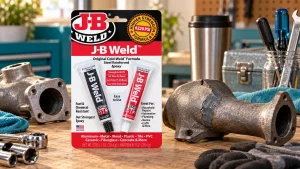
- Ratio: Mix the two components (the black “steel” and the cream “hardener”) evenly in a 1:1 ratio. This specific ratio is crucial to achieve the desired properties.
- Mixing Time: Mix the components for about 1-2 minutes. Ensure the mixture is homogeneous and turns a darker gray color. Proper mixing activates the bonding agents effectively.
- Application: Apply the mixed epoxy to the prepared surfaces. Ensure the surfaces are aligned properly and held in place until the epoxy starts to set.
- Curing Time: Allow the JB Weld to cure for at least 24 hours. This curing period ensures full strength and durability.
Utilizing these steps will help you achieve the optimal results with JB Weld.
Strength Testing
Understand the strength attributes of JB Weld through meticulous testing. Evaluate both the tensile and shear strengths to appreciate its performance under various conditions.
Shear Strength
Shear strength measures the resistance to forces that can cause layers to slide against each other. Although specific shear strength values for JB Weld are not readily available, its practical performance is significant.
- Performance Indicators: The overall bonding strength of JB Weld indicates robust shear strength, inferring its reliability in practical applications.
- Application Examples: Common uses such as bonding metal parts and structural repairs underline its capability. These applications often involve forces that test the adhesive’s shear strength.
Tensile Strength
Tensile strength quantifies the maximum stress JB Weld can withstand while being stretched before breaking. JB Weld exhibits impressive tensile strength, making it suitable for demanding repairs.
- JB Weld Original Cold-Weld: Rated for a tensile strength of approximately 5,200 PSI (pounds per square inch), equivalent to about 38 megapascals.
- Testing Results: In practical tests, JB Weld has shown the ability to withstand significant forces. For instance, a beam bonded with JB Weld held up to about 2 tons (approximately 4,000 pounds) before showing signs of stress.
- Lifting Tests: A test where JB Weld was used to lift the back end of a car demonstrated its strong bonding properties. The exact limit wasn’t precisely quantified, but the adhesive proved substantial in this application.
| JB Weld Type | Tensile Strength (PSI) | Cure Time (Hours) | Temperature Resistance (°F) |
|---|---|---|---|
| JB Weld Original Cold-Weld | 5,200 | 15-24 | 550 |
| Steel Reinforced Epoxy | 5,020 | 15-24 | 550 |
| KwikWeld | 3,120 | 4-6 | 300 |
- Understand the specific strength metrics when selecting JB Weld for a project.
- Note the tensile strength values and practical test outcomes to gauge suitability.
- Use the provided tables to compare different JB Weld variants based on tensile strength and cure times.
Ensure that your repair projects benefit from the comprehensive strength attributes of JB Weld by making informed decisions based on this data.
Comparative Analysis
JB Weld Vs Other Epoxies
When comparing JB Weld to other epoxy adhesives, it’s essential to understand its unique strengths and applications. JB Weld’s notable properties make it a preferred choice for many repair projects.
Tensile Strength:
- JB Weld: 3200 to 5020 psi
- Other Household Epoxies: Typically range from 1000 to 2500 psi
Advantages of JB Weld:
- Higher tensile strength
- Versatile application on multiple surfaces
- Robust bonding for tough repairs
Other Epoxies:
- Suitable for light to medium-duty repairs
- May not hold up under high stress or extreme conditions
Critical Factors for Bonding Strength:
- Surface Preparation: Scuffing and cleaning are essential for any epoxy.
- Mixing Ratio: Proper mixing ensures the best bond.
- Cure Time: Allows the bond to set completely.
Strength Comparison Table
| Property | JB Weld | Generic Epoxies |
|---|---|---|
| Tensile Strength (psi) | 3200–5020 | 1000–2500 |
| Cure Time (hours) | 15-24 | 24-48 |
| Temperature Resistance | Up to 500°F (260°C) | Typically up to 350°F (177°C) |
Heat Resistance
JB Weld is specifically designed to endure moderate temperatures. While it can handle up to 500°F (260°C), it may not be suitable for high-heat environments.
Heat Resistance Comparison:
- JB Weld: Up to 500°F
- Standard Epoxies: Usually up to 350°F
Application Areas
- Automotive Repairs: JB Weld excels in bonding metal components but isn’t ideal for exhaust systems.
- Plumbing Repairs: Its resistance to heat and pressure makes it suitable for temporary fixes.
- Quick Repairs: KwikWeld variant sets in six minutes, making it convenient for urgent tasks.
Summary
JB Weld proves superior in tensile strength and temperature resistance, making it suitable for rigorous repairs. It’s essential to prepare surfaces correctly and follow mixing instructions to achieve optimal results. For durable and robust bonds, JB Weld often outperforms its competitors.
Real-World Examples
Understanding the capabilities of JB Weld through real-world applications helps appreciate its versatility and strength.
Automotive Repairs
Structural Integrity
JB Weld is valuable for repairing cracks and bonding metal parts in automotive setups. For instance, it can effectively fix a cracked engine block or attach metal brackets. But, avoid using it for high-heat areas like exhaust manifolds, as it fails under excessive heat, which often exceeds 600°F.
Emergency Fixes
In emergencies, JB Weld provides reliable temporary fixes for non-load-bearing parts. Examples include patching holes in aluminum bellhousings or reattaching fiberglass hood hinges. These temporary repairs allow continued use of the vehicle until proper repairs are possible.
Limitations
Even though its robustness, JB Weld isn’t suitable for applications involving significant dynamic loads or continuous high temperatures. Avoid using it to repair components that experience constant motion or temperatures above 600°F, such as exhaust components and engine parts under heavy load.
Household Fixes
Plumbing Repairs
JB Weld provides excellent adhesion for plumbing repairs. Use it to seal leaks in metal pipes or bond joints. Its water resistance ensures durability, making it suitable for kitchen, bathroom, and outdoor plumbing fixes. Always ensure that surfaces are dry and clean before application to achieve optimal results.
Furniture Restoration
You can use JB Weld to fix broken wooden furniture. It can bond wood strongly, repairing chair legs, table edges, and wooden joints. Lightly scuff the bonding surfaces and cleanse them to remove dust and grease before applying the adhesive.
Appliance Repairs
For household appliances with broken parts, JB Weld works efficiently. Examples include fixing dishwasher racks, bonding broken plastic refrigerator shelves, or mending cracked washing machine panels. Ensure adequate surface preparation and curing time for the adhesive to reach full strength.
Industrial Uses
Machinery Repairs
In industrial settings, JB Weld offers reliable repair solutions for machinery. It bonds metal parts, fills cracks in heavy equipment, and seals leaks in industrial pipelines. Its high tensile strength, reaching up to 5,020 PSI, ensures strong, lasting repairs. Always consider the operational temperature range and load conditions to ensure the longevity of the fix.
Structural Reinforcement
Industrial applications often involve reinforcing structural elements. JB Weld’s ability to bond diverse materials like metal, ceramics, and certain plastics makes it versatile. Use it for reinforcing brackets, securing bolts, and patching structural cracks in non-dynamic load areas.
Prototyping and Fabrication
Engineers and designers use JB Weld for quick fixes during prototyping and fabrication. Its resilient bonding provides temporary hold solutions while testing the durability and functionality of various prototypes. Ensure a clean and contaminant-free bonding surface for the best results.
| Property | Value | Applications |
|---|---|---|
| Tensile Strength | 3,200-5,020 PSI | Automotive, household, and industrial repairs |
| Cure Time | 15-24 hours | Optimal results require allowing sufficient curing time |
| Temperature Resistance | Up to 550°F | Suitable for most environments except high-heat areas exceeding 600°F |
| Material Compatibility | Versatile | Effective on metals, wood, plastics, ceramics, and more |
Incorporating JB Weld into your repair toolkit provides a versatile, strong adhesive solution for various scenarios. Ensure proper surface preparation and allow sufficient curing time to maximize its effectiveness in both minor fixes and significant repairs.
Conclusion
JB Weld stands out as a reliable and robust epoxy adhesive for a wide range of repair needs. Its impressive tensile strength and resistance to extreme conditions make it a preferred choice for both DIY enthusiasts and professionals. Whether you’re tackling automotive repairs or household fixes, JB Weld’s versatility and durability ensure long-lasting results. By following proper preparation and application steps, you can maximize its effectiveness, making it a go-to solution for tough repairs.
Frequently Asked Questions
How strong is JB Weld?
JB Weld is known for its impressive tensile strength, ranging from 3,200 psi to 5,020 psi depending on the variant. This strength often exceeds that of the materials it bonds, making it ideal for tough repairs in various applications.
What materials can JB Weld be used on?
JB Weld is versatile and can be used on metals, plastics, wood, ceramics, and more. Each type of material may require specific surface preparation to ensure optimal bonding strength.
How long does JB Weld take to cure?
The cure time for JB Weld varies by type but generally ranges from 4-6 hours for fast-setting variants like KwikWeld to 15-24 hours for Steel Reinforced Epoxy. Full strength is usually achieved after 24 hours.
Is JB Weld resistant to high temperatures?
Yes, JB Weld is temperature resistant, with some variants like Steel Reinforced Epoxy enduring temperatures up to 550°F, making it suitable for high-temperature applications like automotive and plumbing repairs.
Can JB Weld be used for structural repairs?
Yes, JB Weld is strong enough for structural repairs. It forms a durable bond that can handle significant stress, making it suitable for automotive parts, machinery, and more.
How should I prepare surfaces before applying JB Weld?
Surfaces should be clean from contaminants and lightly scuffed to enhance bonding strength. Proper cleaning and surface preparation are critical for achieving the strongest bond.
What is the mixing ratio for JB Weld?
The mixing ratio for JB Weld is 1:1. Properly combining the two components ensures the desired properties and maximum strength of the adhesive.
Is JB Weld waterproof?
Yes, once cured, JB Weld is waterproof. This makes it an excellent choice for repairs on items that will be exposed to moisture or submerged in water.
Can JB Weld withstand outdoor conditions?
Yes, JB Weld is designed to withstand various outdoor conditions, including exposure to water, temperature fluctuations, and UV light, ensuring durability in diverse environments.
How does JB Weld compare to other epoxy adhesives?
JB Weld possesses superior tensile strength (3,200 to 5,020 psi) compared to typical household epoxies (1,000 to 2,500 psi). Its robust bonding and temperature resistance make it ideal for heavy-duty repairs.