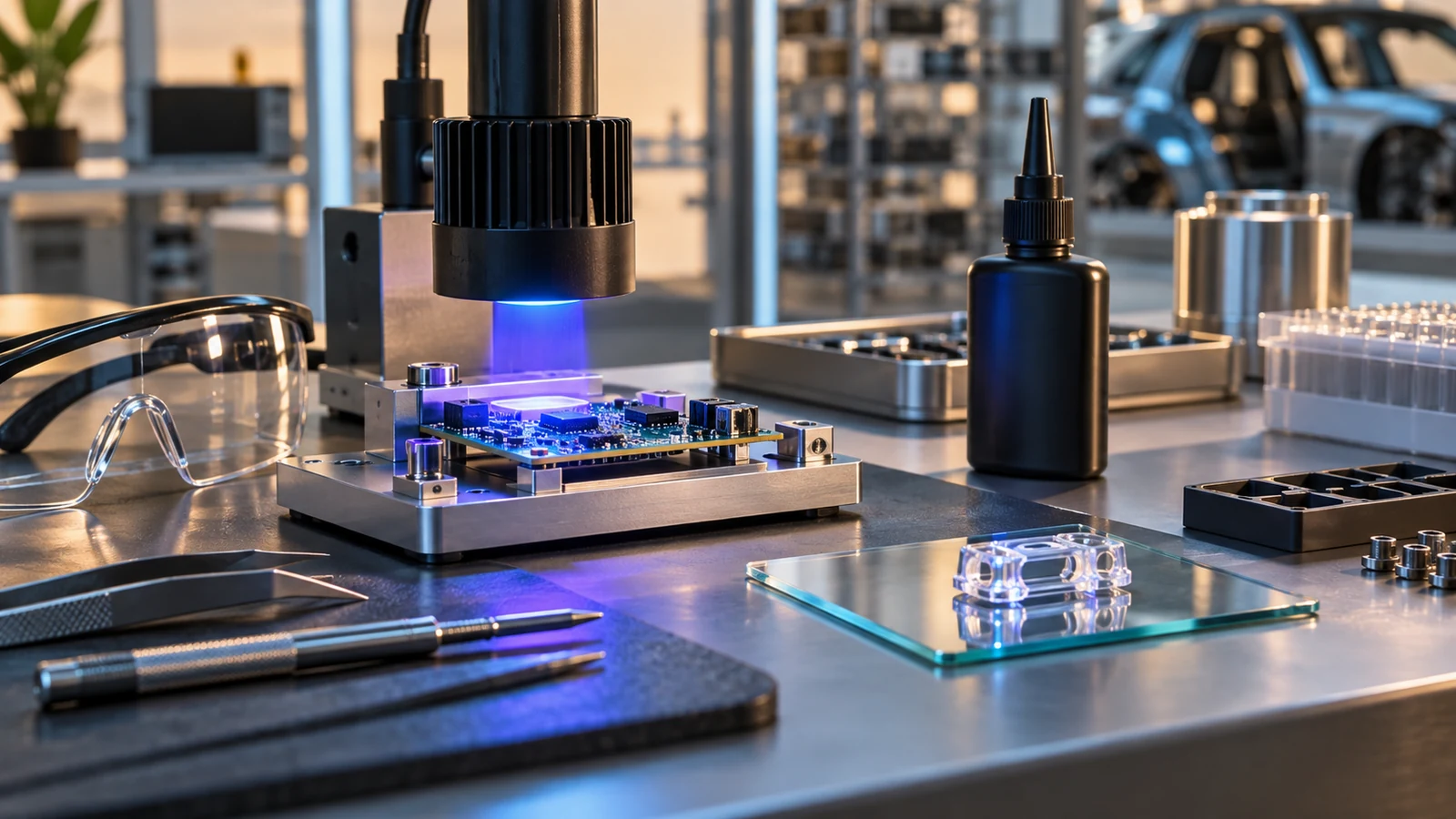
In the rapid world of modern manufacturing, speed and efficiency are paramount. UV curable adhesives have revolutionized the industry by offering rapid bonding solutions that outpace traditional methods. These adhesives cure in seconds when exposed to ultraviolet light, allowing manufacturers to streamline production processes and reduce downtime.
You might wonder how UV curable adhesives achieve such impressive results. The secret lies in their unique chemical composition, which reacts instantly under UV light to form strong, durable bonds. Whether you’re working in electronics, automotive, or medical device manufacturing, these adhesives provide a versatile and reliable option to meet your production needs.
Key Takeaways
- Fast Curing Times: UV curable adhesives cure within seconds to minutes, significantly speeding up manufacturing processes and increasing production efficiency.
- No Heat Requirement: These adhesives eliminate the need for heat during the curing process, making them suitable for bonding heat-sensitive materials and reducing energy consumption.
- High Bond Strength and Versatility: UV curable adhesives offer robust bonding to various substrates including metals, glass, plastics, rubbers, and ceramics, making them suitable for diverse industries such as electronics, automotive, and medical devices.
- Precision and Control: The curing process of UV curable adhesives can be precisely controlled, ensuring consistent and reliable bond quality.
- Challenges and Considerations: Limited penetration depth, specific UV light wavelength requirements, and initial investment costs are key challenges. Addressing these challenges ensures the effective use of UV curable adhesives in manufacturing.
- Innovations and Advances: New developments in formulations, eco-friendly options, and smart adhesive systems continue to expand the applications and efficiency of UV curable adhesives in modern manufacturing.
What Are UV Curable Adhesives?
UV curable adhesives are specialized adhesives that harden and polymerize when exposed to ultraviolet (UV) light. This process removes the need for heat, mixing, or prolonged curing times, making them highly efficient for modern manufacturing.
Key Terms
Polymerize: To undergo a chemical reaction in which small molecules combine to form larger chain-like structures.
Ultraviolet (UV) Light: A type of electromagnetic radiation with a wavelength between 10 nm and 400 nm, shorter than visible light but longer than X-rays.
Core Characteristics
- Fast Curing: They cure rapidly, often in seconds to minutes, depending on the UV light source’s intensity and the adhesive’s formulation. This rapid curing time is crucial for high-volume production lines and quick assembly applications.
- No Heat Requirement: Unlike traditional adhesives, UV curable adhesives don’t need heat to cure, making them suitable for bonding heat-sensitive substrates.
- High Bond Strength: They offer robust bond strength to various substrates, including metals, glass, plastics, rubbers, and ceramics.
Advantages Over Traditional Adhesives
- Efficiency: Reduced curing time dramatically increases production efficiency and minimizes downtime.
- Versatility: Suitable for diverse industries such as electronics, automotive, and medical device manufacturing, given their ability to bond different substrates.
- Precision: The curing process can be precisely controlled, ensuring consistent and reliable bonding.
| Feature | UV Curable Adhesives | Traditional Adhesives |
|---|---|---|
| Curing Time | Seconds to minutes | Minutes to hours (requiring heat) |
| Heat Requirement | None | Often necessary |
| Bond Strength | High | Variable |
| Suitable Substrates | Metals, glass, plastics, rubbers, ceramics | Metals, some plastics |
- Electronics: Ideal for circuit boards and component assembly due to their precision and bond strength.
- Automotive: Used for headlamps, sensors, and interior components where fast bonding is essential.
- Medical Devices: Ensures safe and strong bonds for devices requiring sterilization.
Understanding UV curable adhesives enables you to leverage their benefits in various demanding manufacturing applications, enhancing both speed and reliability. Optimize your production processes with the unique advantages these adhesives offer.
How UV Curable Adhesives Work
UV curable adhesives polymerize and harden when exposed to ultraviolet light. This section explains how they function, focusing on their chemical formulation, application, and curing process.
The UV Curing Process
Chemical Formulation:
- Photoinitiators: These are molecules that absorb UV light and produce reactive species, initiating polymerization.
- Oligomers: These provide the primary structure of the adhesive, determining properties such as flexibility and toughness.
- Monomers: These small, reactive molecules complete the polymer network, influencing viscosity and curing speed.
Application:
- UV curable adhesives can be applied manually or via automatic dispensing systems.
- They come in various viscosities, from low to high. Low-viscosity adhesives work well for tight tolerances, while high-viscosity ones suit gap-filling applications.
Curing:
- Once applied, exposing the adhesive to UV light triggers rapid polymerization—curing within seconds to minutes.
- This process is ideal for heat-sensitive substrates since it doesn’t require thermal energy.
Types of UV Curable Adhesives
Acrylic:
- Attributes: Known for high strength and flexibility.
- Uses: Suitable for automotive, electronics, and medical devices.
Epoxy:
- Attributes: Provides excellent chemical resistance and strong adhesion.
- Uses: Common in aerospace and electronics due to robust performance.
Urethane:
- Attributes: Offers high elongation and superior bonding to plastics.
- Uses: Often used in plastic bonding and flexible electronics.
Silicone:
- Attributes: Provides excellent thermal stability and flexibility.
- Uses: Ideal for applications requiring resistance to extreme temperatures.
| Feature | Description |
|---|---|
| Curing Time | Fast, typically within seconds to minutes |
| Heat Sensitivity | No heat required, suitable for heat-sensitive materials |
| Bond Strength | High, strong adhesion across various substrates |
| Versatility | Applicable to metals, glass, plastics, rubbers, ceramics |
| Control | Precise control over curing, ensuring consistent bonds |
Understanding UV curable adhesives helps manufacturers leverage their benefits in demanding applications, optimizing production processes effectively.
Advantages of UV Curable Adhesives
UV curable adhesives offer several critical benefits to modern manufacturing processes. They are fast, efficient, and versatile, fitting seamlessly into various industrial applications. Here are the principal advantages:
Fast Curing Times
UV curable adhesives cure rapidly, often within seconds to minutes when exposed to the right UV light wavelength and intensity. This swift curing process:
- Reduces Production Time: Accelerates manufacturing cycles, allowing for more units to be produced in the same timeframe.
- Increases Efficiency: Minimizes downtime between production stages, optimizing overall workflow.
No Heat Required
Unlike traditional adhesives that need heat:
- Energy Savings: Eliminates the need for ovens or heat sources, lowering energy consumption and costs.
- Safe for Heat-Sensitive Materials: Ideal for substrates like plastics and electronics where heat can cause damage.
High Bond Strength
UV curable adhesives provide robust bonding capabilities:
- Versatile Substrate Compatibility: Effective on metals, glass, plastics (polycarbonates, acrylics), rubbers, and ceramics.
- Reliability: Ensures long-lasting and durable bonds suitable for demanding applications.
Data on UV Curable Adhesives
| Characteristic | Value Range | Benefits |
|---|---|---|
| Curing Time | Seconds to minutes | Reduces production time |
| Bond Strength | High (Depends on substrate) | Ensures strong and reliable bonds |
| Energy Requirements | No heat needed | Lowers energy costs, suitable for sensitive materials |
| Substrate Compatibility | Metals, glass, plastics, etc. | Versatile across different applications |
Versatility Across Industries
UV curable adhesives find applications in various sectors:
- Electronics: Bonding components without damaging sensitive parts.
- Automotive: Ensuring durable bonds that withstand stress and temperature changes.
- Medical Devices: Providing reliable, sterility-compatible bonds essential for healthcare tools.
UV curable adhesives enhance the efficiency and reliability of manufacturing processes. By leveraging their benefits, you can optimize production lines, reduce costs, and ensure high-quality outcomes.
Key Applications in Modern Manufacturing
UV curable adhesives streamline manufacturing through fast curing times, high bond strength, and versatility. They’ve become crucial in various industries.
Electronics Manufacturing
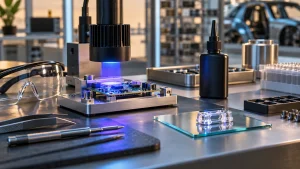
- Fast Assembly and Precision: Essential in electronics, UV curable adhesives bond components like printed circuit boards, displays, and semiconductor devices. Curing in seconds to minutes, they enable rapid assembly and precise part positioning.
- Chemical Resistance and Stability: These adhesives resist chemicals, fuels, and solvents, preserving electronic component integrity.
Automotive Industry
- High Performance Bonding: UV curable adhesives are used for bonding automotive components like glass, plastic trims, and interior parts. Their robust adhesion ensures long-term durability even under stress.
- Weather and Heat Resistance: They withstand harsh environmental conditions, including temperature fluctuations and UV exposure, making them ideal for both exterior and interior applications.
Medical Devices
- Biocompatibility and Sterilization: In medical device manufacturing, UV curable adhesives bond components in devices such as catheters, syringes, and diagnostic tools. They meet stringent biocompatibility standards and can be sterilized without degrading.
- Precision and Speed: Their quick curing time facilitates high-precision assembly, essential for small, intricate medical devices.
Optical and Photonics
- Optical Clarity and Performance: Used in the assembly of lenses, optical fibers, and photonic devices, these adhesives maintain optical clarity and performance. They provide low shrinkage and high refractive index compatibility.
- Fast Curing without Heat: They enable fast assembly without applying heat, crucial for maintaining the delicate balance of optical components.
Packaging
- Tamper-Evident Seals: UV curable adhesives are used in the packaging industry for tamper-evident seals and labels. They ensure product safety and integrity with rapid curing and strong adhesion.
- Environmental Resistance: Their resistance to moisture and chemicals makes them suitable for packaging various products, including food and pharmaceuticals.
- High Strength and Durability: In aerospace, UV curable adhesives are utilized for bonding components in aircraft interiors, structural assemblies, and avionics. They offer high strength and resistance to extreme conditions, including vibration and temperature changes.
- Reduced Weight: Their ability to bond lightweight materials helps reduce overall aircraft weight, contributing to fuel efficiency and performance.
| Industry | Key Applications | Benefits |
|---|---|---|
| Electronics | PCB, Displays, Semiconductors | Fast Assembly, Chemical Resistance |
| Automotive | Glass, Plastic Trims, Interiors | High Performance, Weather Resistance |
| Medical Devices | Catheters, Syringes, Diagnostic Tools | Biocompatibility, Sterilization |
| Optical/Photonics | Lenses, Optical Fibers, Photonic Devices | Optical Clarity, Non-Heat Curing |
| Packaging | Tamper-Evident Seals, Labels | Rapid Curing, Environmental Resistance |
| Aerospace | Aircraft Interiors, Structural Assemblies | High Strength, Reduced Weight |
Adapt UV curable adhesives to enhance manufacturing efficiency tailored to specific industry needs. Sparess, environmental resilience, and quick curing revolutionize production processes.
Factors to Consider When Using UV Curable Adhesives
Selecting the right UV curable adhesive enhances manufacturing efficiency and ensures reliable bonding. Consider these key factors when working with UV curable adhesives.
Substrate Compatibility
- Material Types: UV adhesives bond metals, glass, ceramics, and plastics like polycarbonates and acrylics along with rubbers. Ensure the adhesive is compatible with your specific substrate.
- Surface Preparation: Clean, roughen, or apply a primer to the substrate surface. These steps improve adhesive bonding.
Bonding Requirements
- Tensile and Shear Strength: Select an adhesive with the required tensile and shear strength. These mechanical properties counteract the forces acting on the assembly.
- Examples: For electronics, consider adhesives with high shear resistance. For automotive trims, prioritize tensile strength.
Cure Speed
- Time Efficiency: UV curable adhesives cure within seconds to minutes. This fast bonding minimizes downtime in production lines.
- Examples: In medical device assembly, high cure speed is crucial for quick, precise bonding. In packaging, it ensures rapid sealing processes.
Viscosity
- Flow Characteristics: Viscosity affects the application method and adhesive penetration. Match viscosity to your process and material constraints.
- Examples: Use low viscosity adhesives for tight, even spreading in electronic components. Use high viscosity for gap-filling applications in automotive interiors.
Temperature and Chemical Resistance
- Operational Durability: Assess the adhesive’s resistance to temperature variations and chemical exposure. These properties determine longevity and performance.
- Examples: In aerospace, adhesives must withstand extreme temperatures. In medical applications, they should resist sterilization chemicals.
Dispensing Methods
- Application Precision: Choose dispensing methods like manual application, automated systems, or screen printing. These methods ensure accuracy and consistency.
- Methods: Automated systems provide speed for large scale production. Manual application offers precision for small runs or intricate designs.
Regulatory Compliance
- Standards Adherence: Ensure adhesives comply with industry regulations like RoHS, REACH, or FDA standards. Compliance guarantees safety and legality.
- Examples: In electronics, opt for RoHS-compliant adhesives. For medical devices, ensure FDA approval.
| Property | Typical Value Range | Example Applications |
|---|---|---|
| Cure Speed (seconds) | 5-60 | Electronics, medical devices |
| Tensile Strength (MPa) | 10-50 | Automotive, aerospace |
| Shear Strength (MPa) | 10-30 | Electronics, packaging |
| Viscosity (cP) | 100-100,000 | Electronics, automotive, general bonding |
| Temperature Resistance (°C) | -40 to 150 | Aerospace, automotive |
| Chemical Resistance | High | Medical devices, packaging |
These factors guide the selection and application of UV curable adhesives. Applying this knowledge ensures optimal performance and long-lasting bonds in manufacturing processes.
Challenges in Using UV Curable Adhesives
UV curable adhesives offer numerous advantages, but they also present certain challenges. Understanding these challenges helps ensure their effective use in modern manufacturing processes.
Limited Penetration Depth
UV adhesives need a direct line of sight to cure properly, which limits their use in applications where the adhesive layer is thick or obscured:
- Layer Thickness: When adhesive layers exceed 0.5 inches, UV light often struggles to penetrate, leaving inner layers uncured.
- Obstruction: Objects or materials casting shadows impede effective curing, reducing bond strength.
Need for Specific UV Light Wavelengths
Using the correct UV light wavelength is crucial for efficient adhesion. If the wavelength doesn’t match:
- Curing Inefficiency: The adhesive may not cure properly, resulting in weak bonds.
- Equipment Compatibility: Not all UV light sources are compatible with every adhesive type, necessitating specific equipment.
Safety Concerns
Handling UV curable adhesives involves particular safety measures:
- UV Light Exposure: Prolonged exposure to UV light harms skin and eyes, necessitating protective gear.
- Chemical Sensitivity: Certain adhesives generate fumes and may cause skin irritations or allergies.
Substrate Compatibility
Not all substrates bond well with UV curable adhesives:
- Surface Preparation: Ensuring the surface is clean and properly treated is vital for effective bonding.
- Material Limitations: Some plastics and rubbers may resist UV adhesives, requiring alternative bonding solutions.
Initial Investment Costs
Implementing UV curing systems involves upfront costs:
| Cost Component | Estimated Value |
|---|---|
| UV Light Source | $1,000 – $5,000 |
| Safety Equipment | $100 – $500 per piece |
| Adhesive Supplies | $50 – $200 per liter |
Environmental Considerations
The use of UV curable adhesives has environmental implications:
- Waste Management: Unused adhesive and containers must be disposed of according to hazardous waste regulations.
- Energy Consumption: UV curing systems consume electricity, making energy efficiency an essential factor.
Addressing these challenges with proper planning ensures the benefits of UV curable adhesives outweigh the obstacles, allowing you to maximize their potential in manufacturing processes.
New Developments in UV Curable Adhesive Systems
New developments in UV curable adhesive systems continue to improve modern manufacturing by enhancing speed, versatility, and efficiency. These advancements ensure better performance and wider application, meeting the evolving needs of various industries.
Advanced Formulations and Photoinitiators
Recent innovations in UV curable adhesives focus on advanced formulations and photoinitiators. Enhanced photoinitiators improve curing efficiency, even under lower UV light intensity. This improvement expands usability in environments with variable light conditions.
Benefits:
- Fast curing in low-intensity light conditions
- Increased adhesive performance
- Extended application scope
Improved Adhesive Properties
Manufacturers are developing adhesives with superior mechanical properties. Strength, flexibility, and resistance to environmental factors are prioritized to meet specific application requirements. Enhanced formulations now offer better adhesion to difficult substrates such as certain plastics and metals.
Key Improvements:
- Higher tensile strength and flexibility
- Better resistance to chemicals and temperature variations
- Enhanced adhesion to complex substrates
Environmentally Friendly Formulations
Eco-friendly UV curable adhesives have become crucial due to increasing regulatory pressures and sustainability goals. Research focuses on reducing volatile organic compounds (VOCs) and incorporating bio-based materials without compromising performance.
Eco-friendly Attributes:
- Low VOC content
- Bio-based raw materials
- Compliance with environmental regulations
Smart Adhesive Systems
Integration of smart technologies into UV curable adhesive systems represents a significant advancement. These smart adhesives feature self-sensing capabilities, enabling real-time monitoring of adhesive performance and bond integrity.
Smart Adhesive Features:
- Real-time performance monitoring
- Self-healing properties
- Predictive maintenance through sensing capabilities
Application-Specific Developments
Emerging applications drive the need for specialized UV curable adhesives. Developments are tailored to meet the unique demands of industries such as electronics, medical devices, and automotive.
Electronic Applications:
- High precision bonding for printed circuit boards
- Improved thermal stability and electrical insulation
Medical Devices:
- Biocompatible formulations
- Sterilization-resistant adhesives
Automotive:
- High-performance bonding for structural components
- Resistance to harsh environmental conditions
Data and Statistics
Recent studies and market analyses highlight the growing demand for UV curable adhesives and forecast continuous advancements.
| Attribute | Metric | Example Application |
|---|---|---|
| Curing Time | 1-5 seconds | High-speed production lines |
| Tensile Strength | 30-50 MPa | Structural bonding |
| Heat Resistance | Up to 180°C | Automotive and electronics |
| Adhesion Strength to Glass | >20 MPa | Optical assemblies |
| VOC Content | <50 g/L | Eco-friendly formulations |
Incorporating these new developments ensures that UV curable adhesive systems remain at the forefront of modern manufacturing, providing consistent, reliable, and efficient bonding solutions across diverse industries.
Conclusion
Embracing UV curable adhesives in your manufacturing processes can revolutionize production efficiency and reliability. Their rapid curing times and strong bonds across various substrates make them indispensable in industries like electronics, automotive, and medical devices. By leveraging their unique properties, you can optimize production lines, reduce costs, and ensure high-quality outcomes. As advancements continue, UV curable adhesives will remain at the forefront of modern manufacturing, providing innovative solutions to meet evolving industry demands. Consider integrating these adhesives into your processes to stay competitive and enhance your production capabilities.
Frequently Asked Questions
What are UV curable adhesives?
UV curable adhesives are specialized adhesives that harden and polymerize upon exposure to ultraviolet light. This rapid curing process eliminates the need for heat, mixing, or prolonged curing times, enhancing production speed and efficiency.
How do UV curable adhesives work?
UV curable adhesives cure through a photochemical process. When exposed to UV light, photoinitiators in the adhesive absorb the light, releasing free radicals. These free radicals trigger a polymerization reaction, converting the adhesive from a liquid to a solid state.
What industries benefit from UV curable adhesives?
UV curable adhesives are widely used in industries such as electronics, automotive, medical devices, optics, packaging, and aerospace. They offer high-performance bonding, durability, and rapid curing times, making them suitable for diverse applications.
What are the advantages of using UV curable adhesives?
Advantages of UV curable adhesives include fast curing times, no heat requirement, high bond strength, energy savings, and versatility across various substrates like metals, glass, plastics, and ceramics. They enhance production efficiency and ensure reliable bonding.
Are there different types of UV curable adhesives?
Yes, there are several types, including acrylic, epoxy, urethane, and silicone-based UV curable adhesives. Each type has distinct attributes, making them suitable for specific applications and industries.
How fast do UV curable adhesives cure?
UV curable adhesives typically cure within seconds to a few minutes, depending on the adhesive formulation and the intensity of the UV light source.
What factors should be considered when selecting a UV curable adhesive?
Key factors include substrate compatibility, bonding strength, cure speed, viscosity, temperature and chemical resistance, dispensing methods, and regulatory compliance. Choosing the right adhesive ensures optimal performance and reliable bonding.
What challenges are associated with UV curable adhesives?
Challenges include limited penetration depth, need for specific UV light wavelengths, safety concerns regarding UV light exposure, potential substrate compatibility issues, and initial investment costs for UV curing systems.
How do UV curable adhesives contribute to energy savings?
UV curable adhesives eliminate the need for heat during the curing process, reducing energy consumption. This makes them ideal for bonding heat-sensitive materials and contributes to overall energy savings in manufacturing.
What are some emerging trends in UV curable adhesive technology?
Emerging trends include advanced formulations that enhance curing efficiency, eco-friendly adhesives with reduced VOCs, real-time monitoring and self-healing capabilities, and application-specific developments for industries like electronics and medical devices.