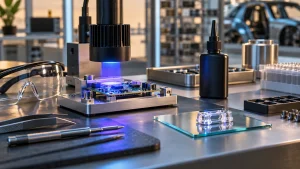

Ever wondered what keeps your favorite products intact and durable? The answer often lies in hot melt adhesives. These versatile bonding agents have revolutionized various industries, from packaging to automotive, thanks to their quick setting times and strong adhesion properties.
Hot melt adhesives offer a myriad of applications that make manufacturing processes more efficient and cost-effective. Whether you’re dealing with product assembly, bookbinding, or even woodworking, these adhesives provide a reliable solution that enhances productivity and performance.
Curious about why industries are making the switch to hot melt adhesives? Let’s explore their key advantages and how they’re transforming modern manufacturing.
Key Takeaways
- Versatile Applications: Hot melt adhesives (HMAs) are extensively used across various industries such as packaging, woodworking, automotive assembly, electronics, textiles, and bookbinding due to their strong bonding and quick setting properties.
- Types of HMAs: Different types of HMAs like EVA, polyolefin, polyamide, polyurethane, and pressure-sensitive adhesives offer unique advantages, making them suitable for specific applications ranging from thermal stability to moisture resistance.
- Advantages: HMAs are popular for their speed, efficiency, and cost-effectiveness. They provide rapid bond formation, high-volume production capabilities, and reduced material usage, making them economically advantageous.
- Environmental Benefits: HMAs are generally VOC-free, contributing to safer working environments and reducing overall waste, which supports sustainable manufacturing practices.
- Challenges: Users must consider temperature sensitivity, substrate compatibility, and application methods to ensure optimal performance. Proper surface preparation, equipment maintenance, and adherence to recommended temperature ranges are crucial for effective use.
Overview of Hot Melt Adhesives
Definition and Properties:
- Hot Melt Adhesives (HMAs): Thermoplastic polymers that are solid at room temperature but liquefy when heated to their softening point. They solidify and form strong bonds as they cool.
- Composition: Made from polymers, plasticizers, resins, and sometimes waxes and antioxidants. These components provide strength, flexibility, and other desired properties.
Applications in Industry
- Sealing Containers: HMAs are widely used in the packaging industry to seal cartons, corrugated boxes, and other containers. They ensure that containers remain sealed under various temperature conditions.
- Food Packaging: Ideal for food packaging due to resistance to extreme temperatures and moisture. Often VOC-free, making them safe for use with food products.
Common Applications in Industry
Packaging
Hot melt adhesives (HMAs) play a crucial role in the packaging industry due to their versatility and strength. They can bond various materials like cardboard, paper, and plastics, ensuring containers remain sealed even under extreme temperatures. These adhesives provide rapid bonding, essential in the rapid packaging sector.
- Versatility and Strength: HMAs bond materials like cardboard, paper, and plastics effectively.
- Efficiency: They ensure rapid bonding, which is vital in rapid environments.
- Food Safety: VOC-free formulations make them ideal for food packaging applications.
Woodworking
In woodworking, hot melt adhesives are preferred for robust bonding of veneers, laminates, and edge banding. They set quickly and offer a strong, durable bond, essential for ensuring the longevity of wooden products.
- Robust Bonding: Ideal for veneers, laminates, and edge banding.
- Quick Setting: Speeds up the manufacturing process.
- Durability: Provides a long-lasting bond for wooden products.
Automotive Assembly
Hot melt adhesives contribute significantly to the automotive sector, primarily in assembling and sealing components. Their quick setting times and strong bonding capabilities enhance manufacturing efficiency.
- Component Assembly: Used for bonding interior trim panels, headliners, and other components.
- Sealing: Ensure parts like door seals and gaskets remain intact.
- Efficiency: Accelerates the production process by reducing curing times.
Electronics
In electronics, HMAs are used for potting and encapsulating components, ensuring protection against moisture and vibrations. They help maintain the integrity of delicate electronic parts.
- Potting and Encapsulation: Protects components from moisture and vibrations.
- Thermal Stability: Withstands high temperatures often present in electronic devices.
- Insulation: Provides electrical insulation to prevent short circuits.
Textiles
Hot melt adhesives aid in bonding fabrics and non-woven materials in textiles. They are vital for creating strong, flexible bonds without compromising fabric integrity.
- Fabric Bonding: Joins various textiles without stitching.
- Non-Woven Materials: Used in products like sanitary pads and filters.
- Flexibility: Maintains fabric integrity while providing strong bonds.
Bookbinding
In bookbinding, HMAs ensure durable bindings for books and manuals. They offer a quick-set solution for binding multiple types of paper, ensuring longevity and resilience.
- Durable Binding: Ensures long-lasting book and manual bindings.
- Quick Set: Speeds up the binding process.
- Versatility: Suitable for various types of paper and cover materials.
Types of Hot Melt Adhesives
Hot melt adhesives (HMAs) are indispensable across various industries due to their rapid bonding and strong adhesion properties. Understanding the different types of HMAs and their specific applications helps in choosing the right adhesive for any given task.
EVA Adhesive
Ethylene-Vinyl Acetate (EVA) adhesives stand out for their quick setting and reliability.
- Applications: Used mainly in the graphic arts industry and bookbinding. Ideal for applications requiring strong initial adhesion and resistance to ink solvents. Applied at temperatures between 325 and 350 degrees Fahrenheit (163 to 176°C), they perform well in temperatures ranging from 20 to 120°F (-6.6 to 48.8°C).
- Characteristics: EVA adhesives have a unique property where they do not snap shut if released, much like a mouse trap index. This feature enhances their usability in consistent application settings.
Polyolefin Adhesive
Polyolefin adhesives are known for their excellent chemical resistance and durability.
- Applications: These adhesives excel in packaging, automotive, and textiles. They offer exceptional bonding for difficult-to-bond surfaces, providing a strong bond for various materials like polyethylene and polypropylene.
- Characteristics: They exhibit impressive chemical resistance and durability, making them suitable for harsh environments and long-lasting applications. Polyolefin adhesives are particularly effective in ensuring quality and longevity in end products.
Polyamide Adhesive
Polyamide adhesives are prized for their thermal stability and high strength.
- Applications: Commonly used in electronics, automotive, and woodworking industries. Their capability to withstand high temperatures makes them ideal for applications that involve heat exposure, such as potting and encapsulation in electronics.
- Characteristics: These adhesives provide excellent resistance to oils, solvents, and other chemicals. Their thermal stability ensures that they maintain their bond strength even under high-temperature conditions, greatly improving product durability.
Polyurethane Adhesive
Polyurethane adhesives offer unmatched flexibility and moisture resistance.
- Applications: Widely used in the construction, automotive, and footwear industries. These adhesives are suitable for applications requiring elasticity and durability, such as bonding different materials where flexibility is key.
- Characteristics: Known for their superior flexibility and resistance to moisture and humidity, polyurethane adhesives maintain their structural integrity in variable conditions. They are particularly useful for outdoor applications and products needing frequent movement or flexibility.
Pressure Sensitive Adhesive
Pressure-sensitive adhesives (PSAs) bond upon applying light pressure.
- Applications: Extensively used in labeling, tapes, and graphics. PSAs are ideal for applications needing temporary or permanent bonding solutions without the need for heat or solvent activation.
- Characteristics: These adhesives are versatile and user-friendly, providing instant bonding without requiring complex preparation or extensive curing times. They are available in various formulations, catering to both removable and permanent applications, making them highly adaptable for different needs.
Each type of hot melt adhesive offers specific benefits and caters to particular applications. Understanding these types ensures you select the appropriate adhesive to optimize performance and durability in your projects.
Advantages of Hot Melt Adhesives
Hot melt adhesives (HMAs) offer numerous advantages that make them indispensable in various industries. Their unique properties enable efficient and effective bonding solutions.
Speed and Efficiency
HMAs are known for their quick application and fast set times.
- Rapid Bond Formation: As HMAs cool, they form bonds swiftly, enabling fast processing and efficient manufacturing.
- High-Volume Production: Industries like packaging and textiles rely on HMAs to maintain high throughput due to minimal downtime.
Cost-effectiveness
HMAs often prove more economical compared to other adhesives.
- No Thickness Loss: Unlike solvent-based adhesives, HMAs maintain their thickness upon solidification.
- Reduced Material Usage: Because of their efficient bonding, less adhesive is required, leading to cost savings over time.
Versatility
HMAs excel in bonding a wide variety of substrates across different sectors.
- Multiple Substrates: These adhesives can bond paper, rubber, ceramics, metals, plastics, glass, and wood.
- Across Industries: Packaging, woodworking, electronics, and textiles are just a few fields where HMAs are extensively used due to their versatile nature.
Environmental Benefits
HMAs provide several environmental advantages over traditional adhesives.
- VOC-Free: HMAs do not emit volatile organic compounds (VOCs), making them safer for both workers and the environment.
- Reduced Waste: Efficient bonding leads to less adhesive waste, contributing to more sustainable manufacturing processes.
Challenges and Considerations
When using hot melt adhesives (HMAs) in various industries, several challenges and considerations must be addressed to ensure optimal performance and durability.
Temperature Sensitivity
Definition: The performance of HMAs can vary significantly with temperature changes.
- High Temperatures: HMAs may lose strength, causing bonded materials to separate. In applications with sustained high temperatures, consider using heat-resistant variants.
- Low Temperatures: Cold conditions can make HMAs brittle, affecting their flexibility and adhesion. Select adhesives specifically designed for low-temperature performance when necessary.
Surface Compatibility
Definition: The effectiveness of HMAs largely depends on the substrate material’s surface properties.
- Non-porous Surfaces: Materials like metals and plastics might require surface preparation, such as priming, to ensure proper adhesion.
- Porous Surfaces: Paper and fabric easily absorb adhesives, but they may require more adhesive to form a strong bond.
Open Time and Setting Time
Definition: Open time is the period during which the adhesive remains tacky after application; setting time is how quickly it solidifies.
- Short Open Time: Provides quick handling but may not be suitable for complex assemblies requiring precise adjustments.
- Longer Setting Time: Necessary for intricate applications but can slow down production processes.
Application Methods
Definition: Different application techniques can impact both the efficiency and the effectiveness of HMAs.
- Spray Systems: Ideal for applying thin, even layers but require specialized equipment.
- Roll Coat and Extrusion: Suitable for continuous production lines but may need precise control to avoid waste.
- Hand Application: Versatile for small-scale tasks but less consistent for larger operations.
Environmental Concerns
Definition: The production and disposal of HMAs can raise environmental considerations.
- VOC Emissions: Although HMAs are generally low in VOCs, ensure disposal methods align with environmental regulations to minimize impact.
- Recyclability: Consider adhesives that offer recycling options to support sustainable manufacturing practices.
Cost Implications
Definition: The initial and long-term costs of using HMAs can influence their feasibility for various applications.
- Initial Costs: Involve the price of adhesive and application equipment.
- Maintenance and Operation Costs: Include regular upkeep of dispensing machinery and potential waste management.
Data Table: Temperature Performance of Common HMAs
| Type of HMA | High Temperature Threshold | Low Temperature Threshold |
|---|---|---|
| EVA | Up to 104°C (220°F) | Down to -20°C (-4°F) |
| Polyolefin | Up to 121°C (250°F) | Down to -40°C (-40°F) |
| Polyamide | Up to 180°C (356°F) | Down to -30°C (-22°F) |
| Polyurethane | Up to 140°C (284°F) | Down to -10°C (14°F) |
| Pressure Sensitive | Up to 71°C (160°F) | Down to -20°C (-4°F) |
Application Tips
To maximize the benefits of using HMAs:
- Surface Preparation: Clean and, if necessary, prime the surfaces to be bonded.
- Temperature Control: Apply adhesives within their recommended temperature ranges.
- Equipment Maintenance: Regularly service application equipment to ensure consistent performance.
- Proper Storage: Store adhesives as per manufacturer guidelines to maintain their efficacy.
By considering these challenges and using informed approaches, you can leverage the full potential of hot melt adhesives in your applications.
Conclusion
Hot melt adhesives are indispensable across various industries due to their efficiency, versatility, and environmental benefits. By understanding the types and applications of HMAs, you can select the right adhesive to enhance your manufacturing processes. These adhesives not only improve production speed and cost-effectiveness but also contribute to sustainable practices. As you integrate HMAs into your operations, consider the specific requirements and conditions to maximize their advantages and ensure optimal performance. Embrace the transformative potential of hot melt adhesives to stay ahead in today’s competitive market.
Frequently Asked Questions
What Are Hot Melt Adhesives?
Hot melt adhesives (HMAs) are thermoplastic polymers that are solid at room temperature but liquefy when heated. They solidify quickly upon cooling, forming a strong bond. They are used in various industries for efficient and durable bonding.
What Are the Main Components of HMAs?
The primary components of HMAs include polymers, plasticizers, resins, and sometimes waxes and antioxidants. These elements contribute to the adhesive’s strength, flexibility, and bonding capabilities.
What Are the Advantages of Using HMAs?
HMAs offer quick setting times, strong adhesion, cost-effectiveness, and versatility. They are also VOC-free, making them environmentally friendly and suitable for food packaging applications.
In Which Industries Are HMAs Commonly Used?
HMAs are widely used in packaging, woodworking, automotive, electronics, textiles, and bookbinding industries due to their strong bonding properties and efficiency.
What Is the Role of HMAs in the Packaging Industry?
In packaging, HMAs are used to bond materials like cardboard, paper, and plastics. They ensure containers remain sealed, even under extreme temperatures, making them ideal for food packaging.
How Do HMAs Benefit the Automotive Sector?
In the automotive industry, HMAs are used for assembling and sealing components, which enhances manufacturing efficiency and ensures durable bonds.
Why Are HMAs Preferred in Woodworking?
In woodworking, HMAs provide quick-setting and robust bonding for veneers and laminates, making them ideal for durable and efficient manufacturing processes.
How Do HMAs Enhance Electronics Manufacturing?
In electronics, HMAs protect delicate components by potting and encapsulating them, offering protection against moisture and vibrations.
What Are the Different Types of HMAs?
The main types of HMAs include Ethylene-Vinyl Acetate (EVA), Polyolefin, Polyamide, Polyurethane, and Pressure Sensitive Adhesives (PSAs). Each type has unique properties suited for specific applications.
How to Apply Hot Melt Adhesives?
HMAs are applied in liquid form by heating to their softening point and then rolling, spraying, or extruding onto surfaces. It is crucial to maintain proper temperature and open time for optimal adhesion.
What Are the Key Considerations When Using HMAs?
Important considerations include temperature sensitivity, surface compatibility, open and setting times, and application methods. Ensuring proper surface preparation and equipment maintenance is essential for effective bonding.