To get super glue off clothes, let the cyanoacrylate dry, scrape away the hardened surface, then test acetone on a hidden seam before dabbing the stain from the back onto white paper towels. Use acetone only on compatible fibers, avoid heat until the residue is gone, and choose freezing or professional cleaning for delicate or acetate garments.
Key Facts at a Glance
- Dried cyanoacrylate is usually easier to remove than wet super glue because scraping does not spread the liquid.
- Acetone can dissolve super glue but can also dissolve acetate, triacetate, and some modacrylic fibers.
- A hidden-seam test is necessary because dyes, coatings, and fabric blends react differently to solvents.
- Freezing for 45-60 minutes can make a thick glue deposit brittle enough to lift from delicate fabric.
- Never tumble-dry a garment while any glue residue remains; heat can harden and anchor the residue.
- Typical home treatment costs $0-$10 and takes 20-60 minutes, excluding laundering and drying.
Why Super Glue Sticks to Fabric
Super glue is a cyanoacrylate adhesive that cures when trace moisture triggers rapid polymerization. The liquid penetrates spaces between fibers, then becomes a rigid acrylic-like plastic that grips the weave mechanically.
That behavior explains the safest first move: do not smear wet glue. Rubbing pushes uncured adhesive farther into the fabric and increases the area that must be treated. Cured glue forms a surface crust that can often be reduced mechanically before any solvent touches the garment.
| Glue condition | Main problem | Best first action | Typical treatment time |
|---|---|---|---|
| Wet, less than 5 minutes old | Spreading and accidental bonding | Keep fabric flat; remove excess without rubbing | 5-15 minutes |
| Tacky, partly cured | Smearing into fibers | Wait until firm, then lift edges | 15-30 minutes |
| Hard, thin deposit | Mechanical grip in weave | Scrape gently, then spot-test solvent | 20-45 minutes |
| Thick, fully cured layer | Solvent cannot reach the base quickly | Reduce layers gradually | 45-90 minutes |
Before You Start
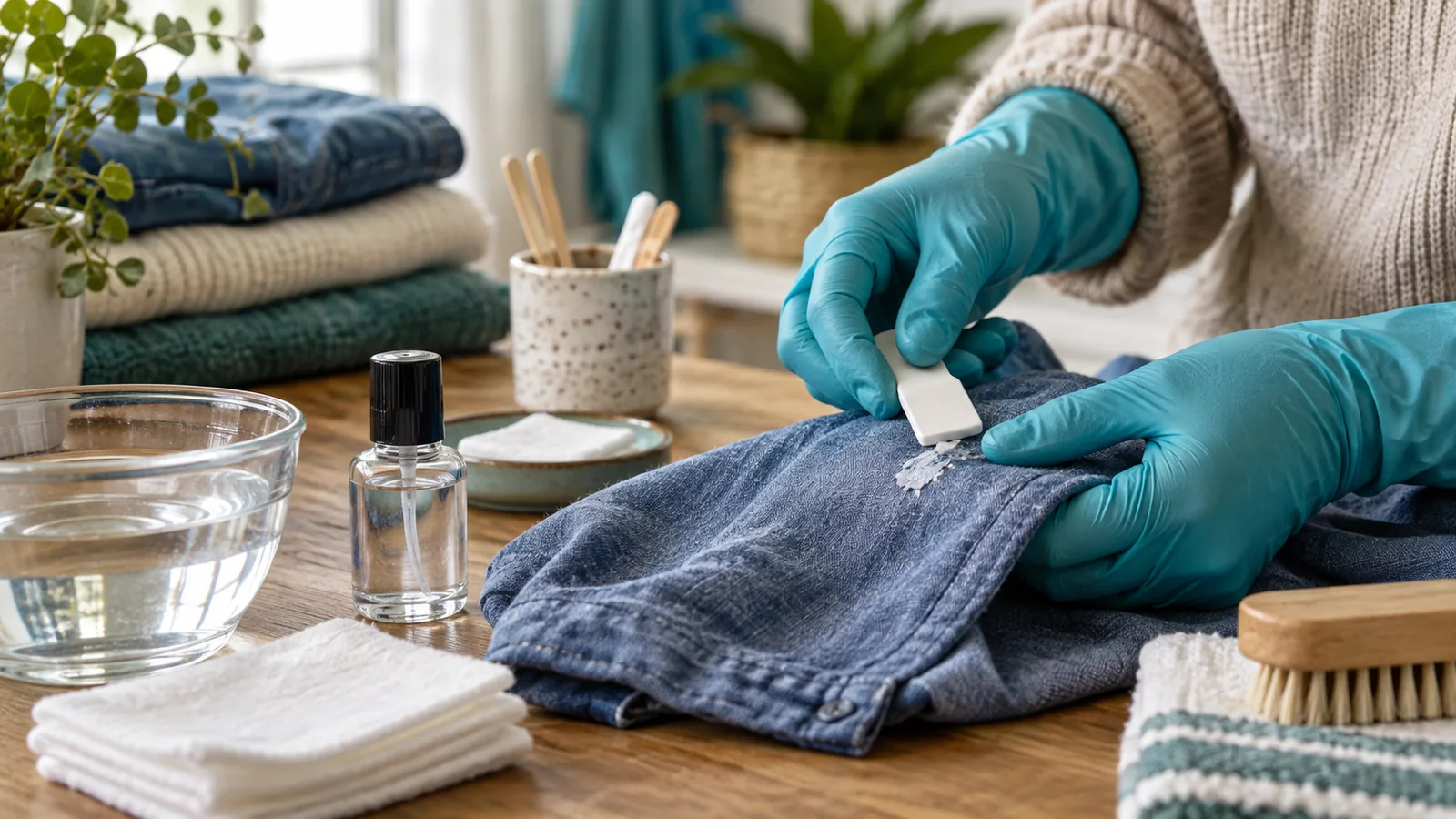
Prepare the garment, work area, and safety equipment before applying any chemical. You need white paper towels, a blunt spoon or plastic scraper, cotton swabs, liquid laundry detergent, a plastic bag for freezing, and acetone only if the care label and fiber test permit it.
Work beside an open window, keep acetone away from flames and heat, and wear disposable nitrile gloves. Acetone is highly flammable and can irritate skin; never mix it with bleach, ammonia, or other cleaning products.
| Item | Required amount | Purpose | Typical cost |
|---|---|---|---|
| White paper towels | 6-12 sheets | Catch dissolved adhesive | $1-$3 |
| Plastic scraper or spoon | 1 | Lift hardened crust | $0-$3 |
| Cotton swabs | 4-10 | Control solvent application | $1-$4 |
| Pure acetone | 1-2 teaspoons per round | Dissolve compatible glue residue | $3-$8 |
| Liquid laundry detergent | 1 teaspoon | Remove solvent and oily residue | $0.10-$0.50 |
| Resealable plastic bag | 1 | Hold garment during freezing | $0-$2 |
How to Get Super Glue off Clothes Step by Step
The complete process has five stages and usually takes 20-60 minutes for a small stain. Success depends most on fabric compatibility, because the wrong solvent can damage the garment faster than the adhesive can be removed.
Step 1: Let the Super Glue Harden
Place the garment flat and leave the affected area untouched for 15-30 minutes, or until the glue feels hard rather than tacky. Do not use a hair dryer, iron, or clothes dryer to speed curing.
You will know the glue is ready when a fingernail pressed beside the deposit does not drag a wet film across the fabric. If the glue remains liquid, blot only the surrounding excess with a dry white towel and avoid contact with the bonded area.
Common mistake: Wiping the wet adhesive.
Fix: Stop spreading it, allow the remaining glue to cure, and treat the larger affected area as one stain.
Step 2: Remove the Surface Crust
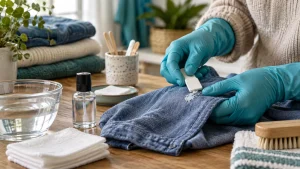
Slide the edge of a plastic scraper, spoon, or dull butter knife under the thickest edge. Lift in short strokes parallel to the fabric surface, applying less pressure when the fibers begin to rise.
A soft toothbrush can loosen tiny flakes from sturdy cotton or denim after the main deposit has been lifted. Do not use a razor on jersey knit, silk, wool, fleece, or loosely woven fabric because one cut can become a run or hole.
Success checkpoint: The glue should be reduced to a thin film or small points rather than a raised lump.
Step 3: Read the Fiber Content and Test the Solvent
Check the care label for acetate, triacetate, modacrylic, silk, wool, elastane, coatings, and decorative prints. Dab one drop of the proposed solvent onto an inside seam, wait two minutes, then press a white towel against it.
Stop if the fabric softens, melts, becomes sticky, changes texture, or transfers dye. A successful test leaves the fiber intact and produces little or no color transfer.
| Fabric or garment feature | Acetone position | Safer first choice | Recommended escalation |
|---|---|---|---|
| Cotton or linen | Usually suitable after testing | Scrape, then acetone | Cleaner for large stains |
| Denim | Usually suitable after testing | Scrape and controlled dabbing | Re-dyeing if fading occurs |
| Polyester | Test carefully; blends vary | Scrape, then small solvent test | Professional cleaner for coated fabric |
| Nylon | Test first; solvent response varies | Mechanical removal | Cleaner if fibers soften |
| Elastane blend | Avoid soaking; test hidden seam | Short contact only | Professional treatment |
| Wool or silk | Do not assume acetone is safe | Freeze and lift | Specialist dry cleaner |
| Acetate or triacetate | Do not use acetone | Freeze and lift | Professional cleaner |
| Screen print or waterproof coating | Solvent may strip finish | Mechanical removal | Garment-care professional |
Step 4: Dissolve Compatible Residue With Acetone
Place two or three folded white paper towels under the stained fabric. Moisten a cotton swab with pure acetone, then dab the glue from the outer edge toward the center.
Use approximately 0.25-0.5 teaspoon per application for a coin-sized stain. Wait 1-3 minutes, lift the loosened residue with a fresh towel, and repeat with clean sections of towel so dissolved glue is not transferred back.
Do not pour acetone directly onto the garment. Controlled dabbing limits halo formation, dye loss, and solvent exposure to nearby trims.
Success checkpoint: Softened glue transfers as clear or white residue to the paper towel.
Common mistake: Rubbing the spot in circles.
Fix: Press vertically, replace the towel, and work from the reverse side whenever the fabric allows.
Step 5: Treat, Wash, and Air-Dry
Apply about one teaspoon of liquid laundry detergent to the treated area and leave it for 5-10 minutes. Rinse according to the care label, then wash at the warmest permitted setting.
Inspect the garment while it is still wet. Air-dry it on a hanger or drying rack. If a hard or shiny patch remains, repeat treatment before using a tumble dryer.
| Garment condition after washing | Meaning | Next action |
|---|---|---|
| No hard patch, no odor | Adhesive and solvent removed | Air-dry fully |
| White, rigid specks | Polymer residue remains | Scrape and repeat spot treatment |
| Oily ring | Solvent or adhesive residue | Detergent pretreatment and rewashing |
| Lighter color | Dye was removed | Stop solvent use; consider repair |
| Melted or rough fiber | Solvent damage | Stop treatment; seek professional advice |
Which Method Works Best Without Acetone?
Freezing is the best no-acetone option for delicate garments, while mechanical scraping is the lowest-risk method for a small, raised deposit. Dish soap and water may help with very fresh contamination, but they rarely dissolve fully cured cyanoacrylate.
Freezing and Mechanical Removal
Put the dry garment in a sealed plastic bag and freeze it for 45-60 minutes. Remove it, place the glue on a firm flat surface, and flex the surrounding fabric gently before lifting brittle fragments with a fingernail or plastic edge.
Freezing does not chemically dissolve the adhesive. It reduces flexibility, so the deposit may fracture instead of stretching between fibers. This method is useful for wool, silk, acetate, and embellished clothing, but it may leave a thin film that requires professional treatment.
Soap and Water
For a fresh, very small spot on washable cotton, soak the area in cool or lukewarm water with liquid detergent for 30-60 minutes after the adhesive has cured. Work the surrounding fabric gently and rinse.
Water is not a reliable solvent for hardened cyanoacrylate. It can remove surrounding dirt and detergent-compatible residue, but a thick glue layer usually requires scraping, a compatible solvent, or specialist cleaning.
Rubbing Alcohol
Isopropyl alcohol is not a dependable substitute for acetone on cured super glue. It may soften surface contamination or help clean a nearby mark, but repeated soaking can spread dissolved residue and affect dyes or finishes.
| Method | Best use | Typical time | Main limitation |
|---|---|---|---|
| Acetone | Tested cotton, linen, some denim | 20-45 minutes | Fiber and dye damage |
| Freezing | Silk, wool, acetate, raised deposits | 1-2 hours | Often leaves fine residue |
| Detergent soak | Fresh contamination on washable fabric | 30-60 minutes | Weak against cured glue |
| Isopropyl alcohol | Nearby residue, not thick glue | 15-30 minutes | Usually does not dissolve cured adhesive |
| Commercial debonder | Controlled craft or industrial use | 30-60 minutes | Chemical and fabric compatibility risks |
Can You Use Acetone on Every Fabric?
No. Acetone should not be used on acetate, triacetate, or modacrylic, and it requires a hidden-area test on polyester, nylon, elastane blends, dyed fabric, prints, and waterproof coatings.
Acetone can dissolve or severely deform some synthetic fibers, producing a shiny, sticky, or permanently weakened patch. Nail polish remover is also less predictable than pure acetone because many formulas contain water, fragrance, oils, or conditioning additives.
Nitromethane-based cyanoacrylate debonders can work on some cured adhesive deposits, but they are not automatically safer for clothing. Use them only when the product label permits textile contact, with ventilation and a hidden-fabric test; otherwise, a cleaner is the safer choice.
How Should You Treat Different Garments?
Cotton, linen, and many denim garments usually tolerate carefully tested acetone, while silk, wool, acetate, coated clothing, and expensive tailoring deserve mechanical treatment or professional cleaning first. Polyester and nylon require testing because blends and finishes vary significantly.
Cotton, Linen, and Denim
Scrape the deposit, place a towel underneath, and use short acetone applications. Dark denim may show a pale ring even when the glue is gone because the solvent affects indigo dye or removes surface finish.
Polyester, Nylon, and Elastane
Use the smallest possible quantity and the shortest contact time. Stretch fabrics can retain solvent in their knit structure, while heat-transfer graphics may wrinkle, dissolve, or lose adhesion.
Silk and Wool
Avoid aggressive brushing and routine acetone treatment. Freeze the garment, lift only brittle surface fragments, and take the item to a cleaner if the adhesive has entered the weave.
Acetate, Triacetate, and Modacrylic
Do not apply acetone. These fibers can soften or dissolve on contact, leaving a hole or distorted area that laundering cannot reverse.
Printed, Coated, or Water-Resistant Clothing
Treat a hidden seam and an inconspicuous part of the print separately. A solvent may remove the glue while also stripping polyurethane coating, screen-print ink, reflective film, or waterproof finish.
What Does Removal Cost and How Long Does It Take?
A small home-treated stain typically costs $0-$10 and takes 20-60 minutes of active work, while professional cleaning commonly costs about $10-$40 for a simple garment and more for tailoring, specialty fabric, or extensive adhesive damage.
Prices vary by location, garment construction, and whether the cleaner must restore color or finish. The longer time range includes repeated solvent applications, washing, and air-drying.
| Situation | Home cost | Active treatment | Likely outcome |
|---|---|---|---|
| Small dried spot on cotton | $1-$8 | 20-40 minutes | Often substantial removal |
| Thick deposit on denim | $3-$10 | 30-60 minutes | Removal with possible dye halo |
| Small spot on polyester | $1-$8 | 20-45 minutes | Depends on blend and finish |
| Silk or wool garment | $0-$5 before cleaning | 45-90 minutes | Partial removal by freezing |
| Tailored or high-value clothing | $10-$40+ | Cleaner-dependent | Best chance of preserving finish |
Common Mistakes and How to Fix Them
Rubbing Wet Glue
Rubbing spreads uncured cyanoacrylate and can bond neighboring fibers. Let the deposit harden, then reduce it from the surface.
Using Acetone on Acetate
Acetone damage is not a stain that can be washed out. Stop immediately if the fiber softens, rinse only if the care instructions allow, and seek a textile professional.
Applying Too Much Solvent
Flooding creates a large wet zone, increases dye migration, and can carry glue deeper into the weave. Use a damp swab, not a soaked garment.
Using Heat Too Early
A dryer, iron, or heated pressing tool can harden residue and set surrounding discoloration. Air-dry until inspection confirms the glue is gone.
Scrubbing With a Colored Cloth
Dye from a rag can transfer when solvent is present. Use white paper towels or an undyed white cotton cloth.
Treating the Stain Without Testing the Print
A shirt graphic, reflective strip, or water-resistant coating may fail before the base fabric does. Test decorative surfaces separately.
What If the Glue Will Not Come Off?
A thick layer often needs several short cycles rather than one long soak. Scrape the softened top layer, replace the paper towel underneath, and repeat with 1-3 minute acetone contact periods only when the fabric passes the compatibility test.
If the glue remains white and rigid after treatment, the solvent may not be reaching the base. If the fabric itself becomes rough, sticky, lighter, or misshapen, stop: continuing can create permanent textile damage without improving adhesive removal.
| Symptom | Probable cause | Correct response |
|---|---|---|
| White crust remains | Cured polymer in weave | Scrape, spot-treat, rewash |
| Glue spreads outward | Excess solvent or rubbing | Stop, let dry, work from edge inward |
| Fabric becomes sticky | Fiber or coating reaction | Stop solvent; rinse only per care label |
| Color fades | Dye solubilization or stripping | Stop acetone; consider color repair |
| Hard spot survives three cycles | Deep penetration | Use a professional cleaner |
| Odor remains after washing | Solvent trapped in fabric | Air outdoors in shade; avoid heat and flame |
When Should You Use a Professional Cleaner?
Choose a professional cleaner immediately for silk, acetate, triacetate, wool tailoring, leather-trimmed clothing, wedding garments, large stains, or garments whose care labels prohibit home solvent treatment. Tell the cleaner that the stain is cyanoacrylate, not ordinary craft glue.
Professional cleaning cannot restore fiber dissolved by acetone or replace dye that has already been stripped. Its value is preventing that damage before treatment and handling garments with linings, coatings, structured seams, or difficult dye systems.
FAQ
Can a Washing Machine Remove Super Glue?
A washing machine rarely removes cured super glue by itself. Washing may remove detergent-soluble residue around the adhesive, but the hardened cyanoacrylate usually remains attached to the fibers. Scrape and spot-treat first, then wash only after the visible deposit has been reduced.
Does Vinegar Remove Super Glue From Clothing?
Vinegar is not a reliable solvent for cured cyanoacrylate. It may alter odor or help with unrelated mineral residue, but it does not replace mechanical removal and a fabric-compatible adhesive treatment. Do not combine vinegar with bleach or other cleaning chemicals.
Can Baking Soda Help Remove the Stain?
Baking soda can act as a mild abrasive, but it does not dissolve cured super glue. On sturdy fabric, a small amount may help lift loose flakes after freezing, yet rubbing can roughen fibers and spread residue. Use a plastic scraper instead when possible.
How Do You Remove Super Glue From a Shirt With a Printed Design?
Protect the printed area and test any solvent on the print itself, not only on the shirt fabric. Acetone can dissolve or dull screen printing, heat-transfer vinyl, reflective ink, and waterproof coatings. For valuable printed garments, use freezing or professional cleaning.
What Happens if Acetone Fades the Clothing?
Acetone-related dye loss is usually permanent because the solvent has removed or altered color rather than leaving removable dirt. Stop applying solvent, wash according to the care label, and consider a matching fabric dye or professional color restoration for a repairable garment.
Is Dried Super Glue Easier to Remove Than Wet Glue?
Dried super glue is generally safer to handle because it no longer spreads as readily. The hardened deposit can be scraped and treated in a controlled area. Wet glue can penetrate farther into the weave and may bond fabric folds together, so wiping it usually makes the stain worse.
The Bottom Line
To get super glue off clothes, let the adhesive dry, scrape away the raised deposit, test the fabric, and use small amounts of acetone only on compatible fibers. Freeze delicate or acetate garments instead, avoid the dryer until inspection is complete, and send valuable or chemically sensitive clothing to a professional cleaner.