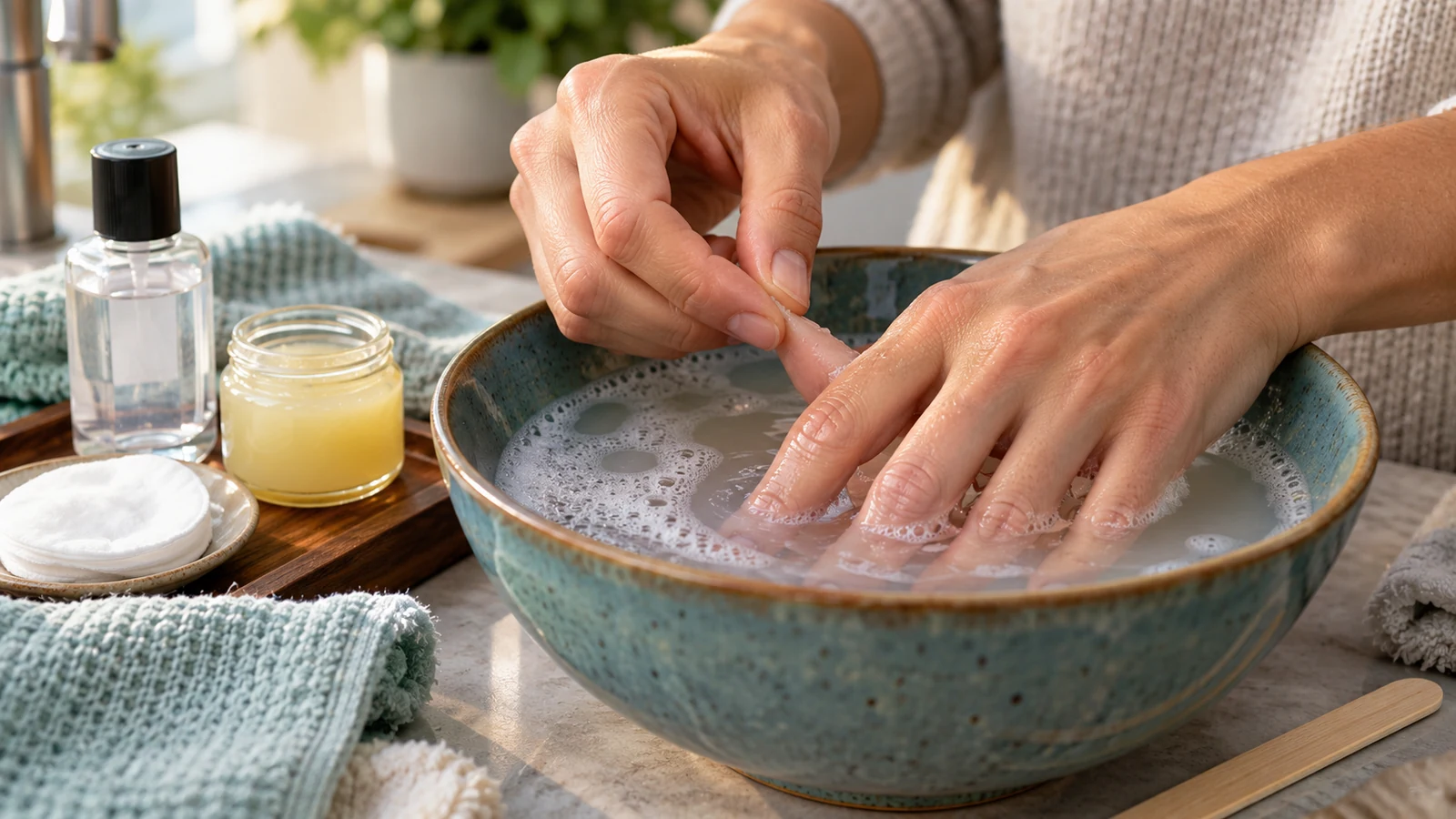
To remove super glue from skin, soak the area in warm soapy water, gently roll or rotate the bonded surfaces, and use acetone only on intact skin away from eyes, mouth, and broken skin. Petroleum jelly or mineral oil provides a slower, milder option. Never pull bonded skin apart, cut the glue, or use heat.
Key Facts at a Glance
Super glue is cyanoacrylate, an adhesive that hardens rapidly when moisture triggers polymerization.
Warm soapy water is the safest first choice for most small skin deposits and stuck fingers.
Acetone works fastest on fully cured glue but can irritate, dry, or damage broken skin.
Petroleum jelly and mineral oil lubricate the bond and may loosen it without solvent exposure.
Cotton, wool, and cyanoacrylate can generate intense heat together, so do not wipe wet glue with cotton fabric or cotton wool.
A glued eye, severe pain, blistering, numbness, poor circulation, or extensive skin exposure requires urgent medical advice.
What Is Super Glue, and Why Does It Stick to Skin?
Super glue is a cyanoacrylate adhesive that cures when moisture triggers anionic polymerization. Skin contains water and microscopic surface irregularities, so liquid cyanoacrylate hardens quickly inside the ridges of the outer epidermis.
The adhesive forms a rigid plastic film on the surface. It does not permanently fuse living tissue, and the outer skin normally sheds as part of its ordinary renewal process. A thin residue may therefore disappear within several days even without solvent treatment.
The main danger is mechanical injury, not permanent chemical bonding. Forcefully separating two glued fingers can tear the epidermis, while aggressive solvent use can cause dryness, dermatitis, or pain. The safest method depends on the location, amount of glue, skin condition, and whether skin is attached to another object.
How Long Does Super Glue Stay on Skin?
A thin, painless layer commonly wears away within 1-3 days, although thicker deposits can remain for up to a week. The exact duration depends on glue thickness, hand washing, friction, skin shedding, and whether the adhesive is trapped around a nail.
Do not scratch off a harmless, dry film merely to remove every last trace. Covering the area with petroleum jelly and washing normally often produces less irritation than repeated solvent exposure.
| Situation | Typical resolution time | Safest first action | Escalation point |
|---|---|---|---|
| Small dry spot on intact finger | 1-3 days | Warm water and soap | Pain, redness, or spreading irritation |
| Two fingers lightly bonded | 5-30 minutes | Soak and rotate gently | Numbness or color change |
| Thick glue on palm | 10-30 minutes | Soap, then oil or acetone if suitable | Blistering or severe burning |
| Glue under a fingernail edge | Several hours to 3 days | Soak and moisturize surrounding skin | Nail-bed pain or bleeding |
| Glue on cracked or abraded skin | Variable, often several days | Do not use acetone; rinse gently | Open wound, swelling, or infection signs |
How to Remove Super Glue From Skin Step by Step
Most uncomplicated skin exposures can be managed in five steps over 5-30 minutes. The factor that determines success is gentle loosening rather than force: cyanoacrylate becomes easier to release when the skin stays lubricated and receives enough time.
Before You Start
| Requirement | Typical specification |
|---|---|
| Time | 5-30 minutes, with repeat soaking if needed |
| Difficulty | Low for surface residue; moderate for bonded fingers |
| Cost | $0 for soap and water; approximately $3-$10 for acetone or petroleum jelly |
| Materials | Bowl, comfortably warm water, liquid soap, towel, petroleum jelly |
| Optional solvent | 100% acetone or acetone-based nail-polish remover |
| Ventilation | Open window or ventilated room for acetone |
| Skin condition | Acetone only on intact skin, never inside eyes or mouth |
Remove rings before swelling develops. Check that the skin is not attached to an electrical appliance, hot surface, sharp object, or moving machinery. If a child is involved, keep solvent bottles away from the child’s face and supervise every step.
Step 1: Wash and Soak the Area
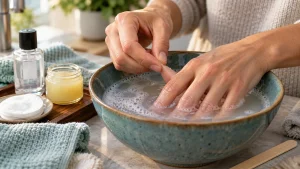
Place the affected skin in comfortably warm, soapy water for 5-10 minutes. Use hand soap or dish soap, but avoid hot water because heat does not safely melt cyanoacrylate and can increase burns or swelling.
Keep the skin submerged if possible. If the glue is on a large area, apply a warm, wet soapy cloth and replace it as it cools.
You will know it is working when: the glue turns less rigid, the skin wrinkles slightly from soaking, or an edge begins to lift.
Common mistake: starting to pull after 30 seconds. A short rinse rarely softens a fully cured deposit.
Step 2: Roll or Rotate, Never Yank
When fingers are bonded, move them by rotating, rocking, or sliding them parallel to each other. Work from the edge rather than pulling directly away, because peeling force concentrates stress on the skin.
Massage a small amount of petroleum jelly around the seam if the fingers remain tight. A blunt plastic card may help guide lubricant into an external edge, but never push a sharp tool between the fingers.
You will know it is working when: the bonded surfaces move slightly without skin whitening, tearing, or sharp pain.
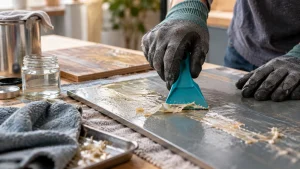
Common mistake: using a knife, razor, nail file, or metal pick. Those tools can puncture skin before the glue releases.
Step 3: Add Oil or Petroleum Jelly
Apply petroleum jelly, mineral oil, olive oil, or another skin-safe oil to the glue and surrounding skin. Massage gently for 5-10 minutes, then allow another 5 minutes for lubrication to spread along the contact surface.
Oil does not reliably dissolve cured cyanoacrylate. It reduces friction and helps the adhesive release from the outer skin, making it a useful option for children, dry skin, and areas where acetone is unsuitable.
You will know it is working when: the glue rolls, flakes, or slides rather than remaining sharply attached.
Common mistake: scraping immediately after applying oil. Lubrication needs contact time.
Step 4: Use Acetone Only on Suitable Skin
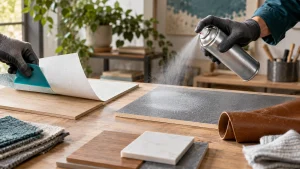
For a stubborn deposit on intact skin, apply a small amount of 100% acetone or acetone-based nail-polish remover to the glue for 30-90 seconds. Gently rub or roll the softened residue, then wash the area with soap and water and apply moisturizer.
Acetone is unsuitable for cuts, eczema flares, severely dry skin, lips, eyelids, the eye surface, and mucous membranes. Keep it away from flames, heaters, and poorly ventilated rooms. Cosmetic nail-polish remover may contain oils, fragrances, or water, so it can work more slowly than pure acetone.
You will know it is working when: the hard film softens and begins to break into small pieces.
Common mistake: soaking indefinitely. Repeated long exposure increases irritation without guaranteeing faster release.
Step 5: Wash, Moisturize, and Monitor
Wash away solvent, oil, and adhesive residue with mild soap and warm water. Pat dry instead of rubbing, then apply a fragrance-free moisturizer or petroleum jelly.
The skin may feel dry for several hours after acetone. Do not continue scraping if the remaining adhesive is painless and superficial; normal shedding is safer.
You will know it is finished when: the skin moves normally, no sharp adhesive edge remains, and redness is mild or absent.
Common mistake: applying acetone again to already raw skin. Switch to gentle washing and medical advice if irritation progresses.
Which Super Glue Removal Method Should You Choose?
Warm soapy water is the best default, acetone is the fastest suitable option, and oil or petroleum jelly is the gentlest practical choice. No method is appropriate for every body site, because the speed advantage of acetone is outweighed by its irritation risk on damaged or sensitive skin.
| Method | Typical working time | Best use | Main limitation |
|---|---|---|---|
| Warm soapy water | 5-15 minutes | Small deposits and bonded fingers | May need several cycles |
| Petroleum jelly or mineral oil | 10-20 minutes | Children, dry skin, delicate areas | Lubricates rather than dissolves |
| Pure acetone | 30-180 seconds per application | Thick cured glue on intact skin | Irritates and dries skin |
| Acetone nail-polish remover | 1-5 minutes | Household substitute on intact skin | Formulation varies by brand |
| Natural shedding | 1-7 days | Painless superficial residue | Does not solve restricted movement |
What Is the Fastest Safe Method?
Acetone is generally the fastest method for fully cured super glue on intact skin, often taking 30-180 seconds per application. Warm soapy water remains the safer first step when fingers are bonded, because it loosens the contact gradually and reduces the chance of tearing skin.
Use acetone sparingly on one small area. Do not pour it over the whole hand, and never use it near the eyes, mouth, genitals, broken skin, or a child’s face.
Does Oil Dissolve Super Glue?
Oil does not chemically dissolve cured cyanoacrylate as efficiently as acetone. Petroleum jelly, mineral oil, and cooking oils can reduce friction, soften surrounding skin, and help the adhesive roll away from the surface.
This distinction matters. Oil is a gentler release aid, not a substitute for emergency treatment when a finger is numb or circulation is impaired.
How Do You Separate Fingers Glued Together?
Separate glued fingers by soaking them in warm soapy water, then rotating or sliding them apart while adding petroleum jelly to the seam. Work for 5-10 minutes at a time and stop if pain, skin tearing, numbness, or color change appears.
Do not pull fingers straight apart. Direct traction can split the outer skin, especially where glue has hardened across a knuckle or between moist finger webs.
If movement remains restricted after several cycles, acetone may be used on intact external skin, away from cuts and nails with damaged surrounding tissue. A healthcare professional can separate a stubborn bond without creating a laceration.
| Warning sign | What it may indicate | Action |
|---|---|---|
| Blue, pale, or unusually cold fingertip | Reduced circulation | Seek urgent medical care |
| Numbness or tingling | Nerve or circulation pressure | Stop force and obtain prompt advice |
| Increasing swelling | Injury or constriction | Remove rings and seek care |
| Bleeding skin tear | Mechanical injury | Rinse, cover, and seek care if deep |
| Severe burning or blistering | Chemical or heat injury | Rinse and obtain urgent medical advice |
What If Super Glue Gets on a Cut, Eczema, or Broken Skin?
Do not use acetone on a cut, open wound, cracked eczema, blister, or actively inflamed skin. Rinse gently with lukewarm water, avoid pulling the adhesive, and contact a clinician or poison information service if the glue has entered the wound or pain is significant.
Cyanoacrylate can produce heat as it cures, particularly in porous materials, and may irritate damaged tissue. A small dry film on the outer edge of a minor area can sometimes be left to shed, but a wound sealed with household super glue should not be treated as a deliberate medical closure.
Cover the area with a clean, non-adherent dressing if clothing catches on it. Seek care for worsening redness, pus, spreading warmth, fever, persistent pain, or reduced movement.
What If Super Glue Touches Cotton or Wool?
Do not place cotton wool, cotton clothing, wool, or a cotton towel over wet cyanoacrylate. The reaction can release substantial heat and cause a burn, a hazard documented in poison-control guidance and emergency medicine reports.
If wet glue contacts fabric on skin, do not rip the fabric away. Cool the area with running water if heat or burning occurs, remove contaminated jewelry if possible, and seek medical advice for pain, blistering, or attached material.
Use a nonwoven synthetic or clean paper material only when necessary, and avoid rubbing the glue deeper into fibers. This is one of the most important safety details omitted from many household removal instructions.
How Do You Remove Super Glue From Lips?
Do not use acetone, nail-polish remover, oil-based solvents, or sharp tools on the lips or inside the mouth. Rinse with warm water, keep the lips moist, and allow saliva and gentle movement to loosen the bond; seek medical advice if the lips remain sealed or swallowing is difficult.
Never force the lips apart. Pulling can cause bleeding and remove the thin mucosal lining.
If glue has been swallowed, a small amount generally hardens quickly on contact with moisture, but mouth exposure still warrants advice from a poison center or clinician, especially for a child, a large amount, breathing difficulty, or a glued tongue.
What Should You Do if an Eyelid or Eye Has Super Glue?
Do not pry open a glued eyelid and do not put acetone, oil, alcohol, or nail-polish remover near the eye. Rinse the closed eye area with clean lukewarm water, avoid rubbing, and obtain urgent medical advice from an emergency department, ophthalmologist, or local poison center.
Household cyanoacrylate can bond eyelashes and eyelids together, but attempting solvent removal at home can injure the cornea. Medical professionals can assess the eye surface and wait for the adhesive to release safely.
Call emergency services for severe eye pain, vision changes, chemical exposure inside the eye, breathing difficulty, or inability to protect the eye.
Can You Remove Super Glue From a Fingernail?
Warm soapy water and petroleum jelly are suitable first choices for glue on or around a fingernail. Let the nail soak, massage the surrounding skin, and gently roll the residue from the nail plate without digging under the nail.
Acetone can remove adhesive from an intact nail plate, but it can irritate the cuticle and surrounding skin. Use a small amount for a short application, then wash and moisturize.
Do not pull a bonded artificial nail away from the natural nail. The adhesive may remove layers of the nail plate or cause bleeding at the nail bed.
What If Skin Is Glued to an Object?
Soak the connection with warm soapy water and loosen it by sliding the skin parallel to the object. If the object is nonporous and the skin is intact, a small amount of acetone may help, but acetone can damage painted, plastic, or finished surfaces.
Do not use a knife, heat gun, lighter, or wrenching motion. If the object is hot, electrical, sharp, chemically contaminated, or attached to machinery, obtain emergency help rather than attempting release.
| Object or surface | Preferred action | Avoid |
|---|---|---|
| Glass | Warm soapy water and slow sliding | Striking or twisting glass |
| Metal tool | Disconnect equipment, then soak | Pulling against a sharp edge |
| Painted plastic | Soap and oil first | Acetone without surface testing |
| Fabric | Cool water if heat develops | Cotton or wool contact with wet glue |
| Hot or electrical object | Emergency assistance | Touching, heating, or cutting |
Common Mistakes and How to Fix Them
Pulling the Skin Apart
Problem: Straight pulling causes a skin tear before the adhesive releases.
Fix: Return to warm soapy water, apply lubricant, and rotate or slide the surfaces.
Using Acetone on Sensitive Areas
Problem: Acetone can irritate eyes, mucous membranes, eczema, and open cuts.
Fix: Wash exposed sensitive areas with water and contact medical or poison-control services.
Applying Heat
Problem: Hot water, hair dryers, and heat guns do not provide a safe way to melt cyanoacrylate.
Fix: Use comfortably warm water only for soaking, never concentrated heat.
Scrubbing With Abrasives
Problem: Pumice, sandpaper, files, and rough towels remove living skin along with glue.
Fix: Let superficial residue shed naturally after gentle lubrication.
Using Cotton to Wipe Wet Glue
Problem: Cyanoacrylate can react exothermically with cotton and wool.
Fix: Keep those fibers away and cool any burning area with running water.
Repeating Solvent Too Often
Problem: Multiple long applications create dermatitis and dryness.
Fix: Wash, moisturize, pause, and allow natural shedding when movement and circulation are normal.
When Should You Seek Medical Help?
Seek urgent care for an eye exposure, glued eyelid, breathing or swallowing difficulty, severe burning, blistering, blue or numb fingers, uncontrolled bleeding, or skin attached to a dangerous object. Contact a clinician for deep wounds, large exposures, worsening redness, infection signs, or persistent loss of movement.
Poison-control services can provide product-specific advice when the adhesive contains additives or when exposure involves a child. Take the product container or photograph the label if medical assessment is needed.
| Exposure | Immediate response | Medical threshold |
|---|---|---|
| Eye or eyelid | Do not pry or use solvent; rinse surrounding area | Immediate professional assessment |
| Mouth or lips | Warm water, no acetone, no force | Difficulty swallowing, breathing, or persistent bonding |
| Skin tear | Rinse and cover with clean dressing | Deep, gaping, contaminated, or bleeding wound |
| Finger bond | Warm soak and gentle rotation | Numbness, color change, severe pain, or swelling |
| Heat reaction with fabric | Cool running water | Blistering, persistent pain, or attached fibers |
FAQ
Will Super Glue Eventually Fall Off Skin?
Usually, yes. A painless, superficial cyanoacrylate film commonly wears away as the outer skin sheds over 1-7 days. Moisturizing and normal washing can speed gentle flaking, but scraping or repeated acetone use may injure the skin more than the adhesive itself.
Can Hand Sanitizer Remove Super Glue?
Hand sanitizer is not a dependable remover for cured cyanoacrylate. Alcohol may soften some fresh residue, but it can sting damaged skin and does not match acetone’s solvent action. Use warm soapy water first, then petroleum jelly or a suitable small acetone application on intact skin.
Does Vinegar Remove Super Glue From Skin?
Vinegar is not a reliable or preferred cyanoacrylate remover. Its acidity does not provide the controlled solvent action of acetone, and it may irritate cracked skin. Warm soapy water, lubrication, and patient rolling are safer household choices.
Can I Peel Off Super Glue After It Dries?
Peel only an edge that has already lifted freely, and roll the adhesive away rather than pulling upward. If the glue remains firmly attached, soak and lubricate it again. A dry, painless surface film can be left to shed naturally.
How Do I Remove Super Glue Without Acetone?
Use warm soapy water for 5-15 minutes, followed by petroleum jelly or mineral oil for another 10-20 minutes. Gently rotate bonded skin and repeat the process. This approach is slower than acetone but safer for children, eczema, broken skin near the deposit, and delicate areas.
The Bottom Line
To remove super glue from skin, start with warm soapy water, add petroleum jelly or oil, and use a small amount of acetone only on intact skin away from sensitive areas. Move bonded surfaces by rolling or sliding, never by force. If the glue involves an eye, mouth, open wound, numb finger, burn, or dangerous object, seek professional help rather than attempting a stronger home method.