Super glue, chemically called cyanoacrylate adhesive, usually sets in 10-60 seconds when applied as a thin film to clean, closely fitting surfaces. The bond may be carefully handled after 10-15 minutes, but super glue generally needs 24 hours to cure fully and reach its best practical strength.
Key Facts at a Glance
- A thin layer of super glue commonly sets in 10-30 seconds on compatible surfaces.
- A super-glue bond can feel solid before its internal cure is complete.
- Light handling is usually reasonable after 10-15 minutes, while heavy loading should wait 24 hours.
- High humidity usually accelerates cyanoacrylate curing, but excessive moisture can create a brittle, frosty joint.
- Thick pools, wide gaps, cold surfaces, and contaminated materials can extend curing well beyond one minute.
- Super glue is best for close-fitting, rigid joints, not flexible, heavily loaded, or large gap-filling repairs.
How Long Does Super Glue Take to Dry?
Super glue takes about 10-60 seconds to set, depending on the formula, surface, temperature, humidity, and glue thickness. Most small household repairs using a thin liquid layer become immobile within 10-30 seconds, while smooth glass, dry plastic, or imperfectly fitted parts may need closer to one minute.
“Dry” is an imprecise description for cyanoacrylate. Super glue does not primarily dry because water evaporates from the adhesive. Instead, moisture on the surfaces and in the surrounding air triggers rapid polymerization, converting liquid monomers into a solid plastic-like polymer.
Super Glue Drying and Curing Times
| Bond stage | Typical time | What the joint can tolerate | Recommended action |
|---|---|---|---|
| Initial set | 10-60 seconds | Parts remain joined without pressure | Stop moving the pieces |
| Tack-free surface | 1-5 minutes | Light touch without obvious smearing | Avoid twisting or pulling |
| Light handling | 10-15 minutes | Careful repositioning of the object | Do not apply significant load |
| Functional cure | 1-4 hours | Normal light use in a small repair | Keep impact and moisture low |
| Full cure | About 24 hours | Maximum practical bond development | Apply normal intended load cautiously |
The times are typical rather than universal guarantees. A manufacturer’s label takes priority because thin liquid cyanoacrylate, gel cyanoacrylate, rubber-toughened formulas, and surface-insensitive grades use different additives and cure profiles.
Why Does Cyanoacrylate Harden So Quickly?
Cyanoacrylate hardens when trace moisture starts an anionic polymerization reaction. Hydroxyl ions attack the cyanoacrylate molecules, and the molecules rapidly link into long polymer chains. The reaction can proceed even when the air feels dry because nearly every practical surface carries a small amount of adsorbed water.
The reaction explains two counterintuitive results. First, a slightly moist surface can make super glue set faster than a completely dry one. Second, adding too much water does not necessarily produce a stronger joint because excess moisture can create a rough, brittle, or chalky bond line.
Super glue also generates heat during rapid polymerization. The amount is usually small in a normal joint, but a large quantity applied to cotton, wool, paper, or other cellulose-rich material can heat rapidly and release irritating fumes. Keep cyanoacrylate away from fabric piles and absorbent clothing.
What Determines Super Glue Drying Time?
Super glue drying time depends mainly on film thickness, surface chemistry, joint fit, moisture, temperature, and formulation. The most important practical rule is to apply the smallest continuous film that covers the mating area rather than filling the joint with a visible puddle.
Glue Thickness
A film around 0.05-0.15 millimeters typically cures much faster than a bead several millimeters thick. Moisture reaches a thin layer quickly, but the center of a thick blob remains liquid because the reaction begins at exposed boundaries and progresses inward.
Thick application also reduces bond quality. The adhesive can become a weak plastic insert instead of a tight interface between two bonded materials. If a gap is wider than approximately 0.1-0.3 millimeters, use a gap-filling adhesive designed for that purpose rather than adding more ordinary liquid super glue.
Humidity
Relative humidity around 40-60% generally provides favorable curing conditions for ordinary cyanoacrylate. Very dry indoor air can slow the initial set, particularly on clean glass, sealed plastic, and other surfaces that hold little surface moisture.
Excessively damp conditions can create problems of their own. A rapid surface reaction may trap uncured adhesive beneath a hardened skin, while condensation can weaken the interface or produce a white deposit called blooming. Humidity changes speed, not necessarily final bond quality.
Temperature
Most consumer super glues cure more slowly on cold materials. A part stored in a garage at approximately 5°C may set noticeably slower than the same part at normal room temperature near 20-25°C.
Do not heat a joint aggressively to force a cure. Hair dryers, heat guns, and open flames can damage plastic, increase fumes, or create an uneven bond. Bringing the parts to room temperature before application is safer than applying high heat afterward.
Surface Fit and Cleanliness
Close-fitting parts provide a thin, continuous adhesive layer and therefore cure quickly. Dust, oil, fingerprints, wax, and mold-release residue interrupt contact and create pockets where liquid glue remains uncured.
Clean compatible surfaces with an appropriate solvent, allow them to dry completely, and test the solvent on an inconspicuous area first. Acetone can damage some plastics, painted finishes, and coated surfaces, so it is not a universal cleaning solution.
How Long Does Super Glue Take to Dry on Different Materials?
Super glue commonly sets fastest on clean, close-fitting porous or moderately moist surfaces and slowest on smooth, dry, chemically resistant surfaces. Material names alone do not determine the result because coatings, surface texture, moisture, and plastic composition can change the timing substantially.
| Material or surface | Typical initial set | Typical full cure | Important limitation |
|---|---|---|---|
| Unsealed wood | 15-45 seconds | 12-24 hours | Porosity can absorb liquid and weaken the surface bond |
| Ceramic or stone | 15-45 seconds | 12-24 hours | Dust and glaze reduce adhesion |
| Bare metal | 20-60 seconds | 12-24 hours | Remove oil, oxidation, and machining residue |
| Glass | 30-60 seconds | 24 hours | Smooth, dry glass provides little surface moisture |
| Rigid plastic | 20-60 seconds | 12-24 hours | Polyethylene and polypropylene usually resist bonding |
| Rubber | 15-60 seconds | 24 hours | Flexible movement can fracture a rigid adhesive |
| Painted surface | 30-120 seconds | 24 hours or longer | The paint layer may fail before the glue does |
| Leather | 15-45 seconds | 12-24 hours | Glue can stiffen and discolor the leather |
Does Super Glue Work on Plastic?
Super glue works well on many rigid plastics, including some acrylic, polycarbonate, ABS, and polystyrene parts, but it performs poorly on low-surface-energy plastics such as polyethylene and polypropylene. A recycling code alone does not always identify the exact plastic, so test adhesion on a hidden area.
Cyanoacrylate can also create a white haze on dark plastic or clear acrylic. A rubber-toughened formulation may reduce brittleness, while a plastic-specific primer can improve bonding on difficult surfaces. Neither solution makes a flexible plastic joint suitable for repeated bending.
Does Super Glue Work on Glass?
Super glue can bond glass, but glass usually takes longer to set than porous materials because the surface is smooth and holds little moisture. A clean, dry glass joint commonly needs 30-60 seconds of firm alignment and 24 hours before full cure.
Glass repairs have a significant limitation: cyanoacrylate is not ideal for large transparent seams, repeated thermal cycling, or joints exposed to water. Clear two-part epoxy or a glass-specific adhesive is usually better when optical appearance, weather exposure, or gap filling matters.
What Is the Correct Way to Apply Super Glue?
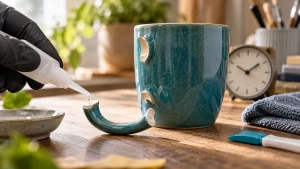
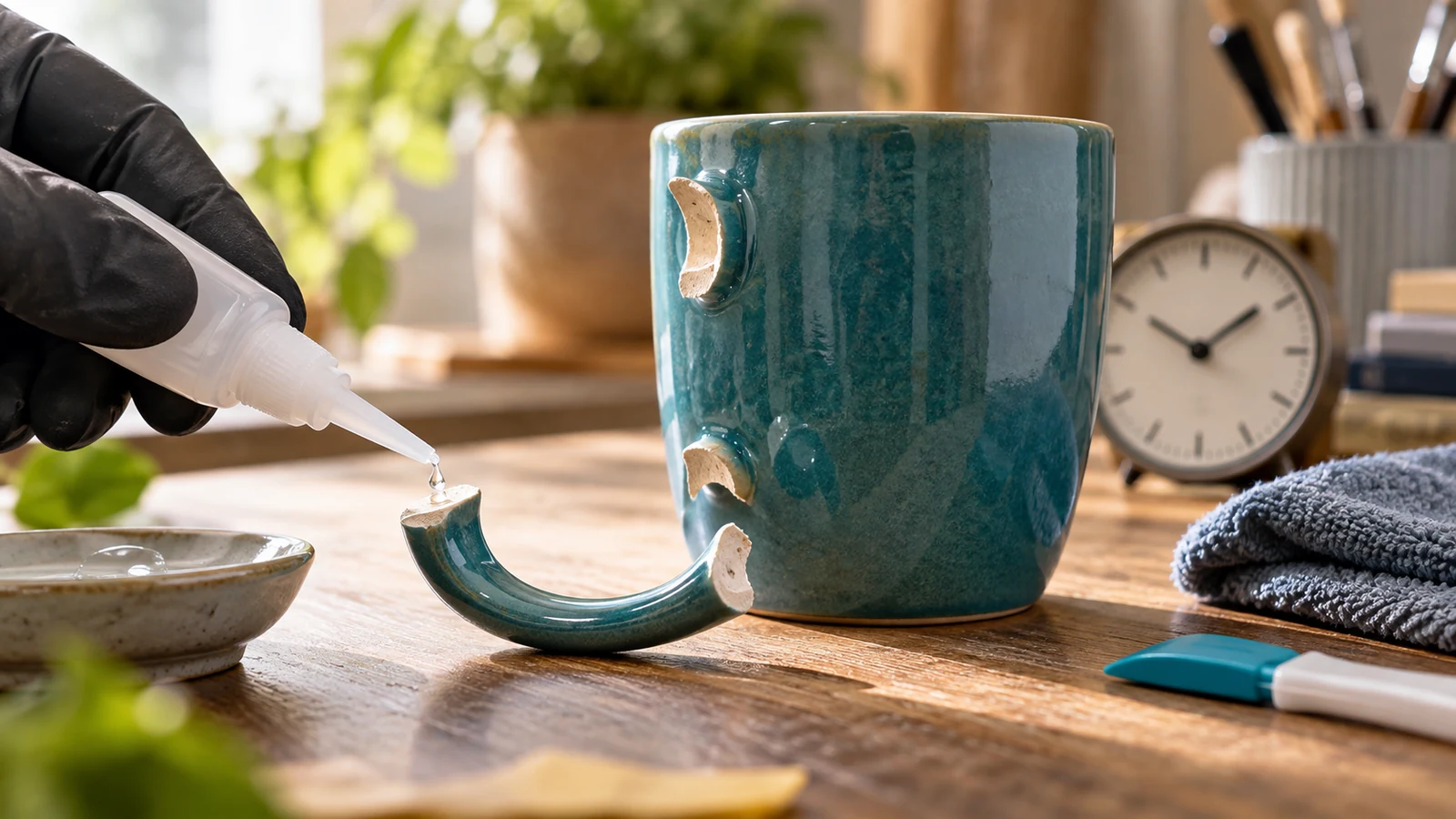
Apply super glue to clean, dry, closely fitting surfaces in a thin film, align the parts once, and hold them motionless for 30-60 seconds. Leave the repair undisturbed for at least 10-15 minutes, then wait 24 hours before applying substantial force.
Before You Start
| Requirement | Typical specification |
|---|---|
| Adhesive quantity | 1 small drop per 2-5 square centimeters |
| Surface condition | Clean, dry, oil-free, closely fitted |
| Alignment time | Complete before dispensing glue |
| Holding time | 30-60 seconds for ordinary small joints |
| Minimum careful handling | 10-15 minutes |
| Full cure target | 24 hours |
| Useful tools | Nitrile gloves, tissue-free clamp, eye protection, applicator tip |
Step 1: Test the Materials
Confirm that the surfaces are compatible before applying adhesive. Avoid relying on cyanoacrylate for polyethylene, polypropylene, silicone, very soft foam, or joints that must remain flexible.
You will know the test is useful when a small hidden spot bonds without whitening, melting, cracking, or remaining rubbery after 24 hours. A common mistake is testing only the glue and ignoring whether the bonded material itself will fail.
Step 2: Clean and Dry the Joint
Remove dust, grease, and loose coating from both mating faces. Allow cleaning agents to evaporate completely because trapped solvent or water can alter the reaction and weaken the interface.
You will know the surfaces are ready when they appear uniform and leave no residue on a clean wipe. Do not touch the prepared faces afterward, since fingerprints reintroduce oil.
Step 3: Apply a Thin Film
Use one small drop for a small household joint, then spread it only if the product instructions permit. The goal is a continuous wet film, not a thick raised bead.
You will know the amount is appropriate when the adhesive covers the mating area without squeezing into a large visible pool. The common mistake is adding more glue because the first drop appears too small.
Step 4: Align and Hold
Bring the parts together accurately and hold them without sliding for 30-60 seconds. Sliding parts after contact can spread uncured adhesive, introduce air, and create a weak, uneven interface.
You will know the initial set has occurred when the parts remain aligned after pressure is released gently. Do not test strength by twisting immediately.
Step 5: Allow the Cure to Finish
Keep the repair still for 10-15 minutes before careful handling and for approximately 24 hours before normal loading. Large joints, cold parts, thick glue, and difficult materials may need longer.
You will know the bond has reached its intended cure when the joint is stable, dry at the edges, and no longer changes under light, non-destructive observation. A hard surface does not prove that the center of a thick layer has cured.
Can You Make Super Glue Dry Faster?
Super glue can be accelerated with a cyanoacrylate activator, favorable surface moisture, or a carefully controlled baking-soda technique. The safest general method is using a product-matched accelerator sparingly, because excessive accelerator can make the bond brittle, cloudy, or weaker.
| Acceleration method | Typical effect | Best use | Main risk |
|---|---|---|---|
| Cyanoacrylate activator | Set in about 1-5 seconds | Precise assembly on compatible materials | Brittle bond or white blooming |
| Slight surface moisture | Reduces initial set time | Clean ceramic, wood, or metal | Excess water weakens the interface |
| Room-temperature parts | More consistent cure | Cold garages and workshops | Does not fix contamination |
| Baking soda | Immediate hardening at contact | Emergency gap reinforcement | Heat, brittleness, rough appearance |
| More adhesive | Usually slows curing | None | Trapped liquid and weak core |
Using Accelerator
Spray or brush accelerator according to its label, usually on one surface rather than flooding both surfaces. Join the parts promptly because the working time can fall from several seconds to almost none.
Accelerator is useful for production-like assembly, porous materials, and situations where alignment is simple. It is less suitable for visible clear joints because blooming and surface frosting become more likely.
Using Baking Soda
Baking soda reacts strongly with cyanoacrylate and can harden it almost immediately. The resulting material is usually rigid and machinable, but it can be brittle, cosmetically rough, and locally hot during the reaction.
Use the method only for small reinforcement or emergency gap bridging, not for skin contact, electrical repairs without appropriate insulation, delicate transparent surfaces, or joints that experience repeated flexing. Never apply cyanoacrylate to cotton or wool as an acceleration experiment.
Why Is Super Glue Still Wet?
Super glue usually remains wet because the layer is too thick, the joint has a gap, the surfaces are contaminated, the material resists cyanoacrylate, or the environment is cold and very dry. A thin layer that remains liquid after several minutes is a troubleshooting signal, not a reason to add more adhesive.
Common Failure Modes
| Symptom | Likely cause | Corrective action |
|---|---|---|
| Wet center after 5 minutes | Thick glue pool | Remove excess and reapply a thin film |
| Parts never bond | Polypropylene, polyethylene, or silicone | Use a compatible adhesive or primer |
| White haze around joint | Excess adhesive or high humidity | Use less glue and improve ventilation |
| Joint breaks during alignment | Parts moved too soon | Hold longer and allow 24-hour cure |
| Glue remains liquid on glass | Oil, coating, or very dry surface | Clean, lightly abrade if appropriate, retest |
| Bond feels weak after one day | Gap, flexing, or poor fit | Use epoxy or flexible adhesive |
Do not pour fresh super glue over a failed uncured layer. Remove the liquid safely, clean the surfaces, and restart with a thin application. Extra adhesive increases curing time and can conceal the actual compatibility problem.
How Long Should Super Glue Cure Before Water or Load?
Wait 24 hours before exposing a super-glue repair to substantial water, impact, vibration, or mechanical load. A joint that feels firm after 60 seconds has achieved initial set, not guaranteed waterproofing or maximum strength.
Cyanoacrylate is often water-resistant after curing, but “waterproof” depends on the formulation, joint design, temperature, and duration of exposure. Continuous outdoor wetting, hot water, alkaline cleaners, and repeated freeze-thaw cycles can degrade some bonds.
| Situation | Minimum practical wait | Better adhesive choice when demanding |
|---|---|---|
| Light handling | 10-15 minutes | Standard liquid cyanoacrylate |
| Small indoor repair | 1-4 hours | Standard or gel cyanoacrylate |
| Maximum household strength | 24 hours | Product-specific cyanoacrylate |
| Outdoor wet exposure | 24-72 hours | Waterproof epoxy or polyurethane |
| Flexible repeated movement | 24 hours | Flexible adhesive or silicone |
| Gap above 0.3 millimeters | Product-dependent | Two-part epoxy or gap-filling adhesive |
A practitioner rule is simple: if failure would damage equipment, injure someone, or require disassembly, do not treat a 10-second set as sufficient proof. Design the joint for the load and choose an adhesive that matches the movement and environment.
When Should You Use Another Adhesive?
Use another adhesive when the joint has a significant gap, remains flexible, carries a structural load, or faces continuous water and temperature changes. Super glue excels at small, rigid, close-fitting repairs, but its fast set and rigid cured film are disadvantages in demanding assemblies.
| Repair requirement | Super glue suitability | More suitable alternative |
|---|---|---|
| Tiny rigid crack with tight fit | High | Thin cyanoacrylate |
| Flexible rubber seam | Moderate to low | Flexible contact adhesive |
| Gap-filling wood repair | Low | Wood glue or epoxy |
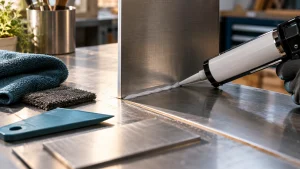
| Metal structural joint | Low to moderate | Two-part structural epoxy |
| Waterproof outdoor repair | Moderate | Marine epoxy or polyurethane |
| Clear glass seam | Moderate | Glass-specific adhesive |
| Large plastic panel | Low | Plastic adhesive or solvent cement |
Cyanoacrylate is not a substitute for mechanical fastening in safety-critical structures. It also is not a reliable repair for load-bearing furniture, vehicle restraints, pressure-containing parts, or anything exposed to repeated bending.
How Do You Remove Super Glue?
Remove cured super glue by softening or mechanically separating the bond without damaging the underlying material. Acetone can dissolve or soften many cyanoacrylate residues, but it can also haze acrylic, melt some plastics, strip paint, and damage finished wood.
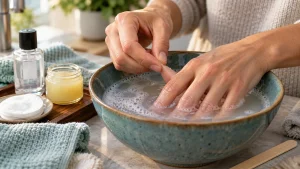
For skin, soak the area in warm soapy water and gently roll or peel the bonded edges; never pull forcefully. Acetone may irritate skin and should not be used near eyes, open wounds, or sensitive areas. If eyelids or eyes become bonded, do not force them apart, and seek urgent medical care.
For hard, compatible surfaces, scrape residue with a plastic blade, use a small amount of acetone after a spot test, and wipe away softened adhesive. Ventilate the area and keep solvents away from flames.
What Safety Problems Can Super Glue Cause?
Super glue can bond skin instantly, irritate eyes and airways, release heat on cotton or wool, and adhere strongly to porous fabric. Wear eye protection, use ventilation, keep the nozzle away from skin, and store the container upright with its cap clean and closed.
If cyanoacrylate contacts cotton clothing, do not rub the area. Move away from the material if it becomes hot, avoid placing it against skin, and cool the area with water when safe. Seek medical help for burns, eye exposure, inhalation symptoms, or extensive skin bonding.
Store super glue in a cool, dry place as directed by the manufacturer. Refrigeration is product-dependent, and condensation can contaminate the bottle when it is removed, so follow the label rather than assuming colder storage is always better.
FAQ
Does super glue dry faster in the refrigerator?
No. Cold temperatures generally slow cyanoacrylate polymerization, although some manufacturers recommend cool storage for unopened or tightly sealed products. Allow cold parts and adhesive to return to room temperature before bonding, and prevent condensation from forming on the surfaces.
Can a hair dryer make super glue cure faster?
A hair dryer may warm a cold part, but direct high heat is a poor curing strategy. Excess heat can damage plastic, increase fumes, create uneven shrinkage, or disturb the alignment. Room-temperature materials and a thin adhesive film produce more reliable results.
Is super glue stronger than epoxy?
Super glue often sets faster, but epoxy usually performs better across gaps, under impact, and in larger or more highly loaded joints. Cyanoacrylate is convenient for small rigid repairs, while two-part epoxy provides better gap filling and often better environmental resistance.
Why does super glue turn white?
White residue, called blooming or frosting, forms when cyanoacrylate vapor condenses and polymerizes around the joint. Excess adhesive, high humidity, poor ventilation, and enclosed spaces increase the risk. Applying less glue and improving airflow usually reduces the effect.
Can you use super glue on a cut?
No. Household super glue is not a substitute for medical wound closure. It may contain additives that irritate tissue, and accidental bonding can trap contamination. Clean minor wounds properly and seek medical advice when a wound is deep, gaping, contaminated, or bleeding heavily.
How long does super glue last after it cures?
A cured joint can last for years in a protected indoor application, but service life depends on ultraviolet exposure, moisture, temperature, impact, joint design, and material compatibility. Outdoor or flexible repairs may fail much sooner than small indoor rigid repairs.
The Bottom Line
Super glue typically sets in 10-60 seconds, becomes carefully handleable after 10-15 minutes, and reaches full cure in about 24 hours. The fastest reliable result comes from clean, room-temperature, closely fitting surfaces and a thin adhesive film. If the joint must fill a gap, flex repeatedly, carry a major load, or withstand continuous water, choose an adhesive designed for that condition instead.
Knowing how long super glue takes to dry prevents the most common mistake: testing a bond after its initial set and assuming the repair has reached full strength. Treat the first minute as alignment time, the first 15 minutes as light handling time, and the first day as the complete cure window.