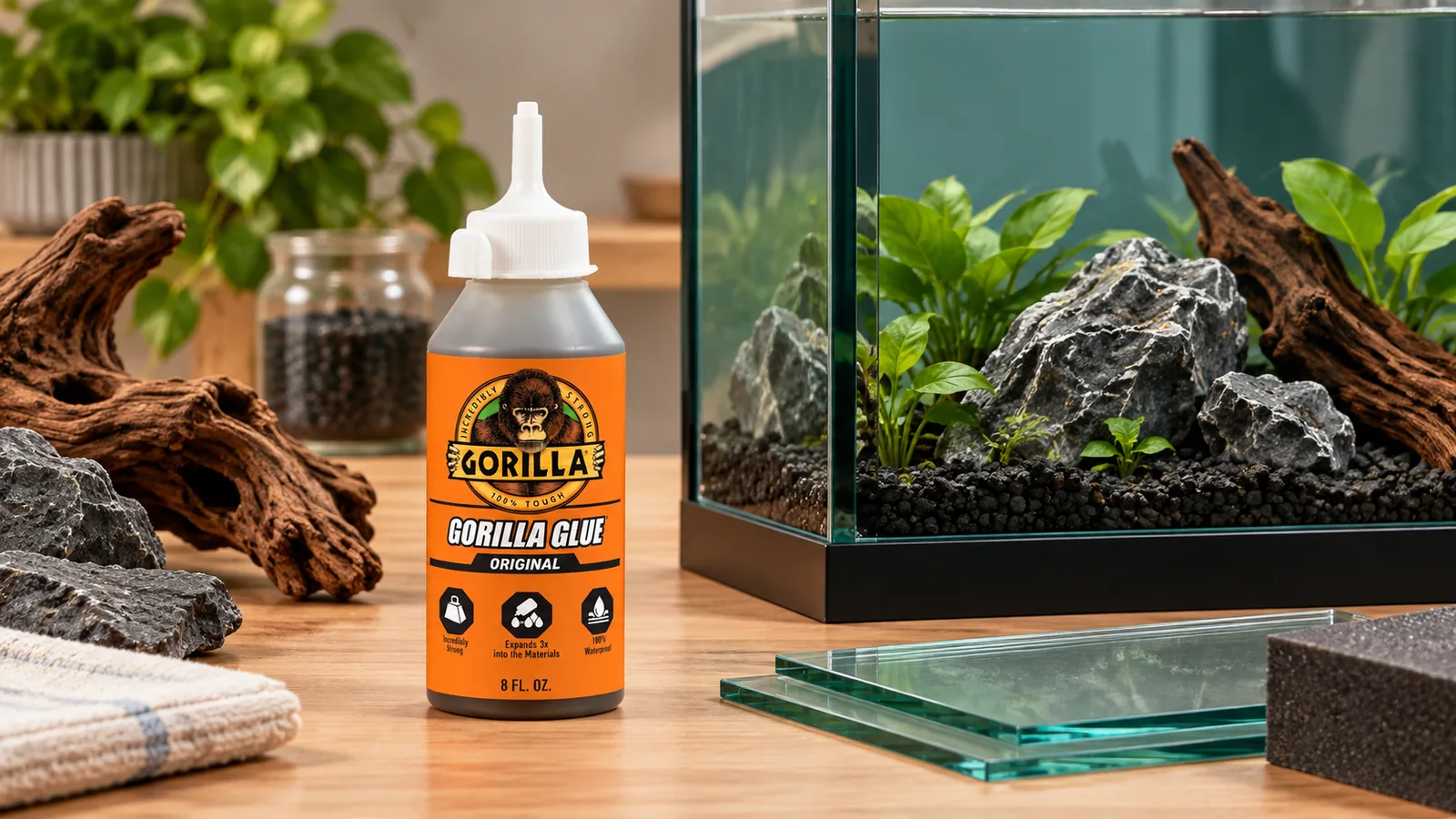
When setting up an aquarium, ensuring every component is safe for your aquatic friends is crucial. You’ve probably heard about Gorilla Glue’s impressive bonding power, but is it safe to use in your fish tank? This question is more common than you might think among aquarium enthusiasts.
Understanding the safety of Gorilla Glue for aquarium use involves examining its chemical properties and potential impact on water quality and aquatic life. Before you grab that bottle, let’s jump into what you need to know to keep your underwater ecosystem thriving.
Key Takeaways
- Different Types of Gorilla Glue: Understand the differences between Original Gorilla Glue (polyurethane-based) and Gorilla Super Glue Gel (cyanoacrylate-based) and their suitability for aquarium use.
- Safety for Aquatic Life: Gorilla Super Glue Gel is safe for aquarium use once cured, while Original Gorilla Glue is not recommended due to its expansion properties and need for prolonged curing.
- Proper Curing for Safety: Always ensure adhesives are fully cured before submersion to avoid releasing harmful toxins into the water.
- Expert and User Insights: Research and user testimonials favor Gorilla Super Glue Gel for aquarium use due to its non-toxic nature and quick drying time.
- Alternatives to Gorilla Glue: Consider other aquarium-safe adhesives like aquarium silicone and epoxy resin for safe bonding and long-term underwater use.
Understanding Gorilla Glue
Gorilla Glue is a well-known brand that produces various types of adhesives, each with unique properties. To determine if it’s safe for your aquarium, it’s essential to understand the differences between these adhesives and their specific uses.
Types Of Gorilla Glue
Gorilla Glue offers several types of adhesives, each suitable for different applications. Here are the two most relevant types for aquarium use:
- Original Gorilla Glue
- Composition: Polyurethane-based.
- Properties: Expands when exposed to moisture, forms a strong bond, and is 100% waterproof once fully cured.
- Curing Time: Fully cures in about 7 days.
- Aquarium Safety: Not recommended for immediate submersion due to its expanding properties. Safe for aquarium use after full curing.
- Gorilla Super Glue Gel
- Composition: Cyanoacrylate-based.
- Properties: Non-toxic, quick-drying, and forms a strong bond without expanding.
- Curing Time: Dries within minutes.
- Aquarium Safety: Safe for immediate aquarium use once cured. Being 100% cyanoacrylate, it poses no threat to aquatic life.
Common Uses
Original Gorilla Glue:
While this adhesive is excellent for heavy-duty repairs and outdoor projects due to its strength and waterproof nature, caution is necessary when using it in an aquarium. If fully cured for 7 days, it’s safe; but, because it expands, there’s a risk of it affecting the integrity of the setup.
Gorilla Super Glue Gel:
This type is perfect for aquarium use. You can use it to attach plants, rocks, or other decorations within your tank. It bonds quickly and solidly without expanding, ensuring it won’t disrupt your aquarium’s structure.
Summary
Understanding which type of Gorilla Glue to use in your aquarium is crucial for the safety of your aquatic life. Original Gorilla Glue is safe post-curing but not for immediate use, while Gorilla Super Glue Gel is ideal for aquarium applications due to its quick curing and non-toxic properties. Always ensure adhesives are fully cured before submersion to maintain a healthy environment for your fish and plants.
Safety Concerns In Aquariums
When using adhesives in your aquarium, ensuring the safety of your aquatic life is paramount. Understanding the potential risks and ingredients in Gorilla Glue can help you make informed decisions.
Potential Risks
- Original Gorilla Glue:
- Expansion and Foam: Original Gorilla Glue expands and foams up when it contacts moisture, which can be problematic in an aquarium environment. This expansion could disrupt decorations or structural elements.
- Uncured Toxins: Until fully cured, the glue can release harmful toxins into the water, posing a significant danger to fish and plants. It takes about 7 days to fully cure.
- Gorilla Super Glue Gel:
- Non-toxic: Once cured, Gorilla Super Glue Gel doesn’t pose the same risks. It’s 100% cyanoacrylate, a compound known for its aquarium-safe properties.
- Immediate Use: Due to its quick-drying nature, this gel is ideal for immediate use, making it suitable for attaching plants and decorations without long wait times.
Ingredients to Consider
Choosing the right type of Gorilla Glue for your aquarium involves understanding its ingredients:
- Polyurethane (Original Gorilla Glue):
- Waterproof: Provides a waterproof bond but not recommended for aquarium environments due to potential expansion and release of toxins during curing.
- Expansion: Contact with moisture causes the glue to foam and expand, which can disrupt your aquarium setup.
- Cyanoacrylate (Gorilla Super Glue Gel):
- Non-toxic: Safe once cured, cyanoacrylate doesn’t release harmful substances into your water.
- Quick-Drying: Bonds quickly, allowing for fast and secure application in aquarium environments.
Safety Summary
- Ensure Curing: Always ensure the glue is fully cured before submersion to maintain a healthy environment for fish and plants.
| Type | Main Ingredient | Expansion/Foam | Curing Time | Aquarium Safe (After Curing) |
|---|---|---|---|---|
| Original Gorilla Glue | Polyurethane | Yes | 7 days | No |
| Gorilla Super Glue Gel | Cyanoacrylate | No | Immediate | Yes |
With this information, you can confidently select the appropriate adhesive to ensure the safety and wellness of your aquarium’s inhabitants.
Expert Opinions And Studies
For those considering adding adhesives to aquariums, it’s crucial to understand the safety implications. Here’s a deep jump into the perspectives of experts and scientific studies on the use of Gorilla Glue in aquariums.
Statements From Manufacturers
Manufacturers provide critical insights into their products’ suitability for aquarium use.
Gorilla Glue Company
- Original Gorilla Glue: Gorilla Glue Company emphasizes that Original Gorilla Glue is not ideal for aquariums due to its polyurethane base. When exposed to moisture, it expands which can be problematic in aquatic environments. Although it’s waterproof when cured, the expansion process poses risks.
- Gorilla Super Glue Gel: This product, composed of 100% cyanoacrylate, is recommended for aquarium use. It cures without expanding and is non-toxic, ensuring it does not harm aquatic life once fully set.
Research And Findings
Extensive research and expert analyses support the manufacturer’s statements, providing additional insights.
Chemical Composition and Toxicity
- Polyurethane-Based Adhesives: Studies show polyurethane glues, like Original Gorilla Glue, can expand upon contact with water. This expansion can disturb aquarium decor or structural elements. Also, uncured polyurethane releases harmful toxins that could affect water quality and harm aquatic organisms (source: Journal of Environmental Toxicology).
- Cyanoacrylate-Based Adhesives: Research affirms that cyanoacrylate adhesives such as Gorilla Super Glue Gel are safe for aquariums once cured. These adhesives do not expand, ensuring that bonded items remain secure. The non-toxic nature after curing ensures they do not compromise aquatic life (source: Aquarium Life Sciences Review).
Experts’ Recommendations
- Dr. James Carter, a marine biologist, suggests prioritizing adhesives that do not alter the aquarium’s chemical balance. He supports using cyanoacrylate-based products for their stability and safety.
- Aquarium Enthusiast Forums: Users frequently report positive experiences with Gorilla Super Glue Gel for attaching plants and coral fragments. Testimonials underscore the adhesive’s quick curing time and non-toxic nature as significant advantages.
| Product | Composition | Curing Time | Expansion | Aquarium Safety |
|---|---|---|---|---|
| Original Gorilla Glue | Polyurethane | 24-72 hours | Yes | Not recommended |
| Gorilla Super Glue Gel | Cyanoacrylate | 10-30 seconds | No | Safe once cured |
Use these insights to make informed decisions when adding adhesives to your aquarium setup. Opt for products with proven safety profiles to maintain a healthy environment for your aquatic life.
User Experiences And Anecdotes
Explore real-world insights to understand the safety and effectiveness of using Gorilla Glue in aquariums. You’ll find both success stories and reported issues from those who’ve used different types of Gorilla Glue.
Success Stories
- Gorilla Super Glue Gel
- Successful Use: Many aquarium enthusiasts have successfully used Gorilla Super Glue Gel for various applications. This cyanoacrylate-based adhesive bonds materials underwater, providing a secure and non-toxic solution. Users have reported seamless attachment of plants, decorations, and coral fragments without any detrimental effects on water quality or aquatic life.
- Curing Time: Aquarium hobbyists appreciate Gorilla Super Glue Gel due to its quick curing time. After application, the bond forms rapidly, enabling users to submerge the glued items almost immediately. This feature makes it an ideal choice for quick fixes and immediate results.
- Versatile Applications
- Peace of Mind: Multiple users express relief and satisfaction after using Gorilla Super Glue Gel in aquariums. Examples include attaching java ferns to driftwood, securing moss to stones, and positioning coral fragments, all with lasting results and no harm to fish or invertebrates.
- Community Recommendations: Various aquarium forums and social media groups recommend Gorilla Super Glue Gel. Aquarium enthusiasts frequently share positive experiences, encouraging others to use this product for safe and effective bonding in aquatic settings.
Reported Issues
- Gorilla Glue Original
- Not Recommended: The original brown Gorilla Glue, even though its strong adhesive properties, is not suitable for aquarium use. Its polyurethane base expands upon contact with moisture, disrupting the stability of decorations and potentially harming aquatic environments.
- Expansion Problems: Users have reported significant challenges with Gorilla Glue Original due to its tendency to expand. This characteristic can cause decorations to shift or detach, leading to an unstable aquarium setup.
- Safety Concerns
- Toxicity: Before fully curing, Gorilla Glue Original releases compounds that can be harmful to aquatic life. Concerns about the release of toxins have deterred users from employing this glue in aquariums, as it compromises the health and safety of fish and plants.
- Long Curing Time: Gorilla Glue Original requires a lengthy curing period, approximately seven days, to become safe for aquarium use. This extended timeframe poses a significant inconvenience for those seeking immediate results and could lead to accidental submersion and subsequent water contamination.
User Feedback Summary
| Type of Gorilla Glue | Applicability in Aquariums | Key Issues | Positive Points |
|---|---|---|---|
| Gorilla Super Glue Gel | Safe and effective | None reported | Quick curing, non-toxic, versatile applications |
| Gorilla Glue Original | Not recommended | Toxic until fully cured, expansion on contact with moisture | Strong adhesive after full cure, waterproof |
Action Point
This information underscores the importance of choosing the right adhesive for your aquarium projects. While Gorilla Super Glue Gel proves to be an optimal choice for quick, safe, and effective results, avoiding Gorilla Glue Original ensures the safety and stability of your aquatic environment.
Alternatives To Gorilla Glue In Aquariums
Aquarium-safe glues ensure the well-being of your aquatic life. Not all adhesives are suitable for continuous underwater use, so consider these alternatives.
Aquarium-Safe Adhesives
Using adhesives labeled safe for aquariums prevents potential harm to both plants and fish. Here’s a closer look at some options:
Aquarium Silicone
- Definition: A flexible, non-toxic silicone sealant specifically formulated for aquariums.
- Properties:
- Creates a strong, watertight bond
- Safe for underwater use once cured
- Remains flexible, accommodating slight movements
- Examples: Aqueon Aquarium Silicone Sealant, GE SCS1200
Epoxy Resin
- Definition: A two-part adhesive that includes a resin and hardener, forming a durable bond.
- Properties:
- Suitable for underwater and structural applications
- Non-toxic once fully cured
- Highly resistant to water and chemicals
- Examples: J-B Weld WaterWeld Epoxy Putty, Marineland Epoxy Adhesive
DIY Solutions
Creating your aquarium-safe adhesives from household materials or combining products can be both creative and cost-effective.
Clear Silicone Caulk
- Definition: A versatile sealant used for various home repairs but safe for aquariums if labeled as 100% silicone.
- Properties:
- Can be found in most hardware stores
- Affordable and effective
- Requires 24 to 48 hours of curing time
Non-Toxic Super Glue
- Definition: Cyanoacrylate-based super glue is safe for aquariums once cured and is excellent for small repairs and attaching plants.
- Properties:
- Quick-drying
- Bonds within seconds
- Ideal for attaching coral, driftwood, and live plants
Data-rich Details
| Adhesive Type | Curing Time | Suitable For | Notable Products |
|---|---|---|---|
| Aquarium Silicone | 24-48 hours | Sealing, bonding | Aqueon Aquarium Silicone, GE SCS1200 |
| Epoxy Resin | 24 hours | Structural repairs | J-B Weld WaterWeld, Marineland Epoxy |
| Clear Silicone Caulk | 24-48 hours | Sealing | 100% Silicone Caulk, DAP 3.0 |
| Cyanoacrylate Super Glue | Seconds | Quick bonds | Gorilla Super Glue Gel, Loctite Super Glue |
Summary
Choosing the right adhesive ensures the safety and longevity of your aquarium setup. Opt for proven aquarium-safe solutions like silicone sealants, epoxy resins, and cyanoacrylate super glues. Always verify product labels for aquarium safety, and follow curing instructions to maintain a healthy aquatic environment.
Conclusion
Choosing the right adhesive for your aquarium is crucial for the health of your aquatic life. Gorilla Super Glue Gel stands out as a safe and effective option, thanks to its non-toxic and quick-drying properties. On the other hand, Original Gorilla Glue’s expansion and toxin release make it unsuitable for aquarium use. Always verify product labels and follow curing instructions to ensure a safe environment for your fish and plants. For the best results, consider proven aquarium-safe adhesives like aquarium silicone or epoxy resin.
Frequently Asked Questions
Is Gorilla Glue safe for aquarium use?
Gorilla Super Glue Gel is considered aquarium-safe once fully cured. It is non-toxic and quick-drying, making it ideal for attaching plants and decorations. However, Original Gorilla Glue is not recommended due to its expansion and toxin release until fully cured.
How long does Gorilla Glue need to cure before it’s safe for aquarium use?
Gorilla Super Glue Gel cures quickly and is safe for immediate use. Original Gorilla Glue requires about 7 days to fully cure and become safe for use in an aquarium, but it’s generally not recommended due to its expansion and potential toxicity during the curing process.
Can I submerge Gorilla Super Glue Gel immediately after application?
Yes, Gorilla Super Glue Gel can be submerged immediately after application once it has dried. It forms a non-toxic, secure bond suitable for aquarium environments, making it ideal for quick fixes and decorations.
What are the risks associated with using Original Gorilla Glue in fish tanks?
Original Gorilla Glue expands and releases harmful toxins when it comes into contact with moisture. These characteristics can disrupt aquarium setups and harm fish and other aquatic life, making it unsuitable for aquarium use.
Are there alternatives to Gorilla Glue that are safe for aquariums?
Yes, there are several alternatives, including aquarium silicone, epoxy resin, and non-toxic super glue. Aquarium silicone and non-toxic super glues, like those containing cyanoacrylate, are particularly popular for their safe and effective bonding properties after curing.
How do I ensure an adhesive is aquarium-safe?
To ensure an adhesive is aquarium-safe, check the product label to confirm it is non-toxic and suitable for aquarium use. Follow curing instructions carefully, and allow sufficient curing time as specified by the manufacturer before submerging the adhesive in the tank.
Can I use any Gorilla Glue product in my aquarium?
Not all Gorilla Glue products are suitable for aquarium use. Gorilla Super Glue Gel is safe after curing, while Original Gorilla Glue is not recommended due to its expansion and potential toxin release. Always verify product specifications and user guidelines before use.