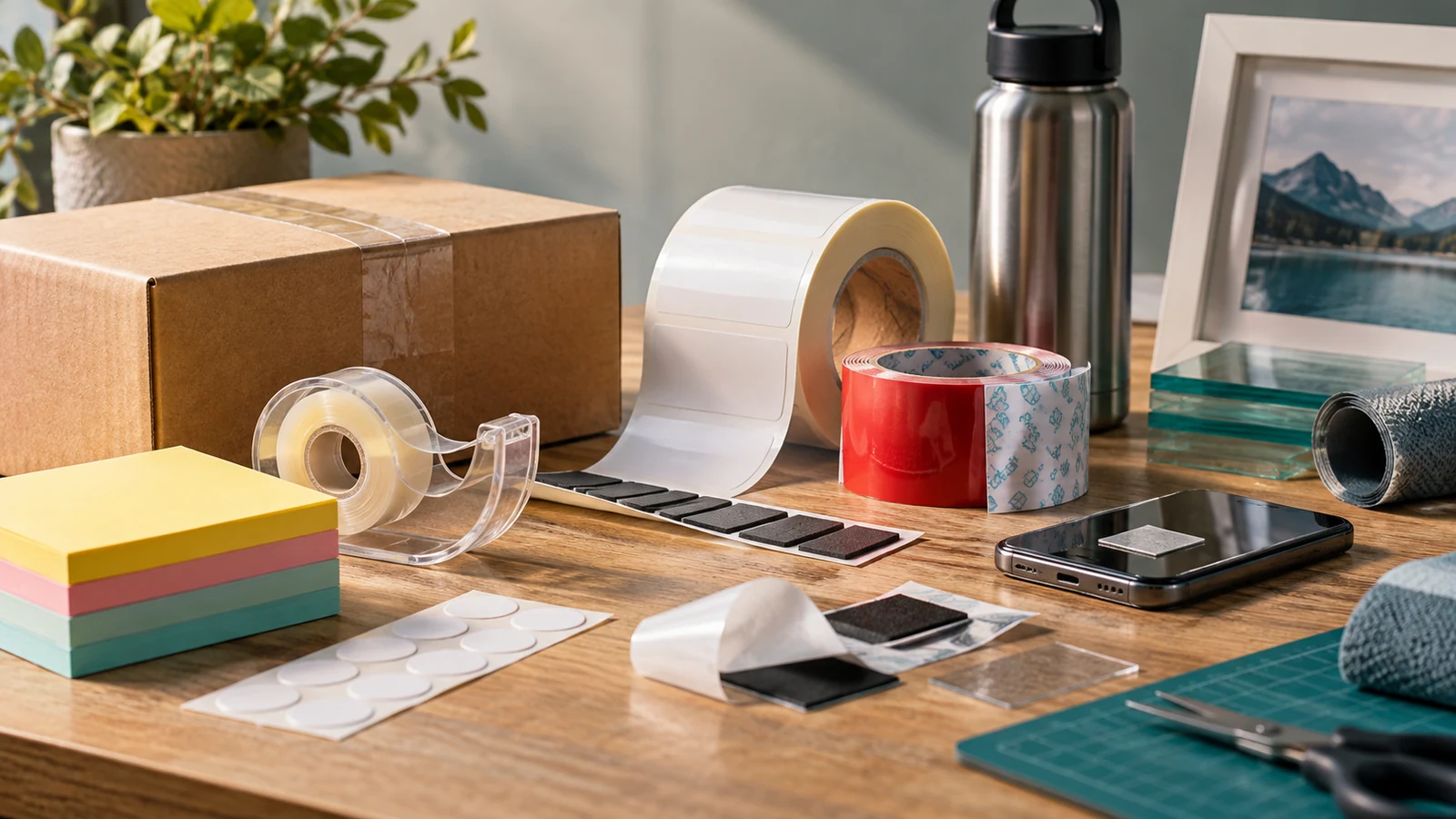
Imagine a world where things stick together effortlessly without the hassle of messy glues or complicated fasteners. That’s the magic of pressure sensitive adhesives (PSAs). These versatile materials have transformed industries from packaging and automotive to electronics and healthcare. With just a little pressure, PSAs form a bond that’s strong yet flexible, making them indispensable in countless applications.
You encounter PSAs every day, often without even realizing it. From the sticky notes on your desk to the labels on your favorite products, these adhesives are quietly at work. But what makes them so effective? Understanding the science and innovation behind PSAs can give you a deeper appreciation for this ubiquitous technology. Immerse to discover how PSAs are engineered to meet the demands of modern life, offering reliable performance with minimal effort.
Key Takeaways
- Versatile Applications: Pressure sensitive adhesives (PSAs) are used across various industries including packaging, automotive, electronics, and healthcare due to their ease of use and strong, flexible bonding capabilities.
- Adhesion Mechanism: PSAs bond surfaces through both physical interactions—filling microscopic irregularities—and chemical interactions—forming bonds with surface molecules.
- Core Components: PSAs consist of a polymer matrix (acrylic, rubber, or silicone), carrier material (paper, film, or foam), and additional components like fillers and plasticizers to enhance performance.
- Manufacturing Methods: PSAs are produced using methods like solvent-based, water-based, hot-melt, and UV-curable processes, each with its unique characteristics and environmental impacts.
- Advantages: PSAs offer easy application, immediate bonding, and versatility, adhering effectively to diverse materials and simplifying processes in various applications from medical devices to automotive parts.
- Selection Criteria: Understanding the key properties—tack, peel resistance, and shear resistance—of different PSA types (acrylic, rubber, silicone) helps in choosing the right adhesive for specific needs and environments.
How Do Pressure Sensitive Adhesives Work?
Pressure Sensitive Adhesives (PSAs) bond surfaces when pressure is applied to connect the adhesive with the adherend. They use both physical and chemical interactions to create strong, lasting bonds.
Adhesion Mechanism
PSAs adhere to surfaces through several processes:
- Physical Interaction: The adhesive flows into and fills the microscopic irregularities on the surface of the material it’s bonding to. This mechanical interlocking reinforces the bond.
- Chemical Interaction: Specific components within the PSA form chemical bonds with the molecules on the adherend’s surface.
Components of PSAs
PSAs are composed of several essential components:
- Polymer Matrix: The primary material of PSAs, which can be acrylic, rubber, or silicone-based. Each type has specific properties that determine the PSA’s application.
- Carrier Material: Often made of paper, film, or foam. This material supports the adhesive and aids in its application.
- Additional Components:
- Fillers: Enhance performance and modify properties.
- Plasticizers: Increase flexibility and tack.
- Cross-linking Agents: Improve stability and resistance.
Example Properties
| Property | Acrylic PSAs | Rubber PSAs | Silicone PSAs |
|---|---|---|---|
| Tack | High | Very High | Moderate |
| Peel Resistance | Good | Good | Excellent |
| Shear Resistance | Excellent | Moderate | High |
| Temperature Range | -40°C to 120°C | -20°C to 80°C | -60°C to 260°C |
By understanding these properties, you can choose the right PSA for specific applications. For instance, acrylic PSAs offer excellent shear resistance, making them suitable for durable bonds. In contrast, silicone PSAs resist extreme temperatures, ideal for high-heat environments.
Application Process
When applying PSAs, follow these essential steps:
- Surface Preparation: Clean and dry the surfaces to remove contaminants.
- Pressure Application: Apply sufficient pressure to the adhesive, ensuring it flows into surface imperfections.
- Time Allowance: Some PSAs may require time to achieve full bond strength.
By following these steps, you’ll ensure optimal performance from the PSA.
Summary
Grasping the functionality and components of PSAs will help you use these adhesives effectively. For further information, consult specific product datasheets or contact manufacturers.
Types of Pressure Sensitive Adhesives
Pressure sensitive adhesives (PSAs) are versatile and efficient for various applications. They bond surfaces through light pressure, making them convenient and user-friendly.
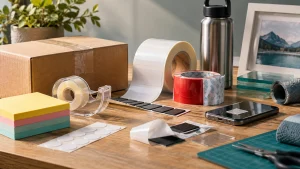
Adhesive Tapes
Adhesive tapes are a common form of PSAs. They come in several configurations tailored for distinct applications.
- Single-Faced Tapes: Adhesive on one side of the carrier material. Used when only one surface requires bonding.
- Double-Faced Tapes: Adhesive on both sides of the carrier material. Ideal for bonding two surfaces together.
Single-Faced Products
Single-faced tapes have adhesive on only one side. They’re commonly used in:
- Medical Devices: Found in wound dressings and transdermal drug delivery systems.
- Labels and Stickers: Used for labeling, packaging, and product labeling.
- Surface Protection: Protect surfaces from scratches, dirt, and damage during manufacturing or transportation.
Examples:
- 3M™ Adhesive Transfer Tape 465: Known for high tack and good adhesion to various surfaces.
- Avery Dennison™ S2045: A label adhesive offering a strong bond to various packaging materials.
Double-Faced Products
Double-faced tapes offer adhesive on both sides, which aids in bonding two surfaces. Applications include:
- Mounting and Lamination: Used in mounting photos, nameplates, and plaques.
- Bonding Components: Common in electronics assembling and automotive parts bonding.
- ARcare 92712®: A clear double-sided adhesive tape with a 12mm thickness, used in various bonding processes.
Examples:
- 3M™ Double Coated Tape 9474LE: Offers high adhesion to low surface energy plastics.
- Tesa® 4965: Known for its high transparency and initial tack.
Transfer Tapes
Transfer tapes are PSA layers without a carrier, offering a seamless finish. These tapes are ideal when a non-interfering bond line is crucial.
- Graphic Arts: Used in signage and displays for a clean finish.
- Assembly: Applied in electronics and appliance manufacturing for minimal gap bonding.
Examples:
- 3M™ Adhesive Transfer Tape 467MP: Known for excellent adhesion to metals and high surface energy plastics.
- Avery Dennison™ FT 112: Offers strong adhesion and is easy to apply.
Key Terms:
- Tack: Initial stickiness when adhesive makes contact with the substrate.
- Peel Resistance: Ability to resist peeling forces.
- Shear Resistance: Adhesive’s ability to resist sliding forces.
- Carrier Material: Material that supports adhesive layer
Use the versatility and efficiency of PSAs by choosing the right type for your specific application.
Materials Used in Pressure Sensitive Adhesives
To understand pressure sensitive adhesives (PSAs), it’s essential to explore the various materials that contribute to their unique properties. These materials determine how well a PSA performs in different applications, from everyday products to specialized industrial uses.
Rubber/Resin
- Overview: Rubber-based PSAs use natural or synthetic rubber, typically combined with resins to enhance adhesive properties. These materials create adhesives with high tack and peel strength, meaning they adhere quickly and strongly to surfaces.
- Applications: Rubber/resin PSAs excel in applications requiring immediate and robust adhesion. They are frequently found in products like tapes, labels, and packaging materials.
Key Properties
| Property | Description |
|---|---|
| Tack | High initial stickiness |
| Peel Strength | Strong adhesion under pulling force |
| Shear Resistance | Moderate resistance to sliding forces |
| Temperature Range | Best used at room temperatures |
Rubber/resin PSAs are ideal when you need fast, strong bonding. But, they may not perform as well at higher temperatures or under prolonged stress.
Acrylic
- Overview: Acrylic PSAs are made from acrylic polymers. These adhesives offer a balanced mix of tack, peel, and shear resistance. They are adaptable, allowing for a variety of formulations to meet specific requirements.
- Applications: Acrylic PSAs are versatile, used in electronics, automotive applications, and more. Their stability over time also makes them suitable for outdoor use.
Key Properties
| Property | Description |
|---|---|
| Tack | Moderate, adjustable |
| Peel Strength | Consistent, long-lasting adhesion |
| Shear Resistance | High resistance to sliding forces |
| Temperature Range | Wide range, suitable for various environmental conditions |
Acrylic PSAs stand out for their durability and adaptability. Use them for applications that demand long-term performance under diverse conditions.
Silicone
- Overview: Silicone PSAs are formed from silicone polymers. They offer excellent temperature stability and chemical resistance, making them suitable for extreme environments.
- Applications: You’ll find silicone PSAs in medical devices, automotive parts, and electronics. These adhesives perform well where other types might fail due to harsh conditions.
| Property | Description |
|---|---|
| Tack | Variable, can be engineered for specific needs |
| Peel Strength | Reliable adhesion over wide temperature ranges |
| Shear Resistance | Very high, retains bonding under stress |
| Temperature Range | Extremely wide, functioning in both high and low extremes |
Silicone PSAs are the go-to choice for challenging environments. They maintain their properties even when exposed to chemicals, high heat, or cold.
By understanding these materials, you can select the right PSA for your needs. Examining the key properties and applications for each type helps ensure optimal adhesive performance in your specific context.
Manufacturing Processes of Pressure Sensitive Adhesives
Pressure-sensitive adhesives (PSAs) are created through various manufacturing methods, each suited for different applications and offering unique characteristics. Below, you’ll find detailed explanations of key methods used in the industry.
Solvent-Based
- Process: This method involves dissolving adhesive ingredients in a solvent. The mixture is applied to the substrate, and the solvent is then evaporated, usually with a hot air dryer, leaving behind pure adhesive.
- Characteristics: Organic solvents used in this process can be hazardous, necessitating careful handling. The solvent-based method tends to be more labor-intensive and costly compared to other methods but provides strong adhesion and quick-drying properties.
Water-Based
- Process: Here, adhesive ingredients are dispersed in water rather than a solvent. After application, the water is evaporated, leaving the adhesive on the substrate.
- Characteristics: This method is more environmentally friendly since it avoids hazardous solvents. It’s cost-effective and suitable for applications where lower environmental impact is desired. But, it may offer slower drying times than solvent-based methods.
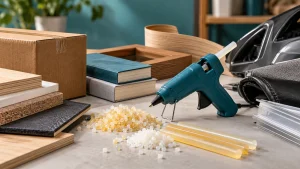
Hot-Melt
- Process: In this method, adhesive ingredients are heated until they melt, and the molten adhesive is applied to the substrate. After cooling, the adhesive solidifies, creating a bond.
- Characteristics: Hot-melt adhesives provide rapid bonding as they solidify quickly upon cooling. They offer strong initial tack and are generally user-friendly. But, they may not perform well at high temperatures.
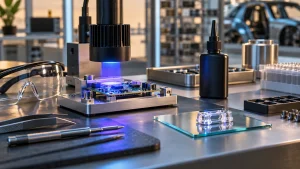
- Process: Adhesive ingredients are formulated to cure when exposed to UV light. The mixture is applied to the substrate and then exposed to UV radiation to initiate the curing process, resulting in a solid adhesive.
- Characteristics: This method offers rapid curing and strong bonds. It requires specific equipment for UV curing and can be more costly. It’s ideal for applications needing quick bonding and high precision.
Here’s a comparison table summarizing the characteristics of each method:
| Method | Process | Key Characteristics | Environmental Impact |
|---|---|---|---|
| Solvent-Based | Ingredients dissolved in solvent, applied, solvent evaporated | Strong adhesion, quick-drying, requires careful handling | Higher due to organic solvents |
| Water-Based | Ingredients dispersed in water, applied, water evaporated | Environmentally friendly, cost-effective, slower drying | Lower due to water usage |
| Hot-Melt | Ingredients melted and applied, solidifies on cooling | Rapid bonding, strong initial tack, user-friendly | Moderate, no solvents used |
| UV-Curable | Ingredients cured by UV exposure after application | Rapid curing, strong bonds, requires specific equipment | Moderate to low, requires UV light |
Each manufacturing method suits particular applications, helping you choose the best PSA for your requirements. Consider factors like environmental impact, drying time, and initial tack strength when selecting a method.
Applications of Pressure Sensitive Adhesives
Pressure sensitive adhesives (PSAs) provide versatile bonding solutions across many sectors. Their ease of use and strong bonding capabilities make them indispensable in various industries.
Automotive
PSAs serve multiple functions in the automotive sector:
- Trim and Decorative Elements:
- Use PSAs for attaching trim, emblems, badges, and interior components.
- Avoid mechanical fasteners, enhancing vehicle aesthetics.
- Masking Tapes:
- Use masking tapes in automotive painting for surface protection.
- Achieve clean, sharp edges to improve finish quality.
- Sound and Vibration Damping:
- Apply PSAs in sound damping films to heighten vehicle comfort and performance.
Medical Devices
PSAs play crucial roles in medical device manufacturing due to their reliability:
- Wound Dressings:
- Ensure secure adhesion while allowing for gentle removal.
- Maintain dressings’ adherence even in moist environments.
- Electrode Pads:
- Use PSAs for electrode pads ensuring consistent electrical contact.
- Achieve pain-free removal after usage.
- Medical Tapes:
- Employ medical tapes to secure tubes and devices to patients’ skin.
- Allow easy repositioning without loss of adhesion.
Tapes, Labels, Graphics
PSAs make tapes, labels, and graphic applications more efficient:
- Packaging Tapes:
- Use PSAs in packaging tapes for reliable sealing.
- Provide strong adhesion under various conditions.
- Labels:
- Apply PSAs on product labels for durable adhesion.
- Ensure labels remain intact through handling and environmental conditions.
- Graphic Films:
- Use PSAs in graphic films for smooth application.
- Maintain clarity and quality through dynamic conditions.
| PSA Type | Characteristics | Common Uses |
|---|---|---|
| Acrylic | Balanced properties, weather-resistant | Outdoor signage, labels, tapes |
| Rubber/Resin | High tack, immediate adhesion | Tapes, labels, temporary bonds |
| Silicone | High-temperature stability, chemical resistance | Medical devices, automotive parts |
By understanding PSAs’ diverse applications, you can better appreciate their role in enhancing product functionality across different industries. Optimize your use of PSAs by selecting the right type for your specific needs.
Advantages of Pressure Sensitive Adhesives
Pressure-sensitive adhesives (PSAs) provide numerous benefits, making them indispensable across various sectors. Understanding these advantages can help you determine the best applications for PSAs in your projects and processes.
Ease of Application
- Simplified Use: PSAs are straightforward to apply, needing only light pressure to form a bond. This ease of use makes them suitable for diverse applications.
- Mess-Free: Unlike traditional adhesives, PSAs avoid the mess of liquid glues, facilitating cleaner and faster application.
Immediate Bonding
- Instant Grip: Upon application, PSAs offer an immediate bond. This quick adhesion enables you to handle or process items right away.
- Efficiency Boost: The rapid bonding capability of PSAs cuts down assembly time and enhances manufacturing efficiency.
Versatility
- Multi-Surface Adhesion: PSAs adhere effectively to a wide range of materials such as paper, plastic, metal, glass, and fabric, making them versatile for different uses.
- Industry Applications: Due to their adaptability, PSAs are utilized in packaging, labeling, automotive, medical, and construction sectors.
Key Benefits at a Glance
| Benefit | Description |
|---|---|
| Ease of Application | Simple and clean application with light pressure. |
| Immediate Bonding | Quick adhesion allows immediate handling. |
| Versatility | Adheres to diverse materials like paper, plastic, metal, glass, and fabric. |
- Packaging: PSAs streamline packaging processes by providing quick sealing for boxes and bags.
- Automotive: Used for attaching trim, mounting components, and vibration damping.
- Medical: Essential in wound dressings, electrode pads, and tapes that require secure yet gentle adhesion.
- Labeling: Ensures that product labels and decals stick firmly, enhancing brand presentation and information durability.
Understanding these advantages helps you leverage PSAs effectively, ensuring optimal performance and efficiency in varied applications. By integrating PSAs into your workflow, you benefit from their simplicity, speed, and adaptability, enhancing productivity and product quality across different domains.
Conclusion
Pressure sensitive adhesives revolutionize how we bond materials offering a clean and efficient alternative to traditional methods. Their versatility and strong bonding capabilities make them indispensable across numerous industries. By understanding the various types of PSAs and their specific applications, you can select the right adhesive for your needs ensuring optimal performance.
Exploring the science behind PSAs reveals their effectiveness and broad utility. Whether you’re in packaging automotive electronics or healthcare PSAs provide reliable solutions that enhance productivity and product quality. Embrace the advantages of PSAs to streamline your processes and achieve superior results.
Frequently Asked Questions
What is a pressure sensitive adhesive?
Pressure-sensitive adhesive (PSA, self-adhesive, self-stick adhesive) is a nonreactive adhesive that forms a bond when pressure is applied to bond the adhesive with a surface. No solvent, water, or heat is needed to activate the adhesive.
How is a PSA composed?
PSAs are composed of a polymer matrix, carrier material, and additional components like fillers, plasticizers, and cross-linking agents, each contributing to the adhesive’s performance.
What are the types of pressure sensitive adhesives?
The main types of PSAs are rubber, acrylic, and silicone. Each type offers different properties such as tack, peel resistance, shear resistance, and temperature stability.
How do you apply pressure sensitive adhesives?
To apply PSAs, ensure the surface is clean, place the adhesive on the surface, and apply appropriate pressure to ensure proper bonding. Allow time for the adhesive to achieve full bond strength.
What are the application methods for pressure sensitive adhesives?
PSAs can be applied using solvent-based, water-based, hot-melt, or UV-curable methods, each offering unique benefits and suited for different applications.
Where are pressure sensitive adhesives commonly used?
PSAs are used in various industries such as packaging, automotive, electronics, and healthcare. Common applications include medical tapes, product labels, mounting components, and protective surface films.
Why are PSAs favored in the automotive industry?
In the automotive industry, PSAs are used for attaching trim and decorative elements, masking for painting, and providing sound and vibration damping due to their strong and flexible bonding capabilities.
What makes silicone PSAs unique?
Silicone PSAs excel in extreme environments due to their excellent temperature stability and chemical resistance, making them ideal for medical devices and automotive parts.
Can PSAs be used for outdoor applications?
Yes, acrylic PSAs are versatile and offer a balanced mix of properties, making them ideal for various applications including outdoor use.
What are the benefits of using PSAs?
PSAs are easy to apply, provide immediate bonding, and can adhere to a wide range of materials, making them versatile for multiple surfaces and efficient for many applications.