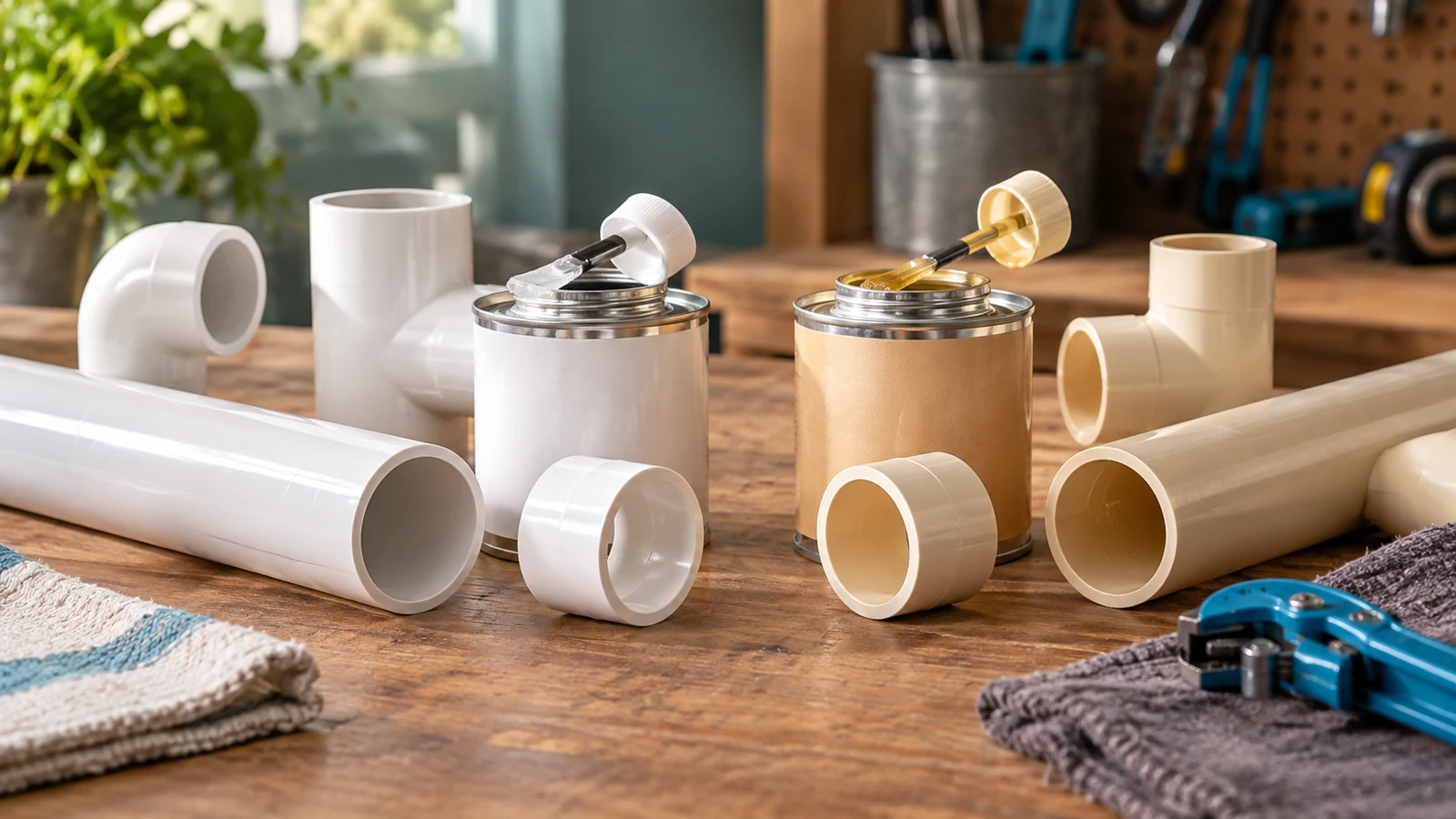
When tackling plumbing projects, you might wonder if you can use CPVC glue on PVC pipes. It’s a common question, especially for DIY enthusiasts looking to save time and money. Understanding the compatibility of these materials can prevent costly mistakes and ensure your plumbing system functions smoothly.
CPVC (Chlorinated Polyvinyl Chloride) and PVC (Polyvinyl Chloride) might seem similar, but they have distinct chemical properties. Using the wrong adhesive can compromise the integrity of your plumbing connections. So, can you use CPVC glue on PVC? Let’s jump into the specifics to help you make an well-informed choice.
Key Takeaways
- Understand Material Differences: PVC and CPVC pipes have distinct chemical and physical properties, which directly impact their adhesive requirements.
- Adhesive Specificity: Use PVC cement for PVC pipes and CPVC cement for CPVC pipes to ensure strong, durable connections.
- Temperature Resistance: PVC glue is suitable for applications up to 140°F, while CPVC glue can handle temperatures up to 200°F.
- Primer Importance: Applying the correct primer for each material (PVC primer for PVC and CPVC primer for CPVC) is essential for proper bonding.
- Expert Recommendations: Professionals advise against using CPVC glue on PVC due to differences in chemical composition and bonding strength, ensuring system reliability.
- Proper Techniques: Follow manufacturer guidelines for adhesive application, including thorough cleaning, uniform primer and cement application, and immediate joint assembly for optimal results.
PVC vs. CPVC: Understanding the Difference
Recognizing the distinctions between PVC and CPVC is crucial for ensuring the right material and adhesive selection in plumbing projects. Defined below are key terms and detailed comparisons.
Key Terms
PVC (Polyvinyl Chloride):
- Usage: Commonly used for cold water supply and drainage applications.
- Temperature Resistance: Suitable for temperatures up to 140°F (60°C).
- Flexibility: More flexible than CPVC, making it easier to install in tight spaces.
- Chemical Structure: Basic polymer of vinyl chloride monomers.
CPVC (Chlorinated Polyvinyl Chloride):
- Usage: Designed for hot and cold water supply, especially in hot water lines.
- Temperature Resistance: Can withstand temperatures up to 200°F (93°C).
- Flexibility: More rigid and durable than PVC, mainly for hot water systems.
- Chemical Structure: Chlorinated version of PVC, enhancing its heat resistance and durability.
Comparative Features
Let’s break down the specific features and applications of both materials in a clear table.
| Feature | PVC | CPVC |
|---|---|---|
| Temperature Resistance | Up to 140°F (60°C) | Up to 200°F (93°C) |
| Usage | Cold water systems, drainage, irrigation | Hot and cold water systems |
| Flexibility | Flexible, good for tight spaces | Rigid, ideal for durable installations |
| Chemical Structure | Vinyl chloride polymer | Chlorinated form of PVC |
| Cost | Generally cheaper | More expensive |
| Adhesive Type | PVC cement | CPVC cement |
Applications
- PVC: Ideal for residential irrigation systems, drainage pipes in homes, and cold water supply lines.
- CPVC: Suitable for indoor plumbing requiring hot water pipes, industrial liquid handling, and high-temperature environments.
Action Point
Use the correct adhesive for each material (PVC cement for PVC and CPVC cement for CPVC) to ensure the integrity and longevity of your plumbing installations.
Compatibility of PVC and CPVC Sizes
Understanding the size compatibility between PVC and CPVC is crucial when planning plumbing projects involving both materials. While both are thermoplastics, their sizing standards differ, which directly impacts their fitting and bonding.
Size Differences
- PVC (Polyvinyl Chloride): PVC pipes adhere to the nominal pipe size (NPS) standards, which are based on the inside diameter. This means that the internal diameter of the PVC pipe will be slightly less than the nominal size.
- CPVC (Chlorinated Polyvinyl Chloride): CPVC pipes for plumbing applications usually follow the copper tube size (CTS) standards, which differ from NPS. These standards are based on the outside diameter, making CPVC pipes generally smaller than their PVC counterparts of the same nominal size.
Impact on Fitting and Bonding
- Fitting Disparity: Since PVC and CPVC pipes have different diameter standards, CPVC pipes will not fit perfectly into PVC fittings and vice versa. This makes CPVC and PVC diameters (NPS vs. CTS) significant.
- Bond Strength: Using incorrect fittings or adhesives can compromise the bond strength. CPVC needs a stronger solvent cement and primer due to its higher melting point and rigid chemical structure.
Practical Considerations
- Mixing Materials: When combining PVC and CPVC in a single system, you must carefully align size standards and use appropriate transition fittings. These specialized fittings help bridge the size gap effectively.
- Joining Techniques: Apply CPVC primer to the outside of the CPVC pipe and inside of the PVC fitting. Follow this by applying a light layer of CPVC cement to primed areas. Twist pieces together and hold firmly for 30 seconds to ensure a strong joint.
Key Terms
- NPS (Nominal Pipe Size): Standard based on the pipe’s internal diameter, used for PVC.
- CTS (Copper Tube Size): Standard based on the pipe’s outside diameter, used for CPVC.
Size Comparison Table
| Aspect | PVC (NPS) | CPVC (CTS) |
|---|---|---|
| Standard | Inside Diameter | Outside Diameter |
| Common Applications | Cold Water Supply | Hot & Cold Water |
| Typical Temperature Range | Up to 140°F | Up to 200°F |
| Adhesive | PVC Cement | CPVC Cement |
Summary
Accurate size compatibility is vital for successful plumbing projects involving PVC and CPVC. Always align size standards (NPS for PVC, CTS for CPVC), use correct solvent cement and primer, and choose appropriate transition fittings to ensure a reliable and strong bond between these materials.
The Role of Glue in Joining PVC and CPVC
Choosing the right adhesive for PVC and CPVC pipes is crucial for ensuring reliable plumbing connections. Incorrect glue can compromise the integrity of your plumbing systems.
Types of Cement & Primer
Using the right type of cement and primer is essential to creating strong bonds in piping systems.
- PVC Cement: Clear or gray cement designed specifically for PVC applications. It does not provide the chemical bonding strength required for CPVC’s tougher chemical structure. This cement is suitable for cold water supply and drainage applications.
- CPVC Cement: Orange in color, this cement conforms to ASTM F 493 standards. It’s stronger than PVC cement and designed for applications requiring higher temperature resistance. It necessitates the use of a CPVC primer to be effective. CPVC cement is suitable for both hot and cold water supply lines.
Defining these materials helps you understand why they are not easily interchangeable.
PVC and CPVC Glue: Differences and Similarities
PVC and CPVC glues have distinct formulations optimized for their respective materials. Recognizing these differences is key to their correct application.
- Chemical Composition:
- PVC Glue: Formulated for PVC’s chemical structure, providing adequate bonding strength for typical applications like drainage systems.
- CPVC Glue: Contains chemicals designed to bond with CPVC’s tougher and more temperature-resistant material.
- Temperature Resistance:
- PVC Glue: Suitable for applications up to 140°F.
- CPVC Glue: Handles higher temperatures, making it suitable for hot water lines up to 200°F.
- Color and Identification:
- PVC Glue: Clear or gray, easy to identify for standard-use cases.
- CPVC Glue: Orange, differentiating it for high-temperature applications.
Summary and Action Points
Understanding the specific properties of PVC and CPVC cements ensures you select the appropriate glue for your plumbing projects. Always use PVC cement for PVC pipes and CPVC cement with CPVC pipes to maintain the integrity of your plumbing installations. Here’s a table summarizing the key features:
| Feature | PVC Cement | CPVC Cement |
|---|---|---|
| Color | Clear or Gray | Orange |
| Standard Compliance | Not specified | ASTM F 493 |
| Temperature Handling | Up to 140°F | Up to 200°F |
| Chemical Composition | Standard PVC | Stronger CPVC |
| Required Primer | No | Yes |
Correctly applying the appropriate cement and primer ensures durable, leak-free connections in both PVC and CPVC systems.
Can You Use CPVC Glue on PVC?
Understanding the compatibility between CPVC and PVC is crucial for ensuring strong, reliable plumbing connections. While both materials share similar applications, their chemical differences, temperature resistance, and bonding requirements dictate the choice of adhesive.
Chemical Composition and Effectiveness
Compatibility and Chemical Structure
- CPVC (Chlorinated Polyvinyl Chloride): Undergoes additional chlorination, enhancing temperature resistance. Often used in hot water lines.
- PVC (Polyvinyl Chloride): Less chlorinated, typically used in cold water supply and drainage applications.
Both materials have distinct chemical compositions that affect how effectively an adhesive bonds with them. CPVC’s tougher chemical structure requires stronger adhesives. Using CPVC glue on PVC is feasible, provided the solvent cement is strong enough.
Solvent Cement Requirements
- Strength: CPVC requires a more robust solvent cement and primer to ensure a solid bond.
- Primer: Using the correct primer ensures that the CPVC cement can effectively bond with PVC.
- Application: While standard PVC cement might not bond well with CPVC, CPVC cement can work on PVC when using the proper primer.
Situations Where CPVC Glue Can Be Used on PVC
Certain circumstances make using CPVC glue on PVC practical and beneficial:
- Mixed Material Systems: When a plumbing system includes both CPVC and PVC, using CPVC glue can help ensure a stronger bond.
- High-Temperature Applications: In scenarios where higher temperature resistance is required, even in PVC pipes, CPVC cement provides the necessary strength.
- Repair Work: For repairs involving both materials, using CPVC glue simplifies the process by eliminating the need for different adhesives.
To conclude, using CPVC glue on PVC can be effective if the correct primer is applied and the solvent cement is strong enough to bond the PVC material. This practice is especially useful in mixed material systems, high-temperature requirements, or repairs involving both CPVC and PVC materials. Ensuring the proper adhesive and primer can significantly enhance the integrity and longevity of your plumbing connections.
Expert Recommendations
Industry experts consistently advise against using CPVC glue on PVC pipes due to the following reasons:
Chemical Properties
- Compatibility: CPVC glue is formulated for CPVC pipes and does not adhere well to PVC pipes. PVC glue is essential for effective bonding.
- Temperature Resistance: CPVC glue can withstand higher temperatures, which is suitable for hot water lines. But, this property doesn’t enhance the glue’s effectiveness for PVC applications.
Bonding Effectiveness
- Adhesion Quality: Using CPVC glue instead of PVC glue compromises the bond’s longevity and strength. PVC glue offers a chemical bond compatible with PVC molecules, ensuring a durable connection.
- Preparation Materials: For the best bond, always use a primer matching the pipe material. For PVC, use a PVC primer and cement. For CPVC, use CPVC primer and cement.
Glue Selection Tips
- Identify Pipe Material: Determine whether you’re working with PVC or CPVC pipes. This dictates the type of glue and preparation needed.
- Use Correct Primer: Apply the primer specific to the pipe material. CPVC primer for CPVC pipes and PVC primer for PVC pipes.
- Select Appropriate Adhesive: Use PVC cement for PVC pipes. Use CPVC cement, which complies with ASTM F 493 standards, for CPVC pipes.
- Follow Manufacturer Instructions: Always refer to the adhesive manufacturer’s guidelines to ensure secure and proper application.
Ensuring Proper Bonding
- Surface Preparation: Clean the pipe ends thoroughly. Debris and oil can hinder adhesive effectiveness.
- Uniform Application: Apply the primer and cement uniformly around the pipe and fitting for full coverage and bond strength.
- Joint Assembly: Insert the pipe into the fitting immediately after applying the cement. Hold it in place firmly for a few seconds to ensure initial bonding.
- Failure Risks: Substituting CPVC glue on PVC can lead to joint failures, especially under pressure or temperature fluctuations. This causes leaks and potential system malfunctions.
- Professional Advice: Professionals always emphasize using materials and adhesives tailored to the specific pipe type to guarantee system integrity and performance.
| Comparison | PVC Glue | CPVC Glue |
|---|---|---|
| Material Compatibility | PVC pipes | CPVC pipes |
| Temperature Resistance | Up to 140°F | Up to 200°F |
| Chemical Structure | Designed for PVC molecules | Formulated for CPVC’s higher chlorine content |
| Required Primer | PVC primer | CPVC primer |
Adhering to these expert recommendations ensures reliable and leak-proof plumbing systems. Selecting and applying the right adhesive based on your pipe material is crucial for lasting and robust connections.
Conclusion
Understanding the differences between PVC and CPVC, as well as their respective adhesives, is crucial for any plumbing project. Using the correct glue ensures that your connections are secure and long-lasting. While CPVC glue may seem like a versatile option, it’s essential to follow expert advice and use PVC cement for PVC pipes to avoid compatibility issues. By adhering to these guidelines, you’ll maintain the integrity of your plumbing system and prevent potential leaks. Always identify your pipe material, use the appropriate primer, and follow manufacturer instructions to ensure reliable, leak-proof connections.
Frequently Asked Questions
Can you use CPVC glue on PVC pipes?
While CPVC glue may adhere to PVC pipes, it’s not recommended due to chemical differences. Using CPVC glue on PVC can compromise the connection’s integrity. Always use PVC cement for PVC pipes to ensure a reliable bond.
What is the difference between PVC and CPVC pipes?
PVC (Polyvinyl Chloride) is used for cold water and drainage, while CPVC (Chlorinated Polyvinyl Chloride) handles both hot and cold water. CPVC has higher temperature resistance (200°F) compared to PVC (140°F).
Why is it important to use the correct adhesive?
Using the correct adhesive ensures a durable, leak-free plumbing connection. PVC requires PVC cement, and CPVC needs CPVC cement to match their chemical properties.
Are PVC and CPVC pipes compatible in size?
No, PVC and CPVC have different sizing standards—PVC uses nominal pipe size (NPS), and CPVC uses copper tube size (CTS). This affects fitting and bonding compatibility.
Can Oatey Orange CPVC Cement be used on PVC?
Oatey® Orange CPVC Cement is designed for CPVC pipes and is not recommended for PVC. Using it on PVC can result in a weak connection.
What happens if I use the wrong cement on pipes?
Using the wrong cement, such as CPVC cement on PVC, can lead to insecure bonds and potential leaks. Always use the specified cement for each pipe type.
How long does CPVC cement take to dry?
Allow CPVC cement 15 minutes for handling strength and 2 hours to cure at temperatures above 60°F. Longer cure times may be required for larger pipes or lower temperatures.