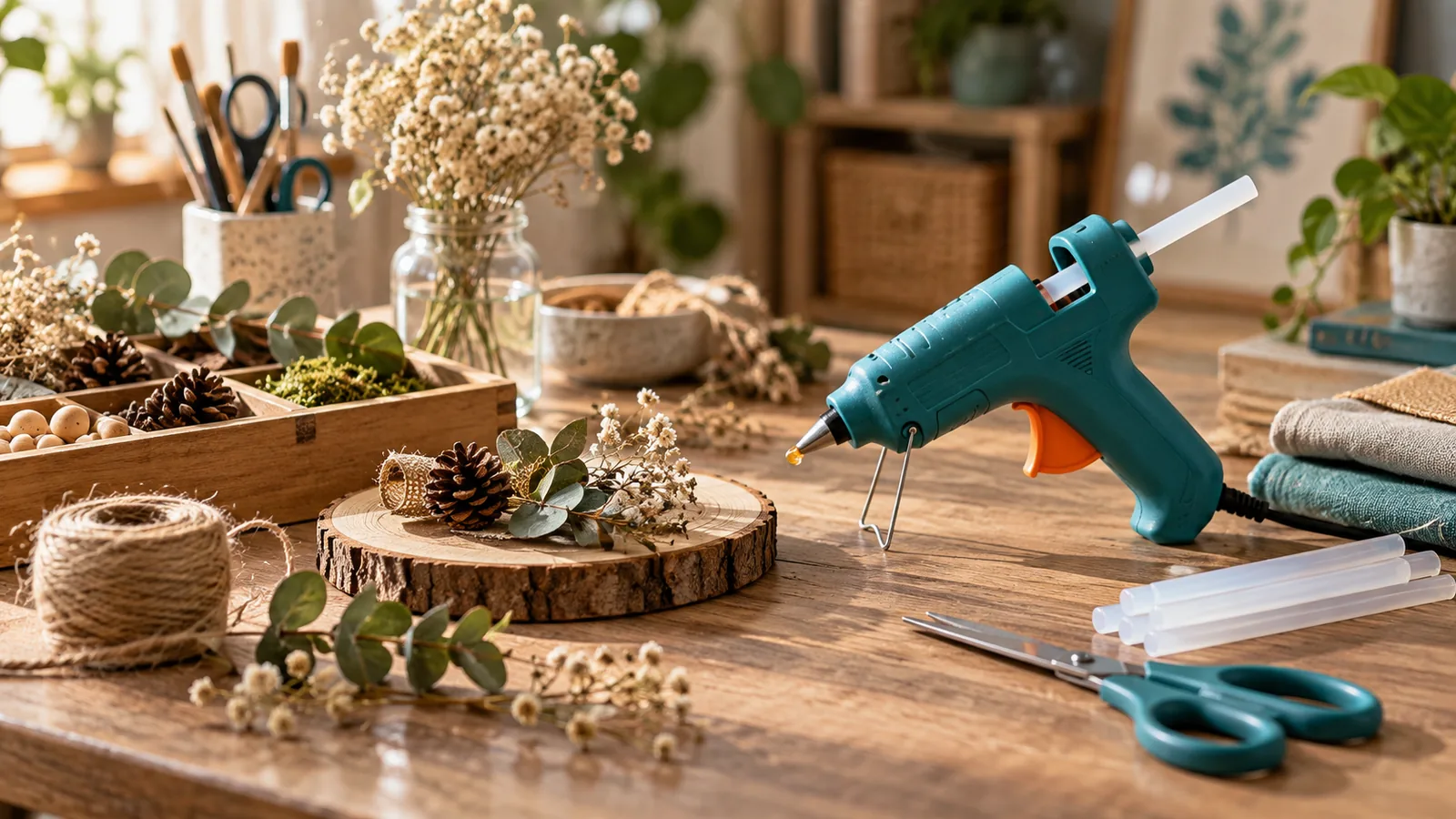
Crafting with a glue gun can be both exciting and a bit intimidating if you’re not familiar with its quirks. Whether you’re a seasoned DIY enthusiast or a newbie crafter, mastering the glue gun can elevate your projects to a professional level. From creating intricate designs to securing heavy materials, the glue gun is an indispensable tool in your crafting arsenal.
Key Takeaways
- Versatility and Material Compatibility: Glue guns can bond various materials including wood, plastic, and fabric, making them essential tools for a wide range of crafting projects.
- Efficiency and Quick Drying: Hot glue dries rapidly, allowing for quick progress on projects and reducing waiting time.
- Precision and Professional Results: The fine tip of a glue gun ensures precise application, which is crucial for detailed crafts and achieving clean, professional-looking outcomes.
- Strong, Durable Bond: The adhesive from a glue gun offers a durable bond, essential for projects that need to withstand wear and tear.
- Ease of Use: Glue guns are user-friendly and require minimal training, making them accessible for crafters of all levels.
- Creative and Advanced Applications: Beyond basic usage, advanced techniques such as using glue for bead creation, custom coasters, and faux geodes can significantly elevate the quality and creativity of crafting projects.
Advantages of Using a Glue Gun
Glue guns offer numerous benefits that can significantly enhance your crafting projects. Understanding these advantages can help you make the most out of this versatile tool.
Versatility
- Material Compatibility: Glue guns can bond various materials like wood, plastic, fabric, and more. This versatility makes them essential for crafters and DIY enthusiasts.
- Project Range: Whether you’re working on home decor, school projects, or intricate designs, glue guns can handle it all.
Quick Drying
- Rapid Adhesion: Hot glue dries rapidly, ideal for projects with tight deadlines or quick fixes. This allows you to move on to the next step without delays.
- Efficiency: Faster drying time means you spend less time waiting and more time creating.
Precision
- Fine Tip: The fine tip of a glue gun enables precise application, crucial for detailed and intricate crafts.
- Professional Results: Precision in glue application helps achieve clean and professional-looking results.
Strong Bond
- Durability: The adhesive from a glue gun creates a durable bond, ensuring your items last longer.
- Wear Resistance: This strong bond is essential for projects that need to withstand wear and tear.
Ease of Use
- User-Friendly: Glue guns are relatively easy to use, making them accessible for both beginners and experienced crafters.
- Minimal Training: You don’t need extensive training to use a glue gun effectively.
| Feature | Description |
|---|---|
| Temperature | Typically ranges from 250°F to 400°F |
| Glue Types | Sticks, pellets |
| Power Source | Electric, battery-operated |
| Nozzle Types | Standard, precision, spreader |
| Drying Time | 30 seconds to 1 minute |
Incorporating these advantages into your crafting routine can elevate the quality of your projects and streamline your workflow. Whether tackling a new DIY project or refining your crafting skills, a glue gun is a valuable and versatile tool in your arsenal.
Choosing the Right Glue Gun
Selecting the right glue gun can make a significant difference in your crafting projects. The right tool ensures precision, efficiency, and professional results. Here, we’ll explore the essential aspects to consider when choosing a glue gun.
Types of Glue Guns
Glue guns come in various types suited to different crafting needs:
- Corded Glue Guns:
- These provide consistent heat, which is ideal for most crafting requirements.
- Limited by cord length, but generally more reliable for extended use.
- Cordless Glue Guns:
- Offer greater mobility and ease of movement.
- May experience battery limitations and inconsistent heating.
- Mini Glue Guns:
- Use mini hot glue sticks, perfect for smaller, detailed work.
- Smaller tips minimize mess and stringing, though less powerful.
- Standard and Jumbo Glue Guns:
- Suitable for larger projects requiring more adhesive.
- Accommodate regular or jumbo-sized glue sticks for extensive tasks.
Wattage Options and Their Pros and Cons
Understanding wattage is crucial as it influences the glue gun’s performance:
| Wattage (W) | Pros | Cons |
|---|---|---|
| 20W – 40W | Ideal for light crafts and delicate materials. Low power usage. | Limited to small projects, slower heat-up time. |
| 60W – 100W | Versatile for various projects. Faster heat-up time. | Higher power usage, slight risk of overheating. |
| Over 100W | Suitable for industrial or heavy-duty projects. Handles large volumes of glue. | Consumes more power, excessive heat may warp sensitive materials. |
Glue Stick Varieties
Choosing the right glue stick is as important as selecting the gun:
- Standard Glue Sticks:
- Versatile and can be used in most glue guns.
- Offer strong adhesion for a variety of materials like wood, fabric, and metal.
- High-Temperature Glue Sticks:
- Compatible with high-wattage guns.
- Ideal for resistant materials requiring stronger bonds.
- Low-Temperature Glue Sticks:
- Designed for delicate materials such as lace, ribbon, and foam.
- Reduce the risk of material damage due to lower melting points.
- Specialty Glue Sticks:
- Include options like colored, glitter, and fabric-specific sticks.
- Offer aesthetic or material-specific features enhancing your projects.
Choosing the right glue gun involves understanding your project’s requirements and the specific features of each type, wattage, and glue stick variety. The right combination will ensure your crafts are not only precise but also durable and professional.
Mastering Basic Techniques
Understanding the fundamental techniques of using a glue gun can significantly enhance the quality of your crafts. From heating it up to choosing the right model, mastering these basics is essential for any crafter.
Heating Up the Glue Gun
Properly heating the glue gun ensures better results in your projects. Here’s how to do it:
- Insert Glue Stick: Place a glue stick into the back of the gun.
- Plug In and Heat: Connect the glue gun to a power source. Wait for 5-10 minutes to allow it to heat up completely.
- Confirm Readiness: Ensure the glue gun is fully heated to minimize glue strings and enhance adhesion.
Applying Glue
Different techniques in applying glue can make a significant difference in your craft’s outcome:
- Gently Squeeze Trigger: Squeeze the trigger lightly to dispense the glue where needed.
- Firmly Press Materials: Press the materials together to create a strong bond.
- Use Fine Tip: For precise application, use the tip of the glue gun to target specific spots.
Choosing the Right Glue Gun
Selecting the correct glue gun based on project requirements improves results:
- Light-Duty Projects: A 20W glue gun works well for delicate materials.
- Heavy-Duty Projects: A 150W glue gun is suitable for heavier tasks.
How to Use a Glue Gun Safely
Safety is paramount when using a glue gun. Follow these guidelines to avoid injuries:
- Read Instructions: Always follow the manufacturer’s instructions for safe operation.
- Use a Stand: When not in use, place the glue gun on its stand to prevent accidental burns.
- Work in a Ventilated Area: Ensure proper ventilation to avoid inhaling fumes.
- Avoid Skin Contact: Never touch the nozzle or molten glue directly, as they can cause severe burns.
Preventing and Removing Glue Strings
Glue strings can be frustrating, but there are ways to minimize them:
- Control Temperature: Ensure the glue gun is fully heated, as underheated glue often causes strings.
- Clean Nozzle: Regularly clean the nozzle to prevent build-up.
- Practice Efficient Application: Apply glue smoothly and quickly retract the glue gun to avoid strings.
To remove glue strings:
- Use a Hair Dryer: A hair dryer on low heat can soften and remove unwanted strings.
- Pick with Tweezers: Use tweezers to gently pull off any glue strings from your craft.
Optimizing Glue Stick Usage
Efficient use of glue sticks saves time and resources:
- Store Properly: Keep glue sticks in a cool, dry place to maintain their quality.
- Use Appropriately: Choose the right glue stick type—standard, high-temperature, low-temperature, or specialty—for the material you’re working with.
- Replace Timely: When the glue stick gets short, insert a new stick to ensure a continuous flow.
Here’s a table summarizing different glue stick types and their uses:
| Glue Stick Type | Suitable Materials | Temperature Requirement |
|---|---|---|
| Standard | General purpose, wood, paper, fabric | High and low |
| High-Temperature | Metal, glass, heavier objects | High |
| Low-Temperature | Delicate materials, foam, lace | Low |
| Specialty | Specific needs such as glitter or color | Depends on specific formulation |
Use these guidelines to refine your glue gun technique and elevate your crafting projects.
Advanced Tips and Tricks
Mastering the glue gun can elevate your crafting projects. For more advanced techniques, these tips provide clarity and enhance your skills.
Removing Hot Glue Strings
- Hair Dryer Method: Use a hair dryer to eliminate hot glue strings. Turn on the hair dryer, apply it to the strings, and watch them disappear.
Cleaning the Glue Gun
- Aluminum Foil Method: To clean a gunked-up glue gun, use multi-layer aluminum foil. Fold the foil and rub it against the warm glue gun to remove residue without touching hot parts.
Creating Beads and Coasters
- Beads: Use colored hot glue sticks to create beads on a silicone mat. Apply a small dot of glue to attach the beads to paper flowers or other projects.
- Coasters: Apply hot glue to create rubber grips on the back of tiles, ensuring they don’t slip when in use.
Precision and Control
- High-Temperature Glue Guns: High-temperature glue guns leave fewer strings, making them ideal for precise work. Ensure the glue gun is fully heated before use for optimal performance.
DIY Glue Gun Stand
Creating your own glue gun stand can save time and keep your workspace tidy:
- Materials: Wooden block, nails, and wire.
- Steps:
- Hammer two nails into the wooden block, spaced to hold the glue gun’s handle.
- Shape the wire into a loop to catch drips, attaching it to the block.
Utilizing Silicone Mats
Silicone mats enhance your crafting efficiency by providing a non-stick surface for glue projects:
- Benefits: Prevents glue from sticking to workspaces.
- Use: Ideal for creating glue dots, shapes, or catching drips. Place the mat on your workspace, allowing easy cleanup.
Fine Tip Glue Guns and Their Benefits
Fine tip glue guns offer greater control, vital for detailed work:
- Precision: Allows for targeted application in intricate designs.
- Benefits:
- Versatility: Suitable for small embellishments and delicate materials.
- Reduced Waste: Less glue used, promoting cost efficiency.
Summary
Enhance your crafting techniques with these glue gun tricks, improving precision and saving time. By implementing these advanced tips, you’ll take your projects to new heights.
Creative Applications
Expand your crafting repertoire with these creative applications of hot glue guns. From beaded paper flowers to custom coasters, discover innovative ways to use this versatile tool.
Innovative Craft Ideas
Enhance your projects with unique ideas and precise applications of hot glue.
- Beaded Paper Flowers:
- Use colored glue sticks to create beads.
- Apply a small dot of colored glue to form beads.
- Attach these beads to paper flowers for an enhanced look.
- Custom Coasters:
- Add vinyl designs to tiles.
- Use hot glue to create rubber grips on the back, preventing slips.
- Seasonal Decorations and Holiday Crafts:
- Make stencils, stamps, and molds using hot glue.
- Create faux geodes for seasonal decorations.
- Refer to guides like “Hot Glue Hacks and Crafts” for detailed projects.
- Lampshades and Stencils:
- Design unique lampshades with hot glue patterns.
- Create stencils by applying glue precisely.
Incorporating Glue Strings into Projects
Turn a common issue into a creative feature with glue strings.
- Glue String Webbing:
- Use glue strings to mimic spider webs in Halloween decorations.
- Apply glue strings to craft spider webs on black cardboard.
- Textured Art Projects:
- Integrate glue strings into abstract art for added texture.
- Add glue strings over painted canvases for a 3D effect.
- DIY Jewelry:
- Create unique, web-like jewelry pieces using glue strings.
- Form glue strings into designs, then paint or glitter them.
Fun Hot Glue Projects
Engage with fun, creative projects to test your glue gun skills.
- Hot Glue Stamps and Molds:
- Create stamps for paint or ink by drawing designs with hot glue.
- Use a silicone mat to mold hot glue shapes.
- Faux Geodes:
- Form geode shapes using colored hot glue and glitter.
- Apply glue in layers, adding glitter intermittently for a realistic look.
- Glow-in-the-Dark Projects:
- Use glow-in-the-dark glue sticks for night-time visibility and charm.
- Create stars, moon shapes, or luminescent designs for bedroom decor.
| Project Type | Materials Needed | Application Method | Unique Feature |
|---|---|---|---|
| Beaded Paper Flowers | Colored glue sticks, paper flowers | Dots of glue as beads, attach to flowers | Enhanced 3D appearance |
| Custom Coasters | Vinyl designs, tiles, hot glue | Vinyl on tiles, glue for rubber grips | Non-slip coasters |
| Seasonal Decorations | Hot glue sticks, stencils, molds, faux geodes | Glue for stencils/molds, layering for geodes | Festive, customizable designs |
| Lampshades & Stencils | Hot glue, lampshade base | Glue designs on lampshades, precise gluings | Personalized home decor |
| Glue String Webbing | Glue sticks, black cardboard | Glue gun to mimic webs | Ideal for Halloween decor |
| Textured Art | Acrylic paint, canvases, glue sticks | Abstract streaks with glue strings | Adds 3D texture |
| DIY Jewelry | Glue sticks, paint, glitter | Form designs, paint, add glitter | Web-like jewelry |
| Hot Glue Stamps | Glue sticks, silicone mat | Draw designs, lift off mat | Custom stamps for prints |
| Faux Geodes | Colored glue sticks, glitter | Layering glue, adding glitter | Realistic geode ornaments |
| Glow-in-the-Dark | Glow-in-the-dark glue sticks | Create night-visible designs, shapes | Luminous, night-time charm |
Focus on these innovative approaches to maximize your use of hot glue guns in crafting. Integrating these techniques into your projects will elevate their quality, making them stand out.
Maintenance and Safety Tips
Proper maintenance and safety precautions are essential to ensure your glue gun operates efficiently and safely. Follow these tips to keep your crafting tool in top shape.
Cleaning and Maintaining Your Glue Gun
Cleaning the Nozzle and Tip:
- Use a piece of aluminum foil to clean off any residue. Fold the foil and rub it against the nozzle while the glue gun is still warm. This helps remove any dried glue and debris.
Using a Stand or Prop:
- If your glue gun doesn’t come with a stand, consider making one or using a binder clip to prop it up. This prevents the glue gun from touching surfaces, reducing the risk of accidents.
Regular Inspection:
- Regularly inspect your glue gun for any damage or wear. Check the cord, nozzle, and trigger for any signs of deterioration. Address issues promptly to avoid operational failures.
Cooling Down:
- After use, unplug the glue gun and let it cool down before storing. This prevents accidental burns and prolongs the life of the glue gun.
Safety Precautions
Work Area Preparation:
- Set up your work area on a heat-resistant surface. Place a silicone mat or piece of aluminum foil underneath the glue gun to catch any drips.
Proper Ventilation:
- Ensure adequate ventilation in your workspace. Glue fumes, especially from high-temperature glue sticks, can be harmful if inhaled for prolonged periods.
Handling Hot Glue:
- Wear protective gloves to avoid burns when handling hot glue. If you get hot glue on your skin, immerse the affected area in cold water immediately.
- Avoid using the glue gun near water or flammable materials. Regularly check the cord for any signs of damage, and make sure the plug is securely inserted into the outlet.
By following these maintenance and safety tips, you can ensure your glue gun remains a reliable tool for all your crafting needs. Regular upkeep and mindful usage extend the life of your glue gun, allowing for safer and more efficient crafting sessions.
Conclusion
Mastering the glue gun opens up a world of crafting possibilities. With the right tools and techniques, you can achieve professional-quality results and elevate your projects to new heights. Whether you’re a seasoned DIYer or a beginner, incorporating these tips and tricks will streamline your creative process and enhance your craftsmanship.
By understanding the nuances of different glue guns and glue sticks, you can tailor your approach to suit various materials and project requirements. Prioritizing safety and maintenance ensures your glue gun remains efficient and reliable, allowing you to focus on your creativity.
Explore the innovative applications and advanced techniques discussed, and you’ll find that the glue gun is more than just a tool—it’s an essential ally in your crafting endeavors. Jump into your projects with confidence, knowing you’ve got the skills and knowledge to make them shine.
Frequently Asked Questions
What are the benefits of using a glue gun in crafting?
Glue guns offer versatility, rapid drying time, precision in application, and strong, durable bonds. They’re user-friendly, making them suitable for all skill levels, and can significantly elevate the quality of projects.
How do I choose the right glue gun?
Consider the type (corded, cordless, mini, standard, jumbo), wattage (20W to 100W+), and the appropriate glue stick (standard, high-temperature, low-temperature, specialty) based on your project needs. Personal preference, such as hand size and frequency of use, also matters.
What types of glue guns are available?
Glue guns come in various types: corded, cordless, mini, standard, and jumbo. They also vary by temperature settings, with options for low temperature, high temperature, and dual temperature for versatile use.
Can a glue gun be used on all materials?
Glue guns work well on many materials like fabric, wood, and plastic. However, they may not adhere strongly to very smooth surfaces like glass, ceramic, or metal.
How do I reduce hot glue strings during crafting?
Ensure the glue gun is fully heated. Twist your wrist as you pull away to minimize strings. After completing your project, use a hair dryer to remove any remaining strings.
Is using a glue gun safe?
Glue guns are generally safe but can cause burns and pose a fire hazard if not used properly. Always work in a heat-resistant area, ensure proper ventilation, and wear protective gloves to prevent injuries.
What maintenance does a glue gun require?
Regularly inspect the glue gun for wear, clean the nozzle with aluminum foil, and use a stand to prevent accidents. Following these steps helps extend the tool’s life and ensures efficient operation.
Are there advanced techniques for using a glue gun?
Yes, advanced techniques include using a hair dryer to remove hot glue strings, cleaning with aluminum foil, and employing silicone mats for easy cleanup. These tips enhance crafting efficiency and project quality.