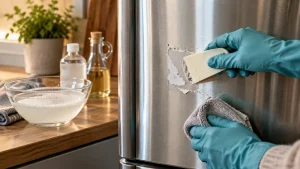
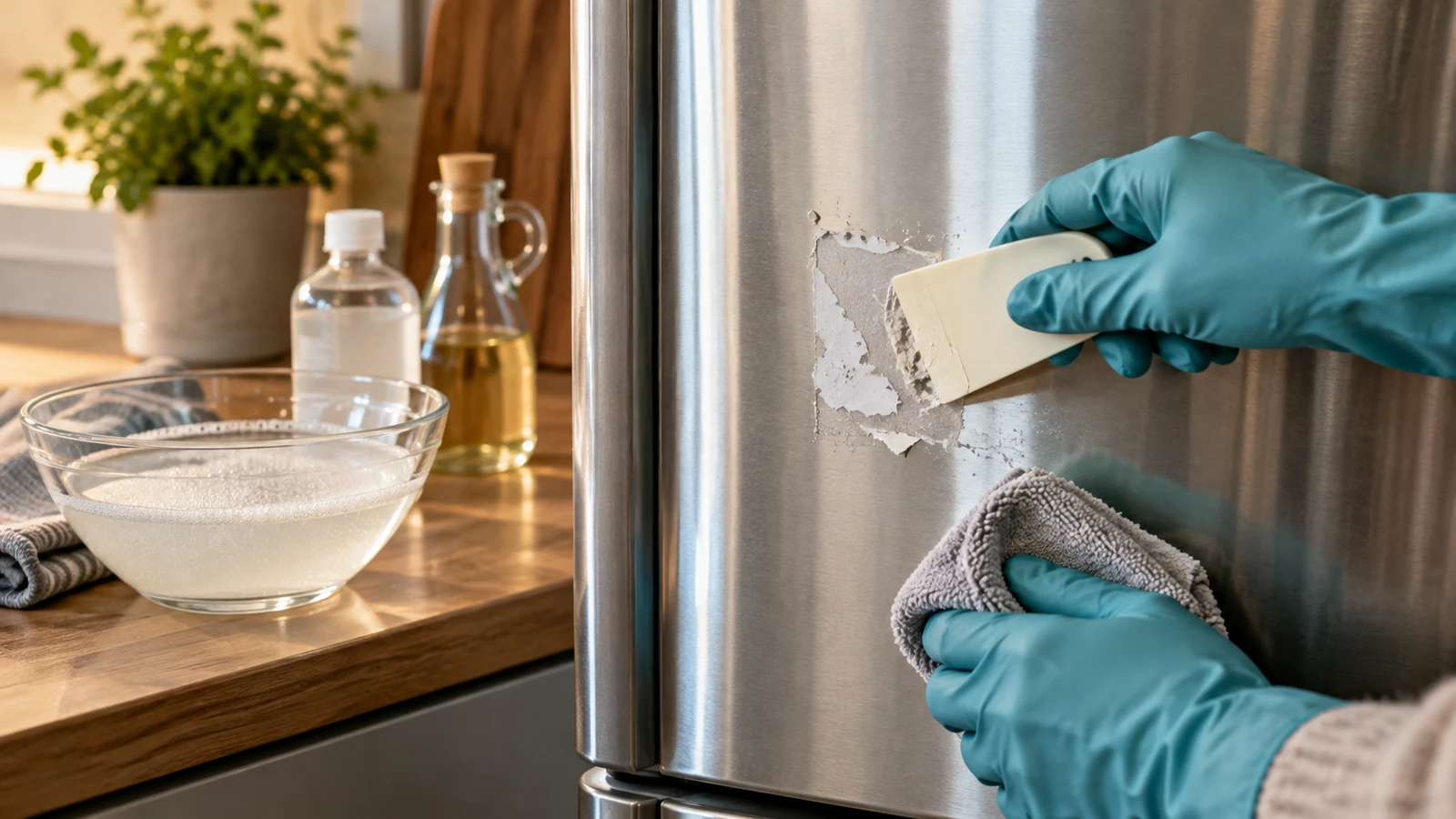
How to remove adhesive from stainless steel depends on the glue and the finish. Soften the residue with warm soapy water, oil, isopropyl alcohol, or controlled heat, then lift it with a plastic scraper and wipe in the steel’s grain direction. Use acetone only for cured glue after testing nearby materials.
Key Facts / Quick Answer
Warm water and dish soap suit fresh, water-based label glue.
Vegetable or mineral oil loosens paper-label and pressure-sensitive residue without aggressive fumes.
Isopropyl alcohol usually handles light tape residue in 1-5 minutes.
A hairdryer softens old film before peeling, but excessive heat can damage coatings, seals, or nearby plastic.
Acetone dissolves some cured adhesives, but it can destroy paint, plastic, rubber, and printed markings.
A plastic razor, nylon scraper, or old card is safer than steel wool or a metal blade.
What Adhesive Residue Is on Stainless Steel?
Adhesive residue is a polymer film left after a sticker, tape, label, protective film, or mounting pad separates from stainless steel. The film remains tacky because pressure-sensitive adhesive does not need water to bond, while cured products such as cyanoacrylate form a harder plastic-like mass.
Stainless steel resists rust because oxygen helps maintain a thin chromium-oxide passive layer. Normal household solvents do not usually remove that layer, but scratching, chloride contamination, heat damage, or trapped moisture can create staining and localized corrosion. The visible grain also matters: a brushed finish hides marks in one direction but exposes crosswise scratches.
Residue changes with age. Fresh tape adhesive is soft and oily; old film may oxidize into a brittle, yellow, gummy layer. Paper labels add cellulose fibers, which can hold water and solvent against the surface. Knowing that difference prevents unnecessary escalation.
What You Need Before Starting
Gather these items before applying a solvent:
- Two clean microfiber cloths
- Warm water and mild dish detergent
- Vegetable oil or mineral oil
- Isopropyl alcohol, preferably 70% or 90-99%
- A plastic razor, nylon scraper, old bank card, or wooden stick
- Nitrile gloves and ventilation for solvent use
- A hairdryer for large film or cold, brittle residue
Avoid combining solvents. A cloth containing oil can prevent alcohol from reaching the adhesive, and mixing household chemicals can create unpredictable vapors or surface marks.
How Do Adhesive Types Change the Removal Method?
The adhesive type determines whether heat, water, oil, alcohol, or a stronger solvent will work fastest. Pressure-sensitive residue usually softens through oil or alcohol, water-based glue responds to hydration, and cured glue requires careful solvent contact plus mechanical lifting.
| Adhesive or residue | Typical appearance | First method | Typical dwell time | Main caution |
|---|---|---|---|---|
| Paper-label glue | Pale, tacky, fibrous | Warm water and detergent | 5-15 minutes | Do not spread wet paper fibers |
| Tape residue | Clear, gummy, elastic | Oil or isopropyl alcohol | 1-5 minutes | Wipe repeatedly with clean cloth |
| Vinyl-film adhesive | Thin, hazy, sticky | Hairdryer, then oil | 2-5 minutes | Protect plastic trim and seals |
| Cyanoacrylate super glue | Hard, clear, raised | Acetone spot test | 5-10 minutes | Acetone attacks many plastics |
| Epoxy residue | Hard, thick, cured | Plastic scraping, specialist remover | 10-30 minutes | Solvent may not dissolve fully cured epoxy |
| Mounting-pad foam | Thick foam with rubbery glue | Heat, peel, oil | 5-15 minutes | Do not pull painted coatings away |
Pressure-sensitive adhesives are often the easiest to remove when softened rather than scrubbed. Friction alone spreads the polymer into a larger translucent smear.
How to Remove Adhesive From Stainless Steel Step by Step
The safest process removes the bulk first, uses the mildest effective chemistry, and ends with detergent cleaning. Follow the grain at every wiping stage.
- Identify the finish and test a hidden area. Look for brushed lines, mirror polish, black coating, printed controls, plastic trim, rubber seals, or lacquer. Apply a drop of the chosen product to an inconspicuous spot for 2-5 minutes, then wipe and inspect.
- Remove loose paper or film. Lift an edge with a fingernail or plastic card. Pull low and slowly, keeping the film close to the surface instead of pulling straight upward.
- Apply heat when the residue is broad or brittle. Hold a hairdryer about 15 cm, or 6 inches, away for 30-60 seconds. Keep the dryer moving. The surface should feel warm, never painfully hot.
- Apply the mildest suitable product. Use warm soapy water for water-based glue, oil for gummy label residue, or alcohol for thin tape residue. Put the liquid on a cloth rather than flooding seams or controls.
- Allow controlled dwell time. Press the damp cloth against the residue for 3-5 minutes. For thick deposits, repeat short applications rather than leaving solvent to evaporate on the metal.
- Lift softened adhesive. Hold a plastic scraper at approximately 30-45 degrees and push gently in the grain direction. Replace the edge when it becomes loaded with glue.
- Wipe with a fresh microfiber cloth. Use straight passes parallel to the brushed lines. Turn the cloth frequently so dissolved adhesive does not return to the surface.
- Wash the area. Use warm water and a few drops of dish detergent to remove oil or solvent residue. Rinse with clean water.
- Dry immediately. A clean towel prevents mineral spots and removes moisture from seams.
- Inspect under angled light. Remaining haze often becomes visible only after drying. Repeat the least aggressive successful step rather than jumping directly to acetone.
The most effective practitioner rule is to remove adhesive in layers. A thick deposit consumes solvent quickly, so peeling or scraping the top layer first reduces both contact time and smearing.
Which Adhesive Remover Is Safest and Fastest?
No single remover is best for every residue. Oil has the lowest surface risk but can leave a film, alcohol evaporates cleanly but may not penetrate thick glue, and acetone works aggressively while creating the greatest compatibility risk around nonmetal components.
| Method | Best application | Typical cost | Working time | Surface and vapor risk |
|---|---|---|---|---|
| Dish soap and warm water | Fresh paper labels | $0.05-$0.50 per use | 5-15 minutes | Very low; minimal ventilation |
| Vegetable or mineral oil | Gummy labels and tape | $0.05-$0.40 per use | 3-10 minutes | Low on bare steel; oily residue |
| Isopropyl alcohol | Thin tape and sticker film | $0.10-$1.00 per use | 1-5 minutes | Low on bare steel; flammable vapor |
| Commercial citrus remover | Thick, aged adhesive | $0.50-$2.00 per use | 3-10 minutes | Moderate; follow label ventilation |
| Acetone | Small cured-glue spots | $0.20-$1.00 per use | 1-10 minutes | High near plastic, paint, and ignition |
| Hairdryer | Large film or brittle glue | No consumable cost | 30-90 seconds | Low on bare steel; heat-sensitive parts |
Typical costs vary by country, package size, and whether the product is bought for one task. Commercial remover is often more expensive than the residue warrants, especially when oil or alcohol works in one or two passes.
When Should You Use Oil?
Oil is the best first solvent for sticky label residue on uncoated stainless steel. Apply a thin layer, wait 3-10 minutes, then roll or wipe the softened adhesive away before washing with detergent.
Mineral oil is more predictable than strongly scented cooking oils, which can oxidize and leave odor. Vegetable oil is acceptable for a small household spot, but it must be removed completely from food-contact surfaces. Oil is a poor choice when the surface has porous paint, a satin coating, or seams that can trap liquid.
When Is Isopropyl Alcohol Better?
Isopropyl alcohol is usually better than oil for thin, fresh tape residue because it leaves less film after evaporation. A 70% solution contains water that slows evaporation, while 90-99% alcohol flashes off faster and can be more effective on dry, oily deposits.
Alcohol is flammable. Keep it away from burners, sparks, and hot heating elements, and never apply it to an operating appliance. It may soften some inks, screen printing, rubber, and painted trim, so the patch test is mandatory.
Can Acetone Be Used on Stainless Steel?
Acetone can be used on bare stainless steel for small, hardened adhesive spots, but stainless steel is not the only material in most objects. Acetone can soften acrylic, ABS, polycarbonate, vinyl, rubber, painted finishes, appliance lettering, and some countertop sealants.
Use a cotton swab or small cloth, not a poured pool. Work for 30-60 seconds, lift the softened material with plastic, and repeat if necessary. Provide strong ventilation, wear solvent-resistant gloves, and keep acetone away from flames. If the glue is epoxy, acetone may only soften the surface rather than dissolve the cured mass.
How Does Heat Help Remove Old Protective Film?
Heat lowers the stiffness of many pressure-sensitive adhesives and makes vinyl film more flexible. A hairdryer on high, held about 6 inches away and moved continuously for 30-60 seconds, is generally easier to control than a heat gun.
| Heat source | Approximate control | Suitable use | Avoid when |
|---|---|---|---|
| Hairdryer | Gentle, moving airflow | Appliance film and labels | Water can enter controls |
| Heat gun on low | Much hotter, rapid softening | Bare metal fabrication parts | Paint, plastic, seals, or wiring are nearby |
| Warm damp cloth | Low, slow heat | Paper labels and water-based glue | Adhesive is oil-based |
| Sun-warmed surface | Uneven, unpredictable | Large outdoor film | Coating or temperature is uncertain |
Pull the softened film slowly at a low angle. If the film tears, warm the next section instead of increasing pulling force. Excessive heat can warp plastic, loosen a bonded trim piece, damage a clear coat, or spread adhesive into a larger area.
What Tools Prevent Scratches?
Plastic and nylon tools are hard enough to lift softened adhesive but generally less likely than steel to gouge stainless steel. A plastic razor is especially useful on broad, flat panels because its edge stays low and distributes pressure.
| Tool | Edge or contact profile | Best use | Typical scratch risk |
|---|---|---|---|
| Fingernail | Flexible, rounded | Small loose edges | Very low |
| Plastic razor | Thin, broad edge | Flat panels | Low |
| Nylon scraper | Rigid, angled edge | Thick residue | Low |
| Old plastic card | Broad, blunt edge | Large soft deposits | Very low |
| Wooden stick | Soft pointed end | Corners and seams | Low, may shed fibers |
| Razor blade | Hard, narrow edge | Only specialist controlled work | High |
| Steel wool | Abrasive fibers | Not recommended | Very high |
Do not use steel wool, green abrasive pads, powdered cleanser, knives, or metal putty knives on a visible finish. Circular scrubbing creates swirls that are difficult to blend, even when the underlying steel remains structurally sound.
An important distinction is that “stainless” does not mean “scratch-proof.” A scratch may not immediately cause rust, but it permanently changes how light reflects from brushed or polished metal.
How Should You Handle Different Stainless-Steel Surfaces?
Bare brushed stainless steel tolerates mild solvent use better than coated, printed, or textured surfaces. The cleaning method should follow the most vulnerable attached material, not merely the metal substrate.
Kitchen Appliances
Unplug the appliance before applying any liquid near controls, vents, door seals, or seams. Put solvent on a cloth, never directly on the appliance. After removal, wash the area with diluted dish detergent, rinse the cloth thoroughly, and wipe again so no solvent or oil remains near food or hand-contact controls.
Cookware and Food-Contact Surfaces
Use warm water, detergent, oil, or a food-contact-approved cleaner first. After any solvent-based treatment, wash the cookware thoroughly according to the cleaner’s label and rinse several times. Do not heat cookware to evaporate solvent, and do not cook food until all odor and residue have disappeared.
Coated or Black Stainless Steel
Black stainless and fingerprint-resistant finishes may include a thin coating over the steel. Avoid acetone, abrasive pads, strong alkaline cleaners, and aggressive scraping unless the manufacturer expressly permits them. A product that is safe on bare stainless can leave a lighter patch on a coated door.
Outdoor Hardware
Outdoor residue may contain dust, salt, and grit, which can scratch during wiping. Rinse loose particles first, then use detergent and a microfiber cloth. On coastal hardware, remove chloride-containing grime promptly because salt deposits can promote tea-colored staining around scratches and crevices.
What Problems Can Happen During Removal?
Most failures result from using too much force, too much solvent, or the wrong order of operations. The following table identifies the visible symptom and the least damaging correction.
| Problem | Likely cause | Immediate action | Prevention |
|---|---|---|---|
| Larger sticky smear | Dry rubbing or excess heat | Apply oil or alcohol to a clean cloth | Soften before wiping |
| Cloudy patch | Solvent dried on finish | Wash with detergent and rinse | Use short dwell periods |
| Crosswise scratches | Scrubbing across grain | Stop abrasive action | Use plastic and straight passes |
| Faded lettering | Solvent on printed coating | Stop solvent use | Mask or avoid markings |
| Oily halo | Mineral or cooking oil remains | Degrease with dish detergent | Use a thin oil layer |
| Brown-orange stain | Embedded iron or contamination | Clean gently, then reassess | Avoid steel wool and carbon-steel tools |
| Film still attached | Adhesive was too cold or thick | Rewarm and peel slowly | Remove bulk before solvent |
If a mark remains after residue is gone, do not assume it is adhesive. It may be a coating change, abrasion, heat discoloration, mineral deposit, or corrosion stain. More solvent will not repair those conditions.
When Should You Stop and Seek a Specialist?
Stop when the surface coating begins to change, the adhesive is bonded to a printed marking, or removal requires a metal blade. Stop also if the panel is valuable, mirrored, deeply scratched, or part of a manufacturer warranty claim.
A specialist may use controlled abrasive refinement, solvent-specific testing, or replacement of a damaged coated panel. Home polishing can make a small spot more visible by creating a different reflectivity from the surrounding factory finish.
The practical stopping rule is simple: if the residue is decreasing but the finish is changing, the process has become counterproductive. Clean the area, document the condition, and identify the surface coating before continuing.
Frequently Asked Questions About how to remove adhesive from stainless steel
Will vinegar remove sticker residue from stainless steel?
Vinegar may help with mineral deposits, but it is not usually the most effective solvent for pressure-sensitive adhesive. Use oil or isopropyl alcohol for gummy residue, then wash the surface. Do not leave acidic liquid on stainless steel, especially near salt, scratches, seams, or other trapped contaminants.
Can WD-40 remove adhesive from stainless steel?
WD-40 can loosen many sticker and tape residues because its petroleum-based ingredients penetrate the adhesive. Apply a small amount to a cloth, wait several minutes, wipe, and then wash with dish detergent. Keep it away from food-contact surfaces until the area has been thoroughly degreased.
How do you remove duct tape glue without scratching steel?
Peel away the tape at a low angle, warm thick residue with a hairdryer for 30-60 seconds, and apply mineral oil or isopropyl alcohol for 3-5 minutes. Push softened glue with a plastic card, then wipe parallel to the grain and wash away the remaining solvent.
Does baking soda scratch stainless steel?
Baking soda is milder than many scouring powders, but dry particles can still create fine scratches when rubbed across a polished or coated finish. Do not use it as the first adhesive remover. If a manufacturer approves it, make a wet paste, use minimal pressure, follow the grain, and rinse completely.
How do you remove super glue from a stainless-steel sink?
Protect plastic drains, rubber seals, and nearby coatings, then test acetone in an unseen location. Apply a small amount to the cured glue, wait up to 1 minute, and lift softened material with plastic. Repeat cautiously, ventilate well, and wash the sink with detergent before use.
Why does adhesive keep coming back after cleaning?
Adhesive often reappears because a thin polymer layer remains in the steel’s microscopic texture or because the cloth is redistributing softened glue. Use a fresh section of microfiber for each pass, allow a short solvent dwell, and finish with detergent to remove the solvent film.
Conclusion
How to remove adhesive from stainless steel safely is a controlled sequence: identify the residue, soften it with water, oil, alcohol, or gentle heat, lift it with plastic, wipe with the grain, and wash the surface afterward. Patch-test every solvent, protect coatings and nearby plastics, and stop before aggressive scraping turns a removable adhesive spot into permanent finish damage.