
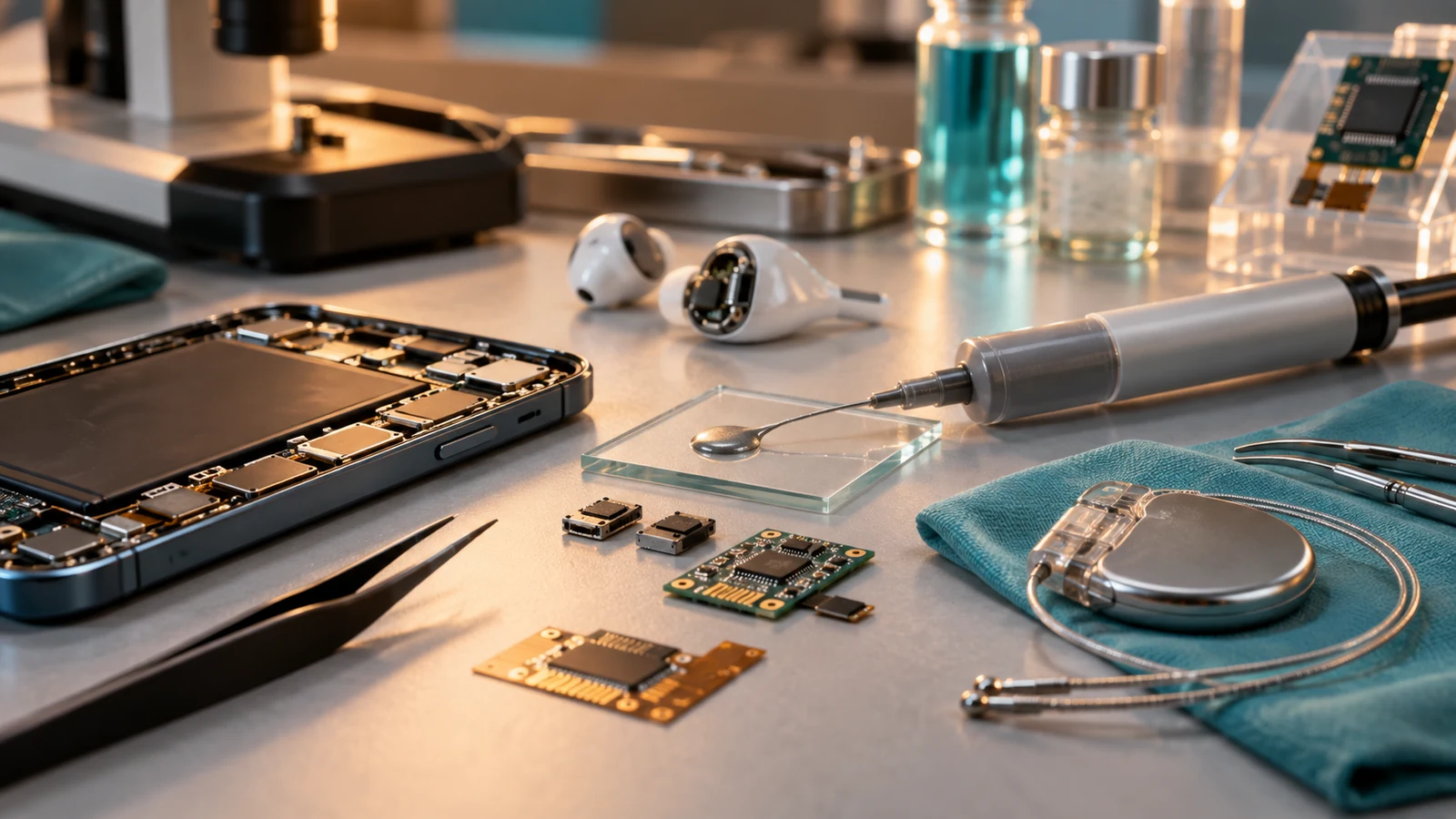
Imagine a world where your electronic devices are smaller, more efficient, and environmentally friendly. Conductive adhesives are making this a reality by revolutionizing how electronic components are connected. Unlike traditional soldering methods, these adhesives provide a flexible, reliable, and cost-effective solution for bonding electrical parts.
You might wonder why conductive adhesives are gaining so much traction. It’s simple: they offer superior performance in various applications, from consumer electronics to advanced medical devices. By providing excellent electrical conductivity and mechanical stability, they ensure your gadgets work seamlessly, even in the most demanding conditions. Ready to dive deeper into this game-changing technology? Let’s explore how conductive adhesives are shaping the future of electronics.
Key Takeaways
- Superior Alternative to Soldering: Conductive adhesives offer a flexible, reliable, and environmentally friendly solution for connecting electronic components, making them an attractive alternative to traditional soldering methods.
- Variety of Types and Applications: Different types of conductive adhesives, including epoxy-based, silicone-based, snap cure, heat cure, and two-component types, cater to various needs such as flexibility, cure time, and specific industrial applications like aerospace, electronics, and automotive.
- Significant Advantages: They provide enhanced electrical conductivity, effective thermal management, and versatility across various substrates and environmental conditions, ensuring reliable performance and longevity.
- Industrial Applications: Conductive adhesives play a crucial role in multiple sectors, including automotive, electronics, aerospace, medical devices, and communication equipment, offering solutions for tasks like bonding electronic control units, sensors, flexible circuits, and LCD connections.
- Challenges and Limitations: Users should be aware of challenges such as thermal expansion, long-term stability issues, and potential inconsistency in conductive performance, which can affect the reliability of these adhesives over time.
Overview of Conductive Adhesives
Definition and Purpose:
Conductive adhesives are specialized materials designed to provide electrical conductivity while bonding components together. These adhesives are crucial in various applications, particularly in electronics, where they help the transmission of electrical signals and form reliable electrical interconnects.
Key Terms:
- Electrical Conductivity: The ability of a material to allow the flow of electric current.
- Bonding: The process of adhering two surfaces together using a substance.
- Electrically Conductive Adhesives (ECAs): Adhesives that conduct electricity and provide structural support.
Types and Applications:
- Epoxy-Based Conductive Adhesives:
These adhesives are formulated by incorporating conductive fillers such as silver, copper, or carbon nanotubes into an epoxy resin matrix. Epoxy-based conductive adhesives are widely used in electronic packaging due to their excellent electrical conductivity and mechanical properties.
- Applications:
- Structural and conductive applications in aerospace.
- Electronic packaging.
- Flat panel displays.
Data and Performance Overview:
| Type of Adhesive | Conductive Filler | Electrical Conductivity (S/cm) | Key Applications |
|---|---|---|---|
| Epoxy-Based Adhesives | Silver, Copper, Carbon Nanotubes | Up to 10^5 | Aerospace structures, Electronic packaging, Flat panel displays |
Action Point:
Evaluate the suitability of various types of conductive adhesives for specific applications, considering factors such as electrical conductivity, mechanical properties, and compatibility with other materials.
Types of Conductive Adhesives
Explore a variety of conductive adhesives that ensure optimal electrical conductivity while bonding materials in electronic and industrial applications. These adhesives address different needs based on flexibility, cure time, and other characteristics.
Electrically Conductive Epoxy Adhesives
Electrically conductive epoxy adhesives, composed of epoxy resins filled with conductive materials, offer superior electrical and mechanical properties. These adhesives often incorporate fillers like silver, copper, and carbon nanotubes. You’ll find them commonly used in electronic packaging and aerospace applications due to their robustness.
- Key Fillers: Silver, copper, carbon nanotubes
- Common Uses: Structural bonding, conductive aerospace adhesives, electronic packaging
- Properties Enhanced By: Carbon nanofibers, graphene nanoplatelets
Electrically Conductive Silicone Adhesives
Electrically conductive silicone adhesives provide flexibility and good electrical conductivity, making them suitable for applications requiring a reliable and flexible bond. These adhesives maintain their properties over a wide range of temperatures and conditions.
- Flexible: Maintain electrical properties even when bent or stretched
- Wide Temperature Range: Effective in extreme conditions
- Common Uses: Flexible circuits, wearable electronics
Snap Cure Conductive Adhesives
Snap cure conductive adhesives cure rapidly when exposed to heat, enabling quick processing in high-speed automated systems. These adhesives are ideal for applications that benefit from short cycle times.
- Fast Curing: Cures in seconds when heated
- High Throughput: Suited for automated assembly lines
- Application Examples: LCD manufacturing, semiconductor bonding
Heat Cure Conductive Adhesives
Heat cure conductive adhesives require elevated temperatures to initiate the curing process, leading to a strong, durable bond and enhanced conductive properties. These adhesives are often used where higher performance is necessary.
- Cure Requirement: Elevated temperatures
- Strong Bonds: Provides high mechanical strength
- Common Uses: Power electronics, automotive sensors
Two-Component Conductive Adhesives
Two-component conductive adhesives comprise two parts mixed before application, initiating a chemical reaction for curing. These adhesives offer controlled working time and precise curing properties, making them suitable for complex assembly processes.
- Two Parts: Requires mixing before use
- Controlled Curing: Adjustable working time and curing process
- Common Uses: Industrial electronics, custom electronic assemblies
| Adhesive Type | Key Fillers | Common Uses | Cure Process | Flexibility |
|---|---|---|---|---|
| Electrically Conductive Epoxy | Silver, copper, CNTs | Aerospace, electronic packaging | Heat, room temperature | Low |
| Electrically Conductive Silicone | Silver, carbon | Flexible circuits, wearables | Room temperature | High |
| Snap Cure Conductive | Silver, copper | LCDs, semiconductors | Rapid, heat | Medium |
| Heat Cure Conductive | Silver, copper | Power electronics, sensors | Elevated temperatures | Medium |
| Two-Component Conductive | Silver, copper, CNTs | Industrial electronics, custom assemblies | Chemical reaction (mixing) | Medium |
Choose the right adhesive by evaluating specific needs, considering factors like application environment, desired flexibility, and cure time.
Industrial Applications
Conductive adhesives have various industrial applications, playing a crucial role in multiple sectors due to their unique properties. Understanding their applications can help leverage their benefits efficiently.
Automotive Industry
Conductive adhesives are used extensively in the automotive industry for various bonding and component attachment purposes:
- Electronic Control Units (ECUs): Utilized for attaching and securing electronic control units, ensuring reliable electrical connections.
- Sensors and Cameras: Employed in bonding sensors and cameras in advanced driver-assistance systems (ADAS).
- Battery Assemblies: Used for assembling electric vehicle batteries, providing excellent electrical conductivity and mechanical stability.
Electronics Industry
In the electronics industry, conductive adhesives are indispensable for their versatility and efficiency in various applications:
Die Attachment and Chip Bonding
- Surface Mount Devices (SMDs): Conductive adhesives attach SMDs, offering lower curing temperatures essential for heat-sensitive components.
- Isotropic Conductive Adhesives (ICAs): ICAs are vital for die attachment and chip bonding as they conduct electricity in all directions.
Flexible Circuits and LCDs
- Anisotropic Conductive Adhesives (ACAs): ACAs are used for bonding flexible circuits and LCD connections, crucial for one-directional electrical conductivity.
- Antenna Structures on RFIDs: ACAs are also suitable for bonding antenna structures in RFID systems.
EMI/RFI Shielding
- Electronic Devices: Conductive adhesives provide EMI/RFI shielding, protecting electronic devices from electromagnetic and radio frequency interference.
Other Industrial Applications
- Aerospace Applications: Used in the assembly and repair of aerospace components, these adhesives ensure robust electrical connections and mechanical strength.
- Medical Devices: Employed in medical device manufacturing, conductive adhesives bond components while maintaining electrical functionality.
- Communication Equipment: Essential in assembling communication hardware, they ensure consistent electrical performance.
Key Terms
- Isotropic Conductive Adhesives (ICAs): These adhesives conduct electricity equally in all directions.
- Anisotropic Conductive Adhesives (ACAs): These adhesives conduct electricity in a single direction.
- Surface Mount Devices (SMDs): These are electronic devices mounted directly onto the surface of printed circuit boards (PCBs).
| Industry | Application | Key Adhesive Type | Primary Benefits |
|---|---|---|---|
| Automotive | ECUs, Sensors, Cameras, Batteries | Various Adhesives | Reliable connections, Stability |
| Electronics | SMDs, Chip Bonding, LCDs, RFIDs | ICAs, ACAs | Low curing temp, Directional conductivity |
| Aerospace | Component assembly and repair | Conductive Epoxy | Robust connections, Strength |
| Medical Devices | Component bonding | Silicone Adhesives | Electrical functionality, Compatibility |
| Communication | Communication hardware assembly | Various Adhesives | Consistent electrical performance |
Advantages of Conductive Adhesives
Conductive adhesives offer several significant advantages over traditional soldering methods, particularly in electronic component assembly and repair. Their unique properties make them an effective solution in many demanding applications.
Enhanced Electrical Conductivity
Conductive adhesives achieve electrical conductivity through conductive fillers such as silver, gold, carbon, and various metal particles embedded in an epoxy or silicone resin. These fillers enable the adhesive to conduct electricity once contact is established during the adhesive hardening process.
- Mechanism of Conductivity: Conductive adhesives contain fillers that create conductive pathways by connecting as the adhesive cures.
- Filler Types: Silver fillers are common due to their stable conductivity and oxidation resistance.
- Conductivity Levels: The type and amount of conductive particles determine the overall electrical conductivity.
Thermal Management
Conductive adhesives excel in thermal management, an essential factor in many electronics applications. They offer efficient heat dissipation, reducing the risk of overheating.
- Thermal Conductivity: Conductive adhesives often include fillers that enhance thermal conductivity, allowing efficient heat transfer from components.
- Temperature Resistance: These adhesives can withstand high operating temperatures, suitable for high-power electronics.
- Thermal Cycling: They perform well in environments with frequent temperature changes, maintaining bond stability.
Flexibility and Versatility
Conductive adhesives provide flexibility and versatility in various applications and substrates, including those that are difficult to connect using traditional soldering.
- Substrate Compatibility: Compatible with a wide range of substrates such as flexible circuits and organic materials.
- Application Methods: Suitable for various application methods, including screen printing, dispensing, and stamping.
- Environmental Resilience: Offer robustness in diverse environments like moisture-rich or corrosive conditions.
| Advantage | Description | Example Fillers |
|---|---|---|
| Electrical Conductivity | Conductive fillers create pathways enabling electricity flow | Silver, Gold, Carbon |
| Thermal Management | Enhanced thermal conductivity ensures efficient heat dissipation | Metal Particles, Graphene |
| Flexibility and Versatility | Suitable for different substrates and application methods, robust in harsh environments | Epoxy, Silicone, Hybrid Resins |
These advantages make conductive adhesives an excellent choice for demanding electronic applications, ensuring reliable performance and longevity.
Challenges and Limitations
Conductive adhesives have several challenges and limitations even though their benefits. Understanding these issues helps you make informed decisions when selecting materials for electronic applications.
Thermal Expansion
Conductive adhesives experience significant thermal expansion. The coefficient of thermal expansion (CTE) of these adhesives can differ from that of substrate materials. This discrepancy leads to stress under thermal cycling. For instance, a typical epoxy-based adhesive has a CTE of around 60 ppm/°C, whereas silicon has a CTE of 3 ppm/°C. This mismatch can lead to adhesive failures.
Key Points:
- Thermal stress can cause cracks in the adhesive.
- Different CTEs between components and adhesives can cause detachment.
- Long-term reliability might be compromised due to repeated thermal cycles.
Long-Term Stability
Long-term stability is vital for the performance of conductive adhesives. Over time, these adhesives can degrade, affecting their bonding and conductive properties. The stability is influenced by factors like environmental exposure, mechanical stress, and thermal cycling.
Key Points:
- Environmental factors like humidity can deteriorate adhesive properties.
- Mechanical vibrations can weaken adhesive bonds over time.
- Thermal cycling can accelerate degradation processes.
Table: Long-Term Stability Factors
| Factor | Effect on Stability |
|---|---|
| Humidity | Increases degradation rate |
| Mechanical Vibration | Weakens adhesive bonds |
| Thermal Cycling | Accelerates aging and failure |
Conductive Performance
Conductive performance of adhesives can be inconsistent. While they offer benefits such as flexibility and ease of use, they form pressure contacts rather than metallurgical junctions. This can lead to unstable electrical properties, especially under mechanical shock.
Key Points:
- Electrical conductivity may decrease over time.
- Pressure contacts are prone to instability.
- Adhesive’s electrical properties can be compromised by oxidation.
- Oxidation: Metal surfaces can oxidize, reducing conductivity.
- Contact Instability: Pressure contacts are less stable than metallurgical bonds.
- Mechanical Shock: Conductive properties can degrade under stress. For instance, adhesives may show a 20% decrease in conductivity after multiple mechanical shocks.
Understanding these challenges and limitations helps you effectively use conductive adhesives in various applications, ensuring stable and reliable performance over time.
Conclusion
Conductive adhesives are revolutionizing the electronics industry with their efficiency, environmental benefits, and cost-effectiveness. Their superior performance in applications like consumer electronics and medical devices makes them indispensable. By understanding the various types of conductive adhesives and their specific properties, you can select the best solution for your needs.
Consider factors such as application environment, flexibility, and curing time to ensure reliable performance. While these adhesives offer numerous benefits, it’s crucial to be aware of potential challenges like thermal expansion and long-term stability. Embrace this innovative technology to enhance your electronic projects and stay ahead in the ever-evolving tech world.
Frequently Asked Questions
What are conductive adhesives?
Conductive adhesives are specialized materials ensuring electrical conductivity while bonding electronic components. They provide reliable electrical interconnects and are made with conductive fillers like silver or copper.
How do conductive adhesives compare to soldering?
Conductive adhesives are smaller, more efficient, and environmentally friendly compared to traditional soldering. They also offer excellent mechanical stability and electrical conductivity, making them suitable for a wide range of applications.
What types of conductive fillers are used in conductive adhesives?
Common conductive fillers include silver, copper, and carbon nanotubes. These fillers are incorporated into adhesive materials like epoxy to enhance their electrical and mechanical properties.
What are the main applications of conductive adhesives?
Conductive adhesives are used in consumer electronics, medical devices, automotive, aerospace, and communication equipment. They bond sensors, battery assemblies, electronic control units, and offer EMI/RFI shielding.
Are there different types of conductive adhesives?
Yes, there are various types including electrically conductive epoxy adhesives, silicone adhesives, snap cure adhesives, heat cure adhesives, and two-component adhesives. Each type has unique properties and curing processes for specific applications.
What are the benefits of using conductive adhesives?
Benefits include enhanced electrical conductivity, efficient thermal management, and flexibility for various substrates. They are cost-effective and versatile for multiple application methods, ensuring reliable performance and longevity.
What challenges do conductive adhesives face?
Challenges include issues with thermal expansion, long-term stability, and inconsistent conductive performance. These problems can lead to stress, adhesive failure, and decreased electrical conductivity over time.
How should one choose the right conductive adhesive?
Choose based on specific needs like application environment, desired flexibility, and cure time. Understanding the limitations and properties of each adhesive type ensures stable and reliable performance in various applications.
Can conductive adhesives be used in wearable electronics?
Yes, silicone-based conductive adhesives are especially suitable for wearable electronics. They provide flexibility and reliable bonding suited for the movements and stresses of wearable devices.
What is the difference between Isotropic Conductive Adhesives (ICAs) and Anisotropic Conductive Adhesives (ACAs)?
ICAs conduct electricity uniformly in all directions, whereas ACAs conduct only in a single direction. The choice between them depends on the specific electrical interconnect requirements of the application.