Got a sticky situation with glue on your MDF cabinets? You’re not alone. Whether it’s leftover adhesive from a DIY project or a spill from a crafting session, removing glue from MDF surfaces can be tricky but not impossible.
Key Takeaways
- Essential Tools and Materials: Stock up on safety equipment, heat guns, sanding tools, and appropriate cleaning materials to effectively remove glue without damaging your MDF cabinets.
- Step-by-Step Process: Follow a precise method involving heat application, scraping, and light sanding to ensure successful glue removal while preserving the integrity of your cabinets.
- Tips for Stubborn Glue: Use heat guns for softening adhesives and avoid chemicals like denatured alcohol and acetone, which can damage MDF.
- Avoiding Damage: Maintain the integrity of your MDF cabinets by using proper techniques and tools, ensuring minimal pressure during scraping and gentle sanding procedures.
- Chemical Caution: Opt for safer alternatives like white vinegar and MDF-safe commercial adhesive removers to prevent swelling or disintegration of the MDF.
Essential Tools And Materials
Removing glue from MDF cabinets might seem daunting, but the right tools and materials make the process manageable. The following equipment ensures effective and safe glue removal without damaging your cabinets.
Safety Equipment
Gloves
Protect your hands from adhesives and cleaning materials.
Safety Goggles
Shield your eyes from debris and chemical splashes.
Mask
Prevent inhalation of dust and fumes from sanding and cleaning.
Removal Tools
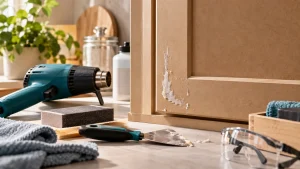
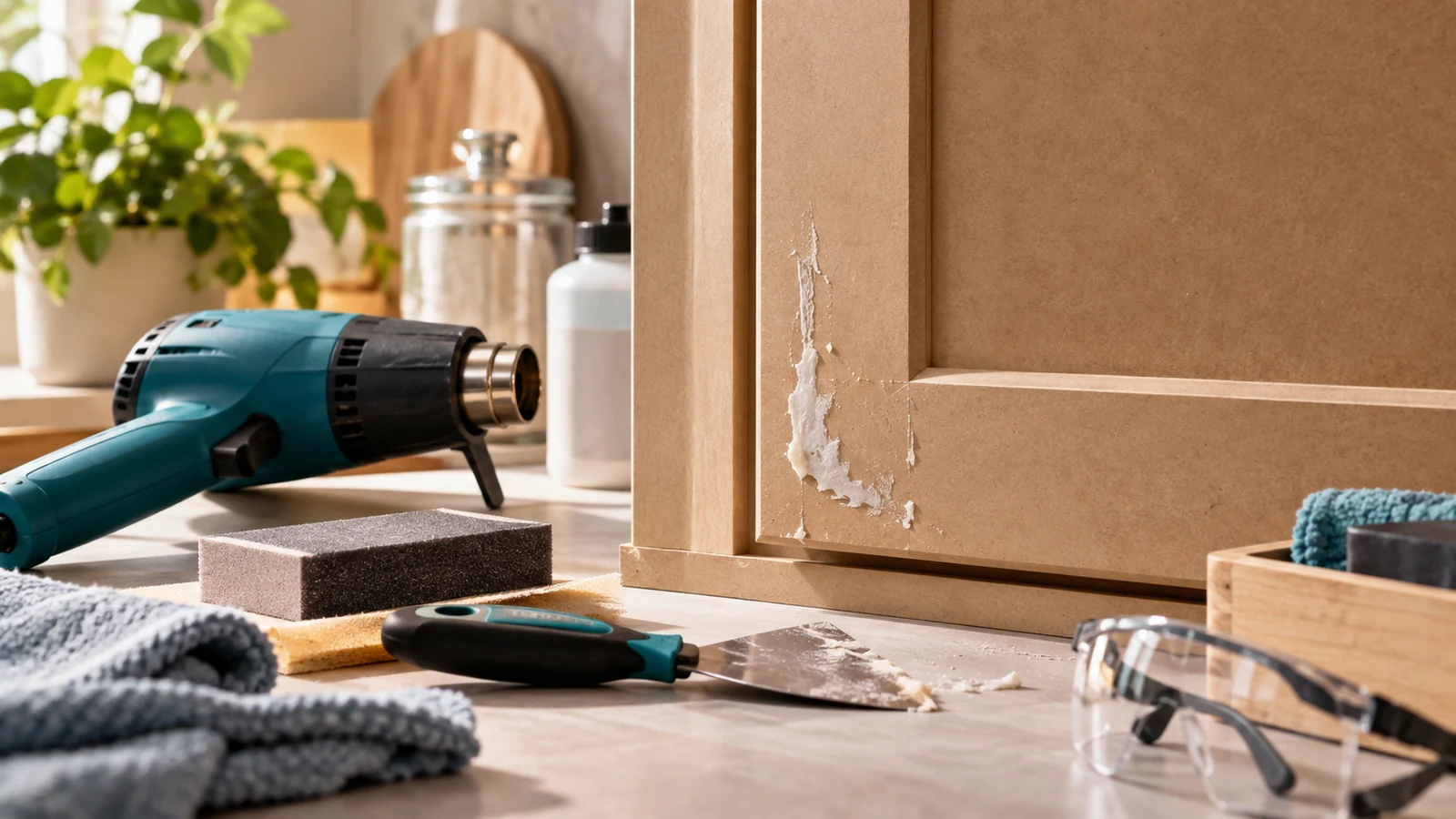
Heat Gun
Crucial for softening the adhesive without damaging the MDF, making it easier to remove thermofoil or vinyl wrap.
Sanding Tools
Fine sandpaper or a sanding sponge smooth out the surface post-adhesive removal.
Circular Sander
Efficiently sands large areas, creating a rough surface for better undercoat adhesion.
Rags
Necessary for applying and wiping off cleaning materials.
Cleaning Materials
Adhesive Remover
Use a commercial adhesive remover formulated for MDF surfaces to dissolve glue residue effectively.
Alcohol or Acetone
These solvents help in breaking down glue for easier removal.
Mild Detergent Solution
Clean the surface post-adhesive removal to eliminate any residual chemicals.
| Tool/Material | Purpose | Example Use |
|---|---|---|
| Gloves | Hand protection | Handling adhesives |
| Safety Goggles | Eye protection | Protecting from debris |
| Mask | Respiratory protection | Sanding dust |
| Heat Gun | Loosening adhesive | Removing thermofoil |
| Sanding Tools | Smoothing surface | Post-adhesive removal |
| Circular Sander | Efficient sanding | Large area sanding |
| Rags | Applying/wiping cleaning materials | Cleaning surfaces |
| Adhesive Remover | Dissolving glue | Removing stubborn adhesive |
| Alcohol/Acetone | Solvent for breaking down glue | Facilitating glue removal |
| Detergent Solution | Post-removal cleaning | Cleaning off residual chemicals |
Equipping yourself with these tools ensures you can effectively, safely remove glue from MDF cabinets, preserving their quality and extending their lifespan.
Step-by-Step Process To Remove Glue From MDF Cabinets
Removing glue from MDF cabinets involves precise steps to maintain the quality of the material. Follow this guide to ensure successful glue removal while preserving your cabinets.
Preparing The Surface
- Remove Thermofoil
Use a heat gun to carefully remove the thermofoil from the MDF surface. Avoid using a hair dryer, as this can burn and damage the material. Apply heat to the edges and corners of the thermofoil to loosen the adhesive. Gently pull the thermofoil off without damaging the MDF.
Softening The Glue
- Apply Heat
Use a heat gun to soften any remaining glue residues. Softening the adhesive will make it easier to remove without damaging the MDF. Ensure the heat is applied evenly and cautiously to avoid overheating.
Scraping Off The Glue
- Scrape Carefully
Once the glue is softened, use a flat tool or a scraper to carefully remove the glue residue. Move the scraper gently to prevent scratching or damaging the MDF surface.
- Sanding
Lightly sand the surface to remove any remaining glue residue. Use a fine sanding sponge or a circular sander to avoid damaging the MDF. Sanding will also smooth the surface, preparing it for any further refinishing.
By following these steps, you can effectively remove glue from MDF cabinets, ensuring their longevity and maintaining their appearance.
Tips And Tricks For Stubborn Glue
Effectively removing glue from MDF cabinets can be a significant challenge, but with the right approach, you can achieve a clean result without damaging the material. This guide presents essential tips and tricks to assist you in this process.
Avoid Chemicals That Can Damage MDF
When selecting methods to remove glue, remember, certain chemicals can harm the MDF substrate.
- Denatured Alcohol: Causes swelling and weakening of MDF.
- Acetone: Leads to disintegration of the fibers.
- Xylene: Possibly results in permanent damage.
Use Heat and Careful Removal
Utilizing heat can make glue removal easier and safer for your MDF cabinets.
- Heat Gun: Softens adhesives and facilitates peeling without MDF fiber damage. Hold 4-6 inches away from the surface and keep moving it to avoid overheating.
- Thermofoil Removal: Apply heat evenly and use a flat tool to lift the laminate slowly. Do not yank to prevent fiber stress.
Heavy Sanding
For remaining adhesive, sanding can prepare the surface for further treatment.
- Sand Properly: Use medium-grit sandpaper (80-120 grit) for evenly removing adhesive residue. Avoid heavy pressure to prevent gouging.
- Check Progress: Frequently remove dust and check to ensure you aren’t over-sanding the surface.
Key Terms
- MDF (Medium Density Fiberboard): Engineered wood product composed of wood fibers and resin.
- Thermofoil: A laminate applied to MDF to give a finished look, often used in cabinet doors.
Steps for Safe Glue Removal
- Prepare Work Area: Ensure good ventilation and use safety equipment.
- Heat Application: Use the heat gun on low to soften the adhesive.
- Careful Peeling: Slowly peel back the laminate with a flat tool while heating.
- Sand Remaining Residue: Use medium-grit sandpaper gently for a smooth finish.
| Adhesive Type | Effect on MDF | Recommended Removal Method |
|---|---|---|
| Hot Glue | Leaves residue | Heat gun, gentle scraping |
| Wood Glue | May absorb into fibers | Warm water, gentle scraping |
| Super Glue | Hardens quickly | Acetone sparingly, sanding |
By following these tips and using appropriate methods, you can effectively remove stubborn glue from your MDF cabinets without causing damage.
Avoiding Damage To MDF Cabinets
Maintaining the integrity of MDF cabinets while removing glue requires a strategic approach. MDF, or Medium Density Fiberboard, is a versatile and affordable material used in many kitchen and bathroom cabinets. But, its composition makes it susceptible to damage if not handled properly during glue removal.
Key Terms:
- MDF (Medium Density Fiberboard): Engineered wood product made from wood fibers glued under heat and pressure.
- Thermofoil: A thin vinyl layer applied to MDF to simulate wood or protect the surface.
- Adhesive: Substance used for sticking objects or materials together.
Heat and Careful Removal
To avoid damaging MDF, use a heat gun, not a hair dryer, to soften glue. Heat guns allow for controlled application, which is crucial for not overheating the surface.
Steps:
- Prepare: Begin by cleaning the surface to remove dust and debris.
- Apply Heat: Hold the heat gun 6-8 inches away, moving it consistently to avoid heat spots.
- Remove Glue: Use a plastic scraper to lift the softened glue carefully. Metal tools can gouge MDF.
Sanding
Sanding helps remove residual adhesive but needs to be done gently. Over-sanding can lead to surface damage.
Steps:
- Choose Sandpaper: Use fine-grit sandpaper, typically around 220-grit.
- Light Sanding: Lightly move the sandpaper in circular motions to smooth the surface.
- Clean Surface: Wipe down with a damp cloth to remove sanding dust.
Chemical Caution
Chemicals like paint thinner, acetone, and xylene can cause MDF to swell or disintegrate. Avoid these to preserve the MDF’s structure.
Recommended Alternatives:
- White Vinegar: A natural adhesive remover that is less harsh on MDF.
- Commercial Adhesive Removers: Ensure you select MDF-safe products. Test on a small area first to check for reactions.
Practical Tips
- Test First: Always test heat and sanding on a hidden area.
- Gentle Techniques: Apply minimal pressure during scraping and sanding.
- Ventilation: Ensure your workspace is well-ventilated to avoid inhaling dust.
Summary
By carefully applying heat, cautiously sanding, and avoiding harsh chemicals, you can effectively remove glue without compromising the integrity of your MDF cabinets. Practice patience and precision to maintain their appearance and functionality.
| Method | Action | Outcome |
|---|---|---|
| Heat Gun | Apply heat 6-8 inches away, keep moving to avoid heat spots | Softens glue for safer removal |
| Sanding | Use fine-grit sandpaper lightly | Smooths surface, removes residuals |
| Chemical Avoidance | Avoid paint thinner, acetone, xylene | Prevents MDF swelling/disintegration |
| Test First | Test heat and products on an inconspicuous area | Ensures no damaging reactions |
Conclusion
Removing glue from MDF cabinets doesn’t have to be a challenging job. With the right tools and techniques, you can tackle this challenge effectively while preserving your cabinets’ quality. Remember to prioritize safety by using proper protective gear and work in a well-ventilated area.
By carefully applying heat, scraping gently, and sanding with the correct grit, you’ll achieve a smooth, glue-free surface ready for refinishing. Avoid harsh chemicals that could damage MDF, and opt for safer alternatives like white vinegar or MDF-safe adhesive removers.
Following these guidelines ensures your MDF cabinets remain in top condition, making your efforts worthwhile and your cabinets looking as good as new.
Frequently Asked Questions
How can I safely remove glue from MDF cabinets?
To safely remove glue from MDF cabinets, use a heat gun to soften the glue, then gently scrape it off with a flat tool. Lightly sand any remaining residue with medium-grit sandpaper. Avoid harsh chemicals like acetone as they can damage the MDF.
What tools are necessary for removing glue from MDF cabinets?
Essential tools include a heat gun, flat scraping tool, sanding tools, gloves, safety goggles, and masks. Avoid using hair dryers, as they can cause damage.
Is it safe to use a heat gun for glue removal?
Yes, a heat gun is safe for glue removal if used correctly. Keep the heat gun at a safe distance and apply heat evenly to avoid damaging the MDF cabinet.
Can I use vinegar to remove glue from MDF?
Yes, white vinegar can be a safer alternative for removing glue. It’s less harsh than chemicals like acetone and won’t cause the MDF to swell or disintegrate.
What should I avoid when removing glue from MDF cabinets?
Avoid harsh chemicals such as denatured alcohol, acetone, and xylene, which can damage MDF. Also, avoid using excessive force while scraping or sanding to prevent surface damage.