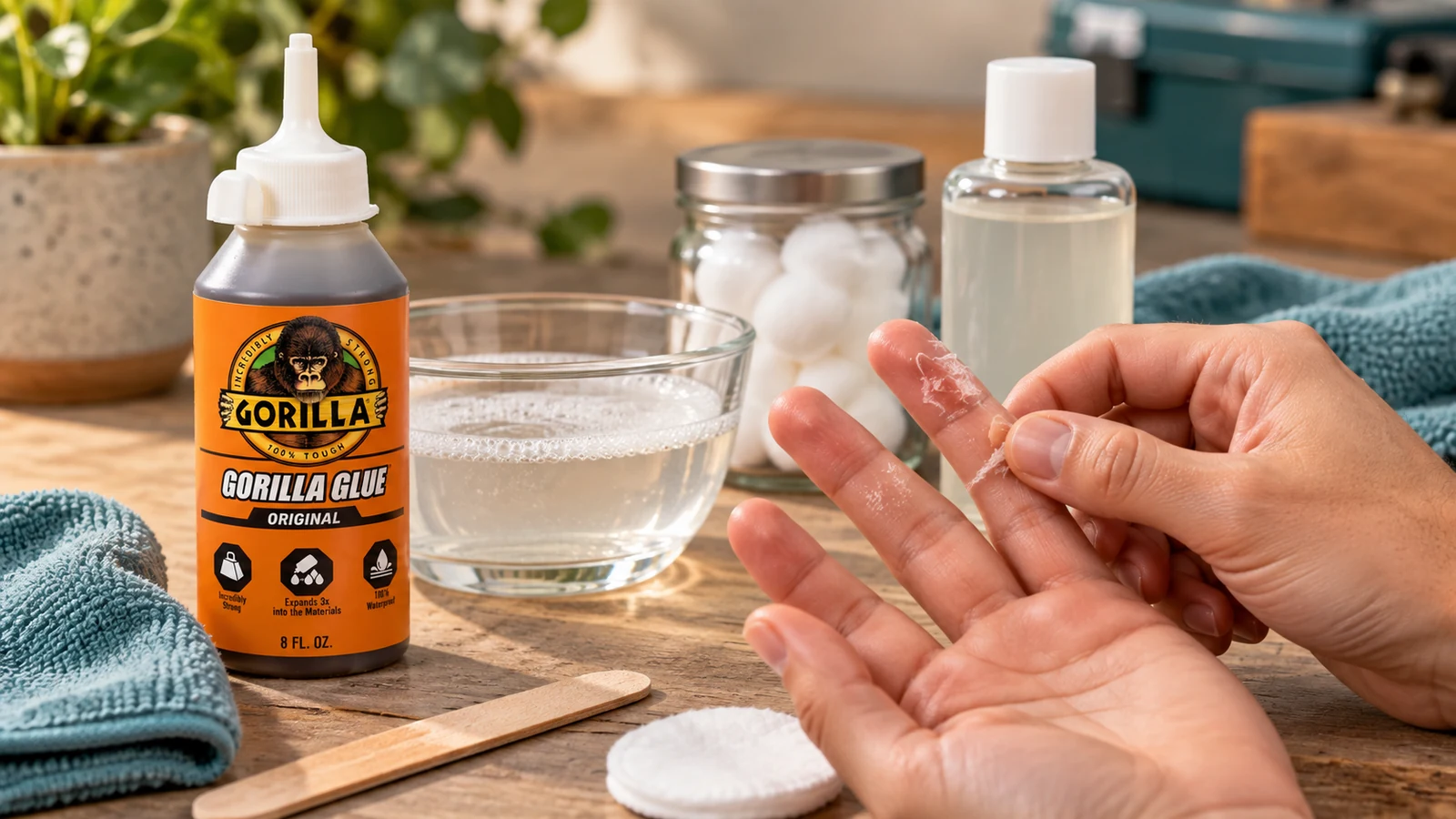
Ever found yourself in a sticky situation with Gorilla Glue on your fingers? You’re not alone. Gorilla Glue is renowned for its powerful adhesive properties, making it a go-to for tough repairs. But, its strength can become a hassle when it bonds to your skin.
Don’t worry, though. Removing Gorilla Glue from your fingers is easier than you might think. With a few household items and some patience, you’ll have your hands glue-free in no time. Let’s jump into the most effective methods to safely and efficiently remove Gorilla Glue from your skin.
Key Takeaways
- Understanding Glue Properties: Gorilla Glue is a polyurethane adhesive known for its strong bonding capabilities, requiring moisture to activate and expanding significantly during the curing process.
- Immediate Cleaning Methods: Start by rinsing your hands with cool water, applying soap, and gently scrubbing with an exfoliator to remove the glue.
- Effective Removal Techniques: For dried glue, use a pumice stone or nail file to sand it off. Apply acetone sparingly or use oil-based solutions like vegetable or coconut oil for gentler removal.
- Post-Removal Care: After glue removal, moisturize your skin with products containing aloe vera or vitamin E and avoid harsh soaps to prevent skin irritation.
- Preventive Measures: Always wear gloves when using Gorilla Glue to avoid skin contact and have a damp cloth ready to wipe off any excess glue.
Understanding Gorilla Glue
Gorilla Glue’s popularity stems from its remarkable adhesive strength, which makes it effective for a variety of repair jobs. Understanding its properties and how it bonds to surfaces helps in managing accidental contact with your skin.
Key Properties of Gorilla Glue
- Polyurethane Adhesive: Gorilla Glue is primarily a polyurethane-based adhesive known for its strong bonding capabilities.
- Curing Process: It requires moisture to activate and cure completely, enhancing its adhesion.
- Expansion: The glue expands 3-4 times its initial volume during the curing process, filling gaps and creating a strong bond.
Common Uses
- Woodworking: Ideal for bonding wood, providing a durable and long-lasting join.
- Metal and Ceramics: Effective in adhering metal parts and ceramic pieces, often used in household repairs.
- Plastic and Foams: Bonds well with various plastics and foam materials, frequently used in DIY projects.
Handling Tips
To effectively manage Gorilla Glue and prevent unwanted situations:
- Wear gloves when using Gorilla Glue to avoid skin contact.
- Have a damp cloth ready to wipe off excess glue immediately.
- Store the glue in a dry, cool place to prolong its shelf life.
Action Points
If you accidentally get Gorilla Glue on your fingers, don’t panic. Employ the methods discussed earlier, such as using soap and water with a scraper or sanding the dried glue. Be patient, and avoid using harsh chemicals that might harm your skin.
Adhering to these guidelines ensures safe and effective usage of Gorilla Glue, minimizing the chances of accidental skin contact while maximizing the benefits of this powerful adhesive.
Immediate Steps
Accidentally getting Gorilla Glue on your fingers can be frustrating, but you can manage it with a few prompt actions. These steps will help you remove Gorilla Glue efficiently.
Washing With Soap And Water
Follow these steps to begin cleaning your fingers using soap and water:
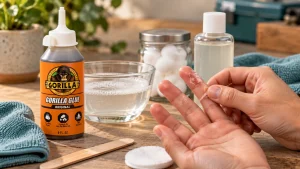
- Cool or Cold Water: Start by rinsing your hands with cool or cold water. This helps to loosen the glue.
- Soap: Apply a generous amount of soap and create a lather. Soap assists in breaking down the adhesive properties.
- Exfoliator: Consider using a gritty-textured exfoliator. Gently scrub the area to remove the glue without harming your skin.
Using a Pumice Stone
If the glue has dried, you can use a pumice stone or a similar tool:
- Pumice Stone or Nail File: Carefully sand off the dried glue with a pumice stone or a nail file. Avoid applying too much force to prevent skin damage.
- Emery Board: Buff off the dried glue using an emery board.
- Moisturizer: Apply a moisturizer post-removal to soothe your skin.
- Persistence: Repeat the process if necessary, as removing all the glue might take multiple attempts.
Effective Removal Methods
Effective methods can make removing Gorilla Glue from your fingers less challenging. Gorilla Glue’s strong adhesive properties often necessitate specific techniques and products to ensure safe and thorough removal.
Acetone Application
Acetone is effective at dissolving Gorilla Glue, particularly when the glue has dried.
- Usage: Apply acetone with a cotton ball or soak the affected area. Rub gently to dissolve and lift the glue.
- Caution: Acetone can cause skin irritation and dryness. Manufacturers don’t recommend it due to these risks, so use it sparingly and with care.
- Post-application: Rinse thoroughly with warm water and soap to remove any acetone residue. Moisturize the skin afterward to prevent dryness.
Oil-Based Solutions
Oil-based solutions can help loosen Gorilla Glue without causing skin irritation.
- Common Oils: Vegetable oil, coconut oil, and olive oil are effective.
- Method: Apply oil generously to the affected area. Allow it to soak for several minutes to soften the glue.
- Removal: Gently rub the area with a cloth or your fingers. Wash with warm water and soap once the glue loosens. Repeat if necessary.
Utilizing Citrus-Based Cleaners
Citrus-based cleaners are another safe alternative for removing Gorilla Glue from skin.
- Ingredients: Products with d-limonene, a citrus extract, are particularly effective.
- Application: Apply the citrus cleaner directly to the glue. Let it sit for a few minutes.
- Action: Gently rub to lift the glue. Rinse with warm water and soap. Moisturize afterward to soothe the skin.
By using these methods, you can effectively remove Gorilla Glue from your fingers while minimizing potential skin damage.
Aftercare
After successfully removing Gorilla Glue from your fingers, it’s crucial to focus on aftercare to restore your skin’s health.
Moisturizing Your Skin
Ensuring your skin stays hydrated is essential, especially after using methods like acetone or sanding, which can dry out the skin. Follow these steps for effective moisturizing:
- Apply a Moisturizer: Use a high-quality moisturizer, preferably one containing aloe vera or vitamin E, which are known for their healing and soothing properties.
- Use Petroleum Jelly: If your skin feels extremely dry, apply a thin layer of petroleum jelly to lock in moisture and create a protective barrier.
- Hydrate Internally: Drinking plenty of water helps maintain skin hydration from within.
Preventing Skin Irritation
Preventing irritation after glue removal is paramount. Here are measures to take:
- Avoid Scratching: Refrain from scratching the affected area to prevent further irritation or potential infection.
- Apply an Antibacterial Ointment: If your skin feels tender or scratched, apply a light layer of antibacterial ointment to prevent infection.
- Use Gentle Products: Switch to mild, fragrance-free soaps and lotions to avoid aggravating the skin.
Summary
Ensure you follow aftercare steps to maintain healthy skin post Gorilla Glue removal. These simple measures can help you avoid further irritation and aid in quicker skin recovery.
Tips and Precautions
To remove Gorilla Glue from your fingers effectively and safely, follow these essential tips and precautions. It’s crucial to handle materials with care to avoid skin damage.
Essential Tips
- Choose the Right Method:
- Different methods work better depending on whether the glue is wet or dry.
- Be Gentle:
- Avoid vigorous scrubbing that can damage your skin.
- Monitor Skin Reaction:
- Stop immediately if irritation occurs and wash your hands thoroughly.
- Use Protective Measures:
- Wear gloves when handling Gorilla Glue to prevent skin contact.
Precautions
- Soap and Scraper Method:
- Gently scrape to avoid skin abrasions. This method typically takes around 30 seconds.
- Acetone (Nail Polish Remover) Method:
- Acetone dries the skin. Use it sparingly and moisturize afterward to prevent dryness and irritation.
- Sanding Method:
- Carefully sand to avoid damaging the skin while removing the glue.
| Method | Average Time | Key Precautions |
|---|---|---|
| Soap and Scraper | ~30 seconds | Use household soap; avoid harsh scraping that could harm skin. |
| Acetone | Varies | Use sparingly; moisturize afterward to prevent skin dryness. |
| Sanding | Varies | Be gentle and cautious to avoid skin damage while sanding. |
These guidelines ensure you can remove Gorilla Glue effectively without compromising your skin’s health. Stay attentive to your skin’s reaction and adjust methods as necessary to maintain safety and comfort.
Conclusion
Removing Gorilla Glue from your fingers can be a straightforward process with the right approach. By using household items like soap, water, and exfoliators, or more specialized solutions like acetone or oil-based products, you can effectively tackle even the toughest adhesive residues. Remember to be patient and gentle to avoid skin damage.
Always prioritize safety by wearing gloves and having a damp cloth handy when working with Gorilla Glue. After removal, take care of your skin with proper moisturization and avoid any irritants. With these tips, you can confidently handle Gorilla Glue without worrying about sticky fingers.
Frequently Asked Questions
How do you remove Gorilla Glue from fingers?
To remove Gorilla Glue from fingers, start by washing with cold water and soap. Use a gritty-textured exfoliator to scrub gently. For dried glue, use a pumice stone or nail file to carefully sand it off. Persistent and gentle effort is key.
Can acetone remove Gorilla Glue from skin?
Yes, acetone can be used to dissolve dried Gorilla Glue. However, it may cause skin irritation, so use it sparingly and moisturize your skin afterward.
What oil-based solutions help remove Gorilla Glue from fingers?
Oil-based solutions like vegetable, coconut, or olive oil can help loosen Gorilla Glue on fingers without causing irritation. Simply rub the oil onto the affected area until the glue starts to come off.
Are citrus-based cleaners effective for removing Gorilla Glue?
Yes, citrus-based cleaners containing d-limonene are a safe alternative for removing Gorilla Glue from fingers. Apply the cleaner and gently rub the area until the glue starts to dissolve.
What should I do if Gorilla Glue has already dried on my skin?
If Gorilla Glue has dried on your skin, soak the area in warm soapy water, then use a pumice stone or nail file to carefully sand off the glue. Follow up with a moisturizer to soothe the skin.
How do I prevent Gorilla Glue from getting on my fingers?
To prevent Gorilla Glue from getting on your fingers, wear gloves during use and keep a damp cloth nearby for quick clean-ups. Additionally, work carefully and avoid touching the glue directly.
What aftercare is recommended following Gorilla Glue removal?
After removing Gorilla Glue, moisturize with high-quality products containing aloe vera or vitamin E. For extreme dryness, use petroleum jelly. Stay hydrated and avoid scratching the affected area to prevent skin irritation.
Should I use alcohol to remove Gorilla Glue from skin?
No, it is not recommended to use alcohol to remove Gorilla Glue from skin as it can strip the skin of its natural oils. Opt for soap and water, exfoliators, or oil-based solutions instead.
How can I soften hard Gorilla Glue?
To soften hard Gorilla Glue, mix a few drops of paint thinner with the glue. Add one drop at a time until it becomes manageable, but work slowly and carefully to avoid over-thinning.
What are the key properties of Gorilla Glue?
Gorilla Glue is a polyurethane-based adhesive that activates with moisture and expands during curing. It’s ideal for bonding wood, metal, ceramics, plastics, and foams due to its strong adhesive properties.